



Host a Virtual Halloween Party: Audio,…

20 Minimalist Halloween Nail Ideas for…

Can Free Affinity Help You Build…

12 Lower-Sugar Halloween Treat Swaps Worth…

Can Hostinger AI Builder Launch a…

A 5-Step Screen-Free Autumn Reading Ritual…

Plug-In Solar Panels UK: Are They…

15 Last-Minute Zoom Halloween Costumes for…

Meta One Explained: Is the Subscription…

10 Low-Fuss Dog Halloween Ideas: Comfort…

Plaud One Explained: Can AI Earbuds…

9 Gothic Dinner Table Ideas for…

Namecheap vs Dynadot

7 UK Ghost Tours and How…

Convertkit Vs Beehiiv

Do You Really Need a £420…

Bluehost vs Siteground

15 Gentle Spooky Autumn Books to…

Namecheap review

How to Remove Halloween Face Paint…
Cooling a garden office during summer is not just about buying a stronger fan and hoping for manners from the weather. A garden office can heat up quickly because it is small, exposed, often timber-built and sometimes under-insulated. The real question is not only how to cool the room down. It is how to stop heat building up in the first place, so your workspace does not become a tiny timber greenhouse with deadlines.
Stop heat getting in first
Shade matters before cooling gadgets
Airflow needs a plan
Fans suit warm days
Portable AC needs venting
Track room temperature
Leave before heat becomes unsafe

Most Relevant Audience
This guide is for remote workers, home workers, freelancers, bloggers, creators, side hustlers, parents, carers and small business owners who use a garden office during warmer months.
It is especially useful if your garden office feels calm in spring but starts becoming uncomfortable by lunchtime in summer, especially when laptop heat, direct sun, weak airflow and long work blocks all join the meeting.
Why Garden Offices Get So Hot
Small rooms heat quickly
Garden offices are often compact, which means heat can build faster than in a larger indoor room.
A laptop, monitor, lamp, router and your own body heat all add to the problem. If the room is already warm, a normal work setup can make it feel stuffy very quickly.
Direct sun hits harder outside
A garden office may sit in open sun for several hours.
Walls, roof panels, windows and doors can absorb or trap heat, especially if there is little shade. By the time you notice the room is uncomfortable, the structure may already have stored heat.
Poor airflow traps warm air
A closed garden office can become hot and stale.
If there is no useful airflow, the warm air simply sits there while the room keeps heating. Opening a window helps only when cooler air can enter and warmer air can escape.
Insulation works both ways
Good insulation is not only for winter.
It can help slow heat transfer in summer too, depending on the build and materials. A poorly insulated garden office may feel cold in winter and too hot in summer, which is a slightly rude use of both seasons.
Work habits add heat pressure
Long sessions, midday calls, high screen brightness and powered devices can all make the space feel worse.
A garden office cooling plan should include when you work, not just what you buy. Sometimes the best summer upgrade is moving the hardest work earlier.

This guide is about cooling a garden office during summer: reducing heat gain, improving airflow, choosing fans or portable cooling carefully, tracking temperature and knowing when to leave the room. Full garden office setup guides should own the whole workspace. Portable power station guides should own runtime and backup power. Here, the question is how to keep the room workable when heat starts building.
Stop Heat Getting In First
External shade
External shade is one of the strongest cooling moves because it blocks heat before it reaches the room.
Think shade sails, trees, awnings, umbrellas, nearby walls or temporary covers where suitable. Stopping direct sun from hitting windows and roof areas can reduce the cooling work needed later.
Reflective blinds
Reflective blinds can help reduce heat and glare through windows.
They are especially useful when sunlight hits the glass for long periods. They will not solve every heat problem, but they can make the room easier to manage alongside ventilation and shade.
Thermal curtains
Thermal curtains can help reduce heat gain through windows and doors.
They are more useful when used before the room overheats, not after it already feels uncomfortable. Close them during strong sun, then reopen when the air outside becomes cooler.
Roof and wall exposure
The roof often takes a lot of summer heat.
If your garden office becomes hot from above, shade, roof material, insulation and ventilation may matter more than another fan. Heat prevention is usually more effective than chasing hot air around the room.
Early-day cooling
Cool the room before the hottest part of the day.
Open windows early if the outside air is cooler, then close blinds or curtains before direct sun builds. This is not glamorous, but neither is trying to answer emails in a room that has already overheated.
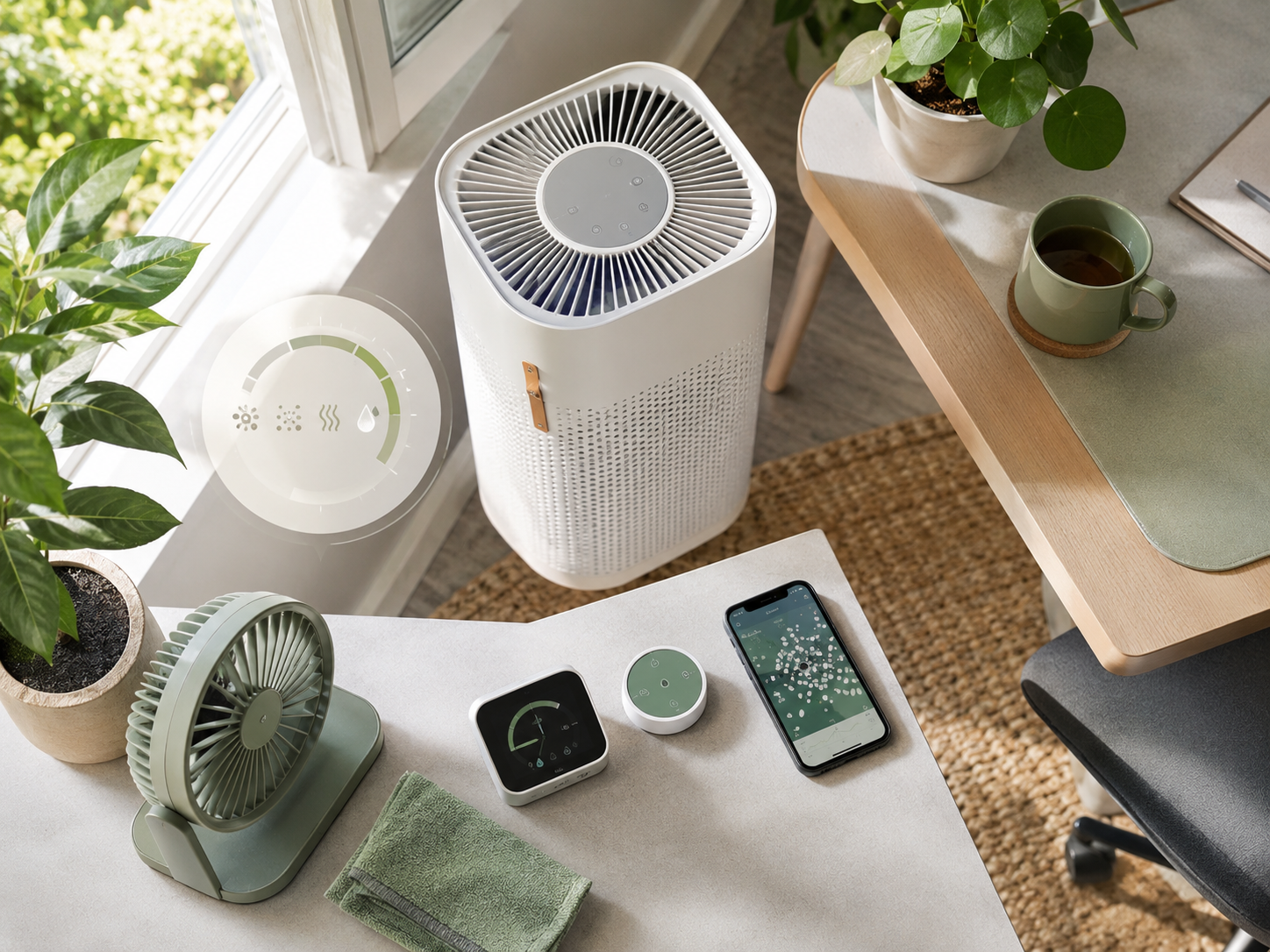
Cooling Products And Setup Helpers

Cooling gadgets are more useful after you reduce heat gain. A fan, portable AC or purifier-style fan has a better chance when the room is shaded, ventilated and not already baking. Start with the building and the sun. Then choose the device that matches the remaining problem.
Portable AC vs Fan vs Evaporative Cooler
Evaporative cooler
An evaporative cooler may help in some dry conditions, but it is not the same as air conditioning.
In humid weather, it may be much less effective and can add moisture to the room. Be cautious in small garden offices where damp is already a concern.

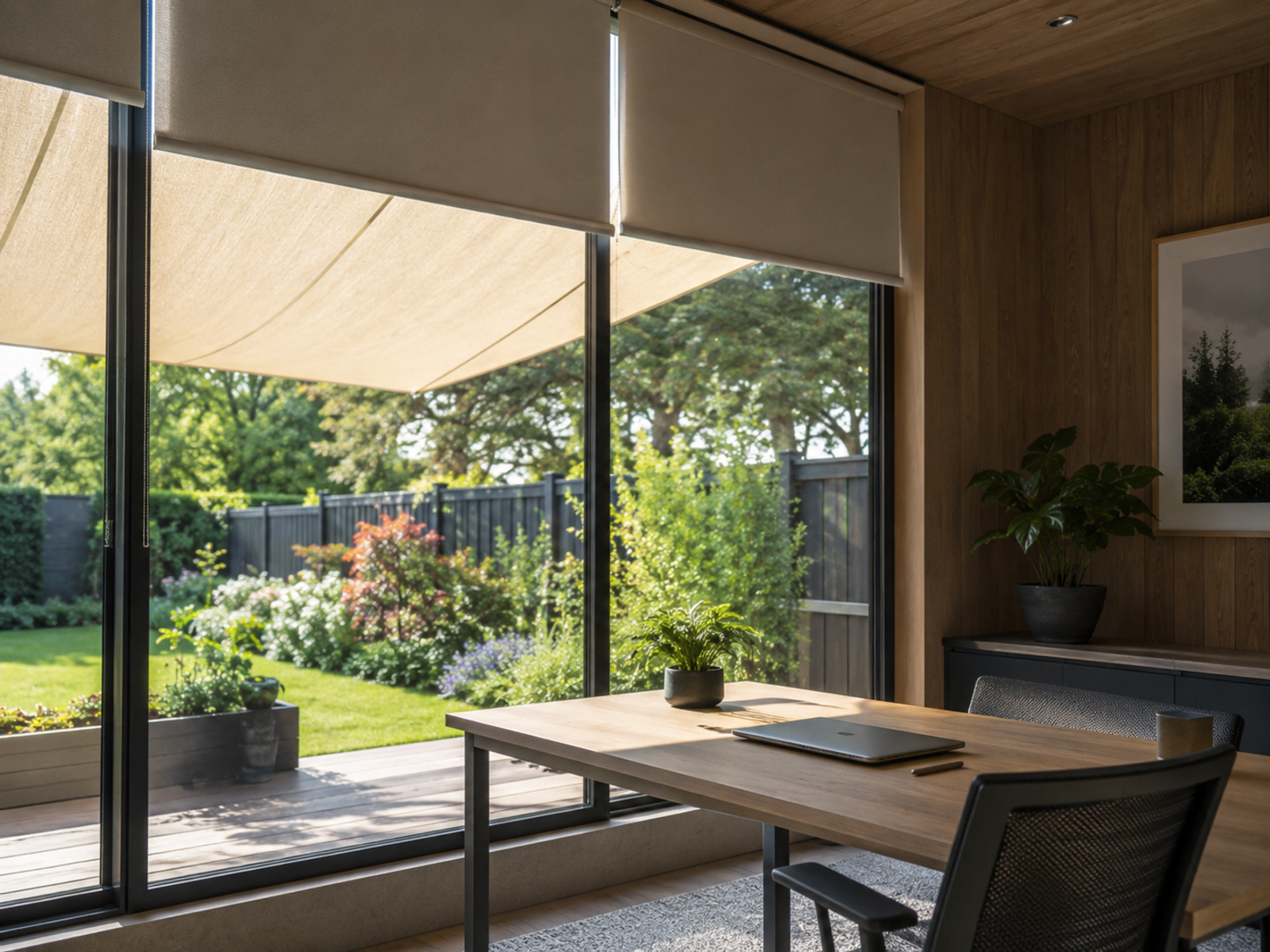
Shade, Blinds And Window Position
Work with the sun path
Notice when the sun hits the office hardest.
Morning, midday and afternoon heat can affect the room differently depending on window direction and garden layout. Once you know the worst window or wall, you can shade the right area instead of guessing.
Block window heat early
Blinds and curtains work best before the room gets hot.
Close reflective blinds or thermal curtains before direct sunlight pours in. Waiting until the room is already hot makes every cooling device work harder.
Use external shade where possible
Shade outside the glass is often stronger than shade inside the room.
An awning, umbrella, shade sail or nearby planting may reduce heat before it reaches the window. Keep anything external safe, secure and suitable for wind and weather.
Reduce glare too
Summer heat often arrives with glare.
Shading the window can make the room cooler and make screens easier to read. That helps comfort, posture and eye strain, especially if you are using a laptop or portable monitor.
Keep privacy in mind
Blinds and curtains can also improve privacy if the office is overlooked.
That matters for video calls, paperwork and equipment security. A cooler room that also feels more private is easier to use consistently.

Ventilation And Airflow Basics
Create an air path
Opening one window may not do much if air has nowhere to move.
Try creating a route for air to enter and leave, such as opening a window and door at suitable times. Airflow works best when warm air can escape rather than swirl around.
Use cooler hours
Ventilate when the outside air is cooler than the inside air.
Early morning and later evening can be more useful than the middle of the day. If the outdoor air is hotter, opening everything may simply invite the heat in for a sit-down.
Place fans carefully
A fan’s position matters.
Pointing a fan directly at your face is not always the best setup. Try moving air across the room, toward an exit point or from a cooler shaded area. Small changes can improve comfort quickly.
Avoid stale closed-room heat
A sealed garden office can feel heavy and uncomfortable.
If you close everything to block sun, remember to manage airflow when conditions allow. Heat, moisture and stale air can make the room feel harder to work in.
Watch device heat
Laptops, monitors and chargers add heat.
Keep vents clear, avoid direct sun on devices and give equipment space to breathe. A cooling plan should protect both you and the tech you are relying on.

Working Earlier, Pausing Later And Heat-Safe Routines
Start earlier
Use the garden office for focused work before heat builds.
Writing, planning, accounts, client work and admin may feel easier in the morning. Save lighter tasks for later if the office becomes uncomfortable.
Move demanding calls
Avoid scheduling important calls during the hottest part of the day if your office overheats.
Heat, fan noise, screen glare and discomfort can all affect concentration. A calmer call indoors may be better than a heroic call from a room that feels slightly cooked.
Track the room temperature
A thermometer or smart temperature sensor can help you spot patterns.
You may learn that the office is fine until midday, overheats after 1pm or cools again later. That gives you a routine, not just a complaint.
Take heat seriously
If the room feels uncomfortably hot or you feel dizzy, sick, unusually tired or headachy, stop working in the garden office and move somewhere cooler.
Heat is not something to push through for productivity. Drink water, rest in a cooler place and get appropriate help if symptoms are severe, worrying or do not improve.
Protect devices
Heat can affect laptops, batteries, chargers and monitors.
Keep equipment out of direct sun, avoid blocking vents and shut down or move indoors if devices become too warm. Your laptop does not need a summer endurance test.
Common Garden Office Cooling Mistakes
Buying a fan before fixing shade
A fan can help, but it cannot undo direct sun hitting the room for hours.
Start with shade, blinds, curtains and ventilation. Then use a fan to improve comfort rather than asking it to fight the whole afternoon.
Expecting portable AC to be effortless
Portable air conditioning can help, but it needs setup.
Power, venting, hose placement, drainage, noise, storage and safe use all matter. Check the practical details before assuming it will solve the whole summer.
Ignoring humidity
Humidity can make a room feel hotter and more uncomfortable.
It also affects whether evaporative coolers make sense. In damp or humid conditions, adding more moisture may not be helpful.
Leaving equipment in direct sun
Laptops, chargers, batteries and monitors should not sit in strong direct sun.
Heat can affect performance and comfort. Position devices in shade and keep vents clear.
Staying too long
A garden office is not a test of character.
If the room is too hot, move indoors, shift the work block or pause. The best summer routine is the one that protects your body and still lets work get done.

FAQ
How do I cool a garden office in summer?
Start by reducing heat before it builds.
Use external shade, reflective blinds, thermal curtains, ventilation, early-day airflow and sensible fan placement. If the room still gets too hot, consider a suitable portable air conditioner with proper power and venting.
Why does my garden office get so hot?
Garden offices can get hot because they are small, exposed and often hit by direct sun.
Poor ventilation, weak insulation, glass doors, dark materials, device heat and closed windows can all add to the problem. Heat prevention usually matters before cooling gadgets.
Is a fan enough for a garden office?
A fan may be enough on warm days if the room is shaded and has decent airflow.
If the office is already very hot, a fan may only move warm air around. In hotter spaces, you may need better shading, ventilation or portable air conditioning.
Are portable air conditioners good for garden offices?
Portable air conditioners can be good for some garden offices, but they need realistic setup.
Check power needs, venting, drainage, noise, size and storage before buying. They work best when the room is already shaded and reasonably insulated.
How can I stop heat building up in a garden office?
Block sun before it reaches the room, especially through windows and roof areas.
Use shade, blinds, thermal curtains, ventilation, lighter work hours and device management. Track the temperature so you know when the room starts heating up.
What should I avoid when working in a hot garden office?
Avoid direct sun, poor airflow, overworking in heat, overloaded cooling devices and leaving laptops or batteries in strong sun.
If the room feels unsafe or you feel unwell, move somewhere cooler. A hot garden office is not worth forcing.
Final Verdict
Cooling a garden office during summer works best when you reduce heat first, then choose the right cooling support. Shade, blinds, ventilation, insulation, window position and work timing matter before gadgets. A MeacoFan 1056 can help with quiet airflow. EcoFlow WAVE 2 may suit portable cooling needs. Dyson Purifier Cool or Hot+Cool can support premium air movement and purification. Temperature sensors help you stop guessing.
The best setup is not the most dramatic cooling device. It is the one that keeps your garden office readable, breathable and comfortable enough to work in safely, without pretending a tiny hot room should be treated like a normal office all afternoon.


