



Host a Virtual Halloween Party: Audio,…

20 Minimalist Halloween Nail Ideas for…

Can Free Affinity Help You Build…

12 Lower-Sugar Halloween Treat Swaps Worth…

Can Hostinger AI Builder Launch a…

A 5-Step Screen-Free Autumn Reading Ritual…

Plug-In Solar Panels UK: Are They…

15 Last-Minute Zoom Halloween Costumes for…

Meta One Explained: Is the Subscription…

10 Low-Fuss Dog Halloween Ideas: Comfort…

Plaud One Explained: Can AI Earbuds…

9 Gothic Dinner Table Ideas for…

Namecheap vs Dynadot

7 UK Ghost Tours and How…

Convertkit Vs Beehiiv

Do You Really Need a £420…

Bluehost vs Siteground

15 Gentle Spooky Autumn Books to…

Namecheap review

How to Remove Halloween Face Paint…
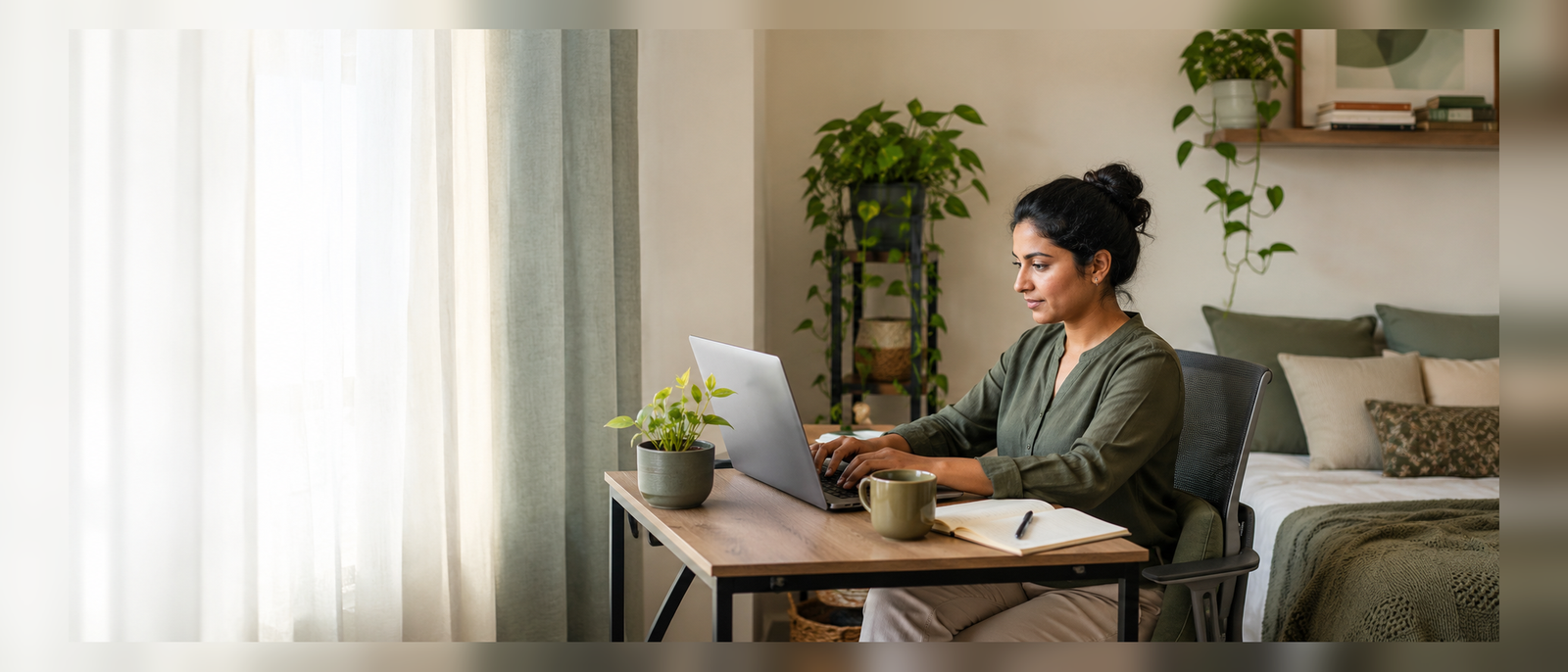
Creating green spaces indoors does not mean turning your home into a full plant project. For most home workers, the goal is much simpler: add a small amount of greenery that makes the workspace feel calmer, fresher and more human. Whether your desk is in a bedroom corner, dining area or shared room, one well-placed plant, shelf or planter can soften the space without adding more clutter or another complicated routine.
Tiny desk: use one small pot
Dark corner: choose hardy plants
Shared room: keep greenery contained
Pets or children: check safety first
Forgetful care: try self-watering
Cluttered desk: go vertical
Artificial greenery is allowed
Most Relevant Audience
This guide is for remote workers, home workers, freelancers, bloggers, creators, side hustlers, parents, carers and small business owners who want their workspace to feel less boxed in.
It is especially useful if your home office is also a bedroom corner, dining table, shared room or spare wall that has slowly been claimed by laptop life. You do not need an indoor jungle. You need the room to remember it is still a home.
Choose Your Green Setup By Workspace Problem
Tiny desk: use one small pot
If your desk is tiny, choose one small plant in a stable desktop planter or place greenery on a nearby shelf instead. Look for a pot around mug-sized, a contained shape and a liner or saucer that protects the desk.
The plant should soften the desk, not elbow your mouse for territory. If it takes away usable work space, move the greenery up, beside or behind the desk.
Dark corner: choose hardy plants or light support
If your workspace is gloomy, start with forgiving plants such as ZZ plant, snake plant or pothos, placed near the brightest available spot. Low light does not mean no light.
For very dark rooms, artificial greenery or a small grow light may be more realistic. Do not send a delicate plant into the botanical version of a basement job and hope for personal growth.
Shared room: keep greenery contained
If your workspace sits in a bedroom, living room or family area, use one plant stand, one shelf or one defined green corner. Contained greenery feels calmer than pots spreading across every shared surface.
Choose stable planters, secure stands and sensible pot sizes. Calm should not depend on a plant balancing bravely near a child, pet, cable pile or passing laundry basket.
Pets or children: check safety first
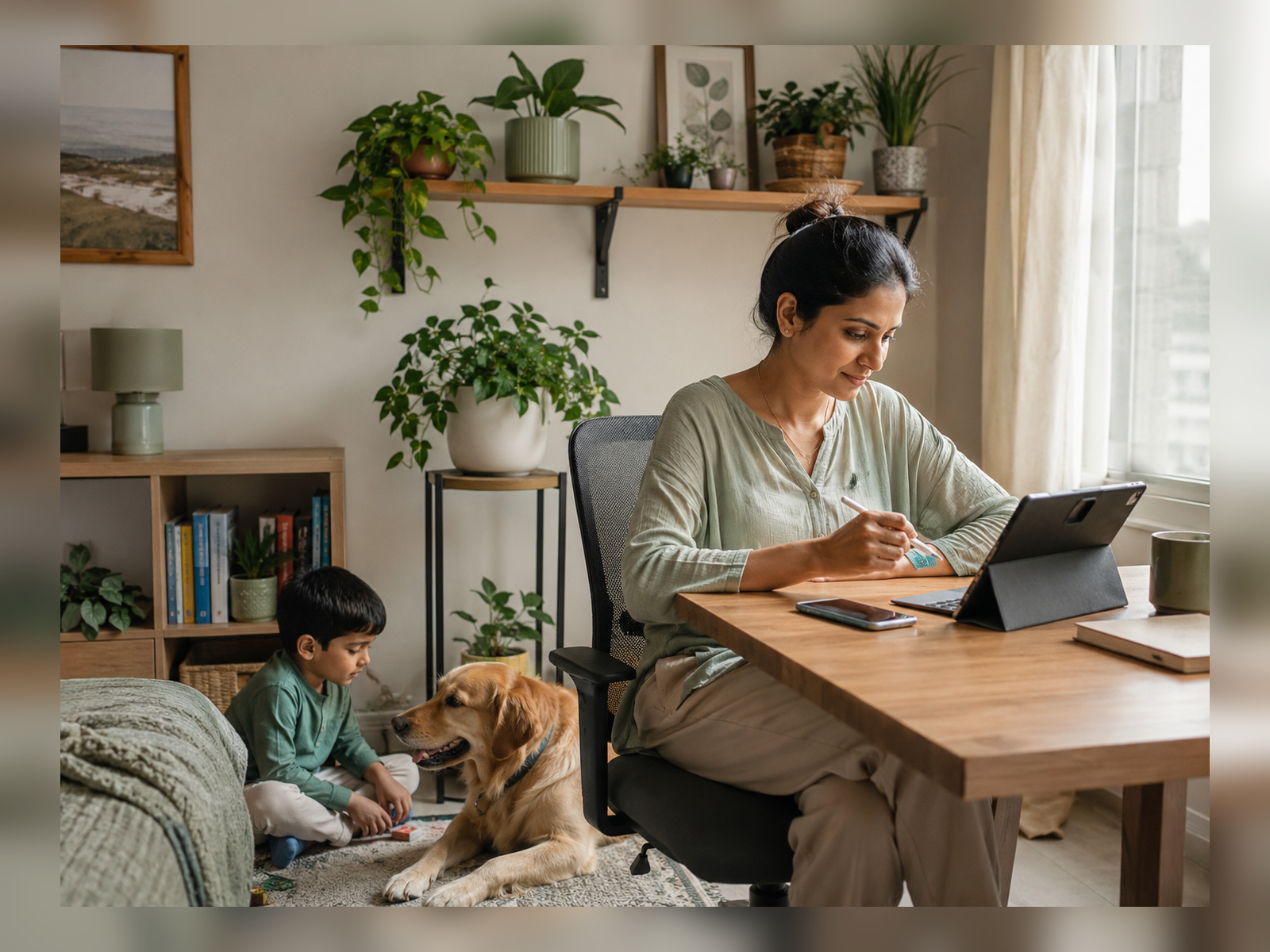
Some common houseplants can be unsafe if chewed by cats, dogs or children. Before buying, check plant suitability and place anything questionable out of reach.
Artificial greenery can be a sensible choice in busy households, darker corners or places where curious hands and paws are likely. It still softens the room visually, without adding soil drama.
Forgetful care: use low-effort helpers
If plant care is patchy, choose hardy plants, self-watering planters or a simple weekly check habit. The best setup is the one you can maintain during a normal week, not the week where you become mysteriously organised.
Self-watering pots can help, but they still need refilling, checking and suitable plants. They reduce effort. They do not turn you into a plant butler.
Cluttered desk: go vertical
If the desk already feels crowded, avoid adding more surface objects. Use wall shelves, plant stands, windowsills or narrow vertical storage instead.
Vertical greenery works well in small rooms because it adds softness without stealing your working area. The goal is a calmer workspace, not typing inside a shrub.
Indoor greenery works best when it fits the room, the light and your actual care routine. The goal is not plant perfection. The goal is a workspace that feels a little more alive without giving you another thing to fail at by Wednesday.
Best Indoor Greenery Options For Home Workers
Low-Maintenance Houseplants
Low-maintenance houseplants are the best starting point for most busy home workers. Snake plants, pothos, ZZ plants and spider plants are popular beginner choices because they are generally forgiving.
Buy based on light level, watering tolerance, mature size and household safety. Bright indirect light gives you more choice. Lower-light spaces need tougher plants. Pet or child safety should come before leaf shape, however pretty the product photo looks.
Desktop Planters
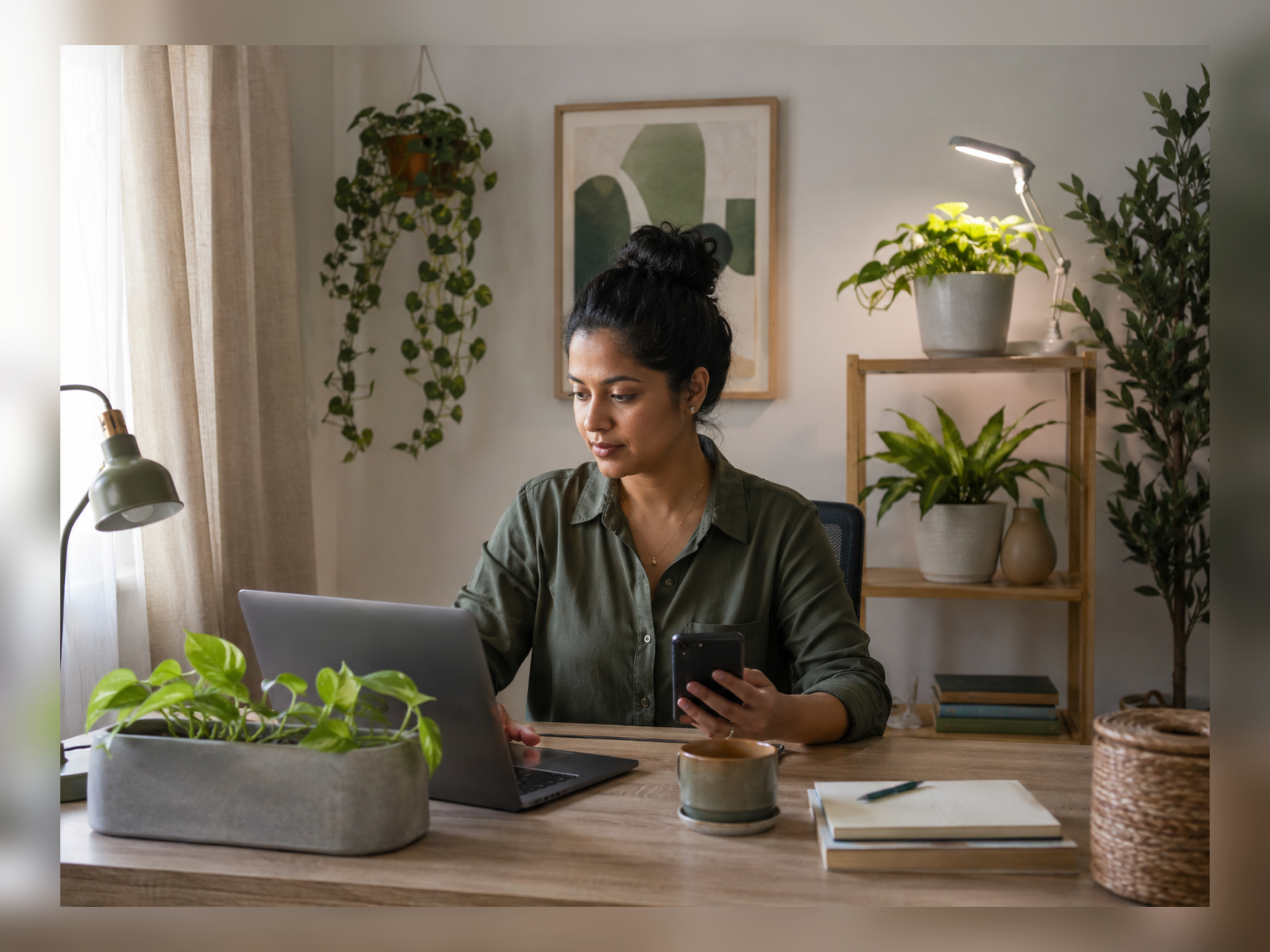
Desktop planters are best for small workspace greenery when the desk still has spare surface space. Look for a stable base, compact size, drainage or an inner nursery pot, and a saucer or liner that protects the desk.
Avoid oversized pots, crumbly soil near electronics or plants that need frequent misting beside a laptop. Your keyboard does not need a rainforest experience.
Plant Stands And Shelves
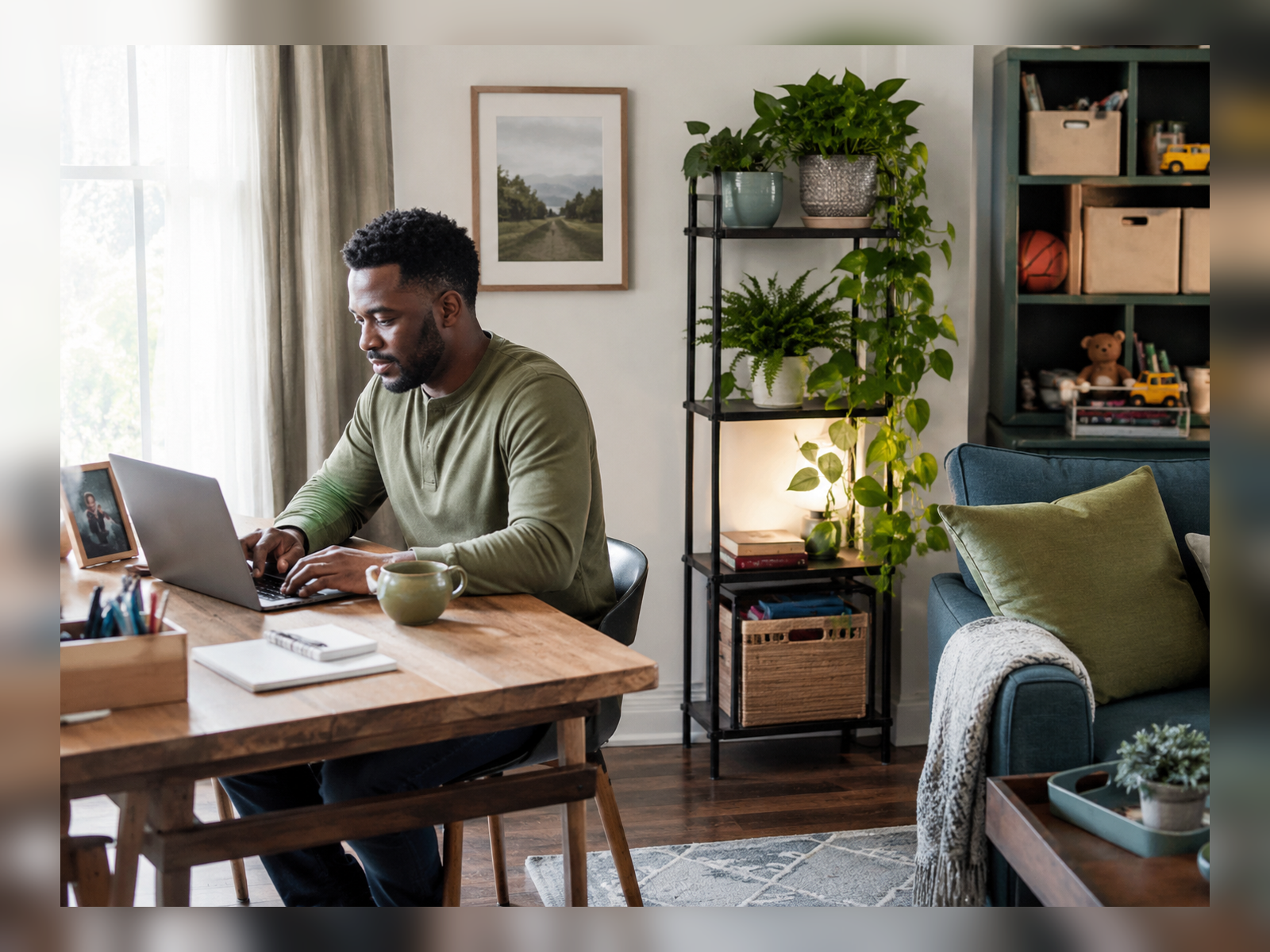
Plant stands and shelves are best for creating a green corner without using the whole desk. They help lift plants away from cables, papers and work surfaces.
Choose sturdy stands, secure shelves and pots that fit properly. Check height, footprint, weight capacity and whether watering will be easy. If reaching the plant feels like a weekly obstacle course, you will avoid it.
Small Grow Lights
Small grow lights are best for darker workspaces where natural light is limited. Look for compact size, timer settings, adjustable brightness and placement that supports the plant without glaring into your eyes or screen.
Also check cable routing, heat, clamp stability and whether the light makes the room feel harsh. A grow light should support greenery, not make your desk feel like interrogation has begun.
Artificial Greenery
Artificial greenery is best for very dark rooms, pet-sensitive homes, child-heavy spaces or people who know plant care will become another guilt source.
Choose realistic textures, simple shapes and easy-clean leaves. Avoid shiny plastic arrangements that make the desk look like a hotel lobby trying its best. The point is visual softness, not botanical accuracy under cross-examination.
Green Spaces Without Perfect Natural Light
Use the light you actually have
Before buying plants, watch the room for a day. Notice where light falls in the morning, afternoon and evening. Check whether the desk is bright, shaded, gloomy or hit by direct sun.
Plants need different conditions. Do not buy for the fantasy windowsill. Buy for the actual corner where the plant will live.
Choose forgiving plants first
If your room has lower light, start with forgiving plants rather than delicate varieties. Snake plants, ZZ plants and pothos are common beginner choices because they can cope better with imperfect spaces.
If the room is very dark, choose artificial plants, a grow light or a different location. There is no wellness prize for slowly upsetting a plant in the name of ambience.
Keep darker rooms simple
Darker workspaces do not need huge plant plans. One hardy plant near the brightest available spot may be better than several struggling plants scattered around.
A grow light can help, but only if it is safe, practical and easy to use. Check glare, cable mess, timer settings and placement before adding one beside your work setup.
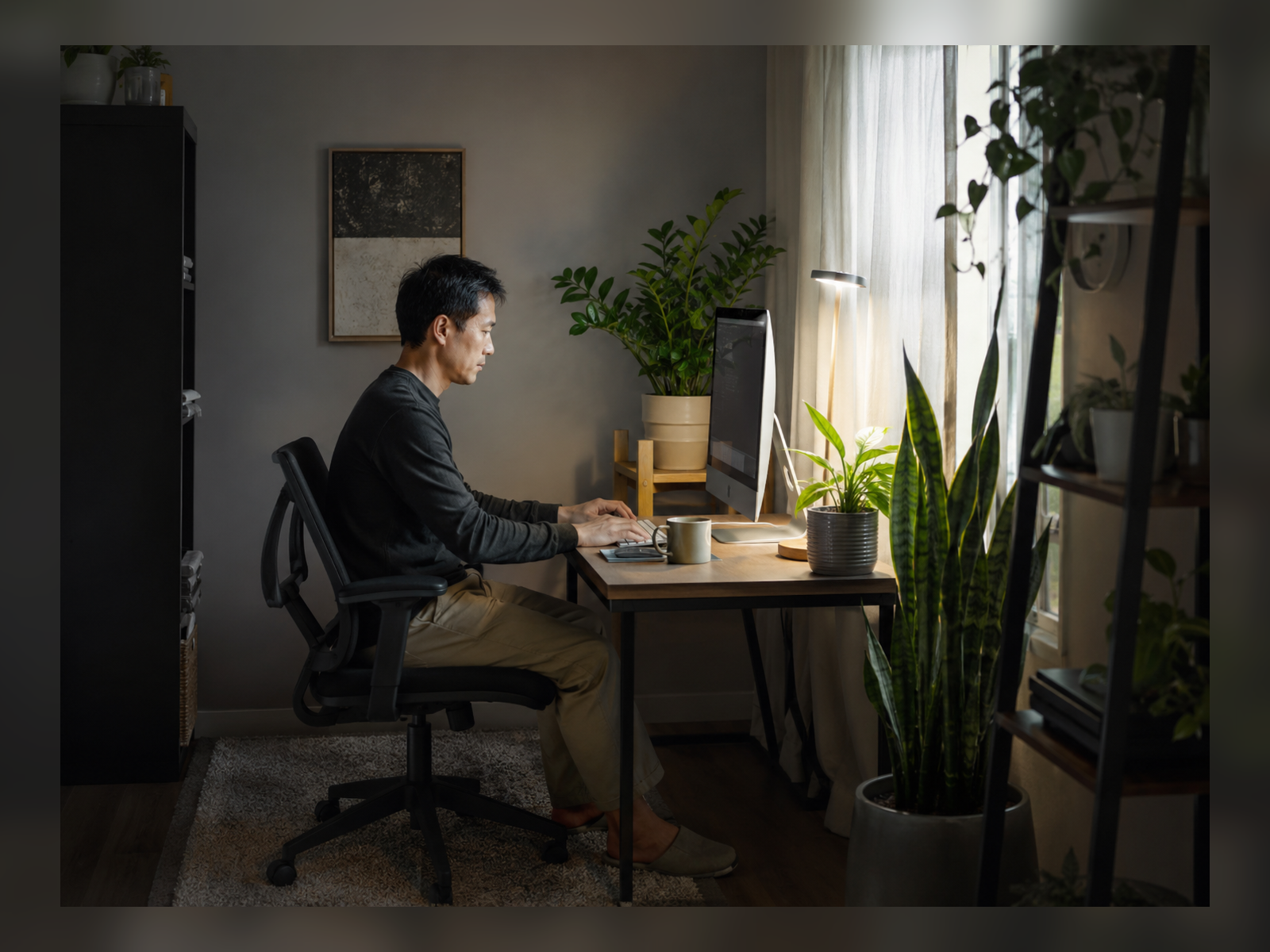
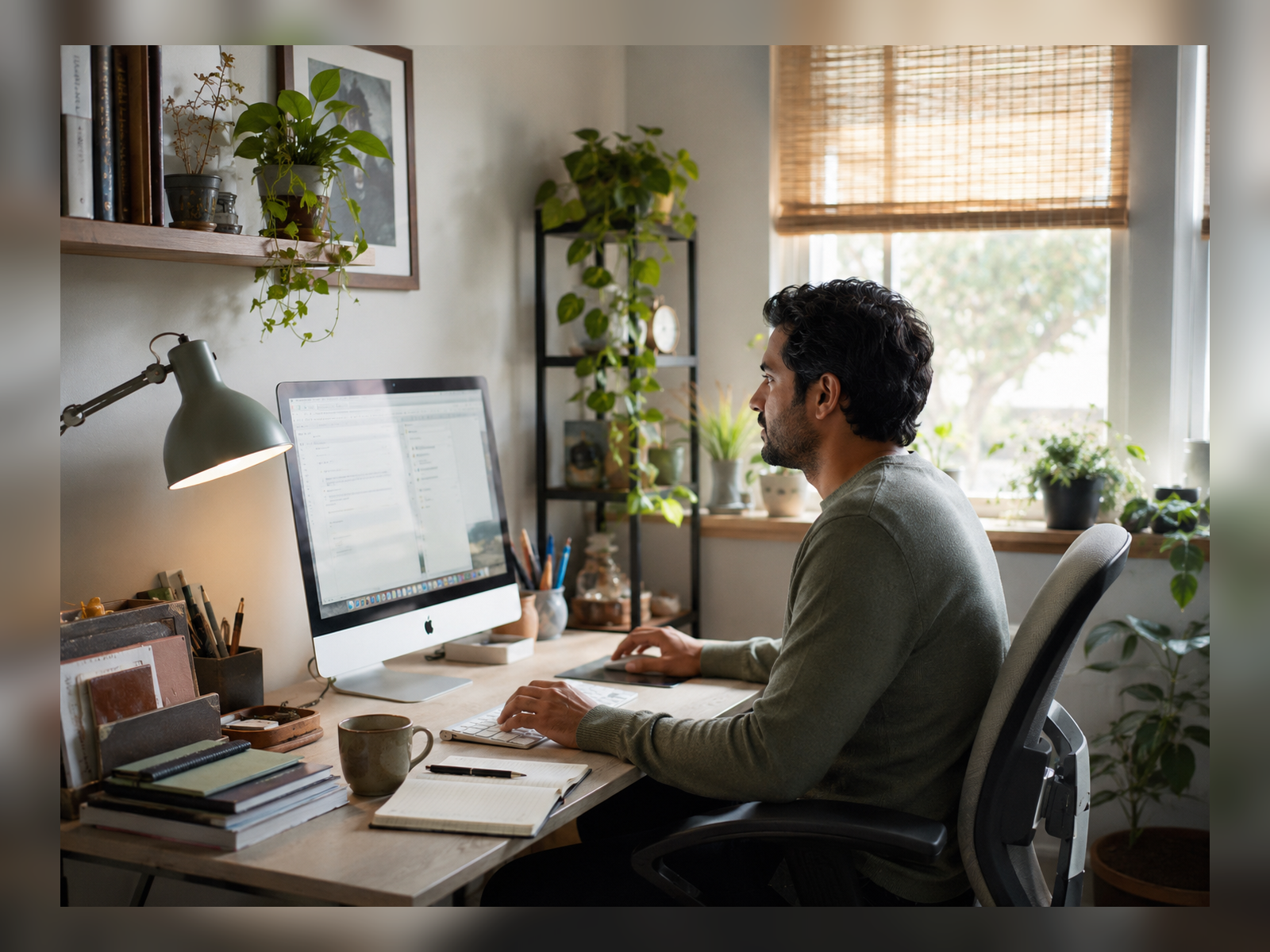
Best Greenery Setup For Different Workspaces
Best for tiny desks
Use one small desktop planter, a mini trailing plant on a shelf, or a wall-mounted planter near the desk. Keep the actual work surface clear.
A tiny desk needs breathing room. Greenery should soften the space, not make every task feel like negotiating with leaves.
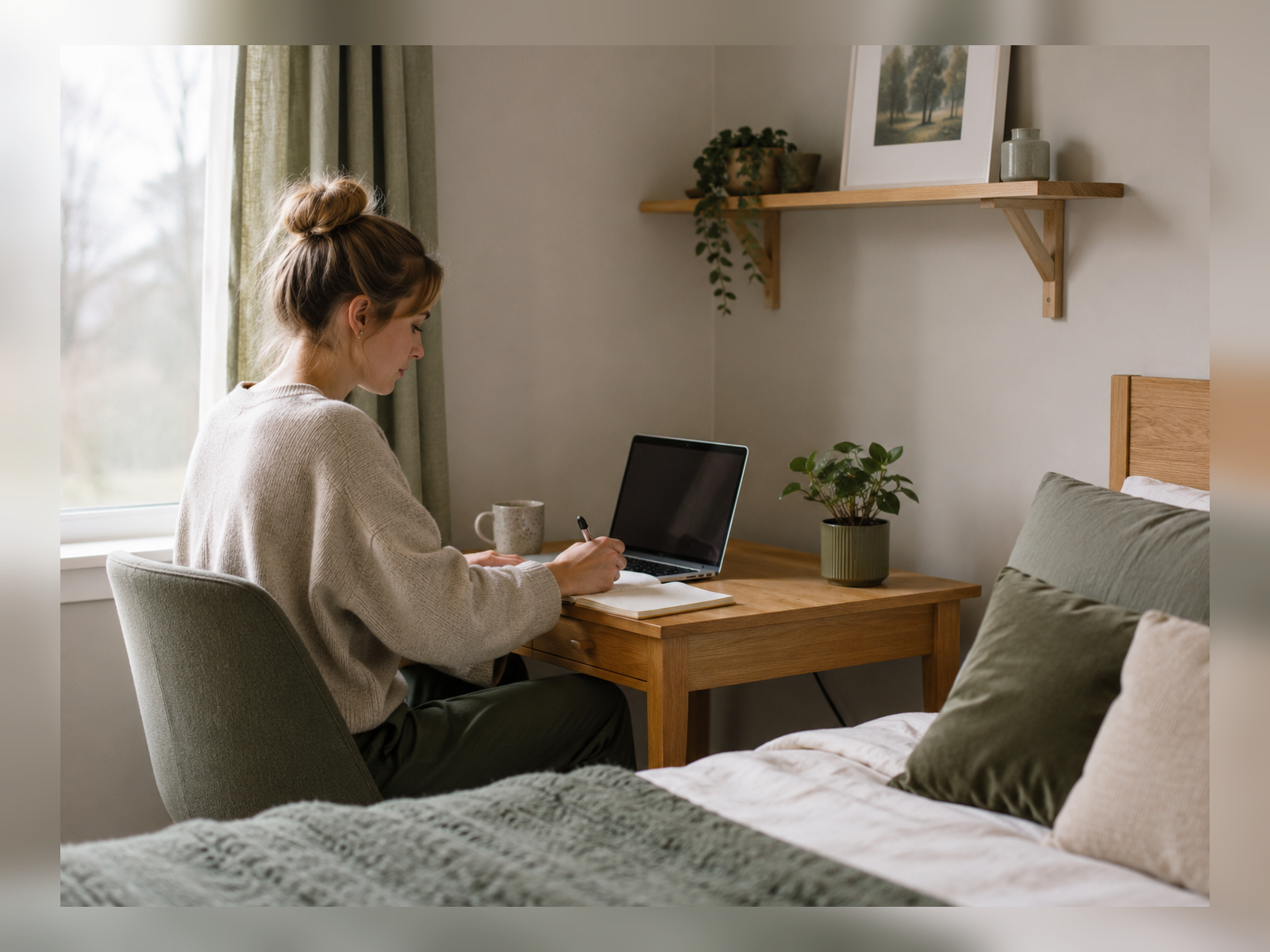
Best for bedroom offices
Choose a calm plant stand, small shelf or one plant near natural light. Bedroom workspaces need extra care because the room should still feel restful after work.
Avoid making the bedroom corner too visually busy. A few healthy leaves can help. A crowded plant display may become another thing your tired brain has to look at.
Best for shared rooms
Use contained greenery: one shelf, one stand or one defined plant corner. Shared rooms work better when plants have a clear place and do not spread across family surfaces.
Choose hardy plants, artificial greenery or stable pots, especially if children, pets or busy traffic move through the room. Calm should not be balanced on a wobbly stool.

Best for dull corners
A plant stand, tall hardy plant, artificial plant or small grow light can make a dull corner feel more intentional. This is useful when your workspace feels temporary, boxed in or forgotten.
Add one plant first. You are creating a calmer work zone, not auditioning the corner for a garden centre.
Best for forgetful plant owners
Use low-maintenance plants, simple watering reminders or self-watering planters. Keep care visible and easy.
Place the plant somewhere you notice it naturally. If it lives behind a monitor, under papers or in a corner you avoid, it may have to develop survival skills no plant requested.

Common Indoor Plant Mistakes
Buying too many plants at once
The fastest way to make indoor greenery stressful is to buy several plants before learning what your room and routine can handle.
Start with one or two. Notice light, watering, placement and whether you enjoy caring for them. A calm workspace does not require seven dramatic leaves silently judging you from the windowsill.
Ignoring light conditions
A plant that loves bright light may struggle in a gloomy corner. A plant that prefers indirect light may suffer in harsh direct sun.
Check the plant’s basic light needs before buying. Indoor greenery feels calmer when the plant is not visibly losing a battle with the room.
Watering with enthusiasm
Overwatering is a common beginner problem. Many plants prefer drying slightly between watering rather than being treated like they are training for a swamp.
Check soil moisture before watering. Use pots with drainage where possible. Love is not measured in litres, which is inconvenient but true.
Letting plants clutter the desk
Greenery should not make your work surface harder to use. If plants crowd your keyboard, notebook, cables or coffee, the setup is creating friction.
Use shelves, stands or windowsills instead. Your desk needs enough space for work, not a full committee of pots.
Placing plants too close to electronics
Plants, soil, water and electronics need sensible boundaries. Avoid placing thirsty plants, misting plants or unstable pots beside laptops, monitors, sockets or cable-heavy areas.
Use trays, stable planters and careful watering. A calmer workspace should not come with the thrilling possibility of watering your keyboard.
Forgetting pets and children
Some popular houseplants can be unsafe if chewed by pets or children. Always check plant safety before placing greenery within reach.
Also think about tipping risk, soil spills and curious hands. A calming green space is less calming when the plant has been enthusiastically redistributed across the floor.
FAQ
How do I create a green space indoors?
Start with one easy plant in a place you see often. Match it to the light in the room, use a stable planter and avoid overcrowding your desk.
You can build from there with shelves, a plant stand, self-watering planters, artificial greenery or a small grow light if the room needs extra support.
What are the best indoor plants for beginners?
Good beginner indoor plants often include snake plants, pothos, ZZ plants and spider plants because they are generally forgiving and low-maintenance.
Always check light needs, watering guidance and pet or child safety before buying. Beginner-friendly does not mean suitable for every home.
Can plants make a home office feel calmer?
Plants can make a home office feel calmer, softer and more pleasant by adding colour, texture and a reminder of nature.
They should not be treated as a cure for stress or poor working conditions. Think of greenery as a supportive workspace upgrade, not the whole wellness plan.
What plants are good for low-light rooms?
Snake plants, ZZ plants and pothos are often popular for lower-light indoor spaces, although all plants still need some light.
If a room is very dark, consider moving the plant closer to a window, choosing artificial greenery or using a small grow light.
Are self-watering planters worth it?
Self-watering planters can be worth it if you forget watering or have an inconsistent schedule. They can make plant care easier for busy home workers.
They are not fully automatic. You still need to refill the reservoir, check soil moisture and make sure the plant suits that watering style.
How do I add greenery without cluttering my workspace?
Choose one small desk plant, use vertical shelves, place plants on stands or create one defined green corner.
Keep your main work surface clear. The best indoor greenery makes the workspace feel calmer, not more crowded.
Final Verdict
Creating green spaces indoors works best when it stays manageable. One low-maintenance plant, a small desktop planter, a narrow shelf, a self-watering pot, artificial greenery or a grow light in a darker room can make a home workspace feel softer and less dominated by laptop life.
You do not need an indoor jungle. Choose greenery that fits your light, space, care routine and real household. The best plant setup is the one that makes the room feel more human without adding another chore to the day.


