



Host a Virtual Halloween Party: Audio,…

20 Minimalist Halloween Nail Ideas for…

Can Free Affinity Help You Build…

12 Lower-Sugar Halloween Treat Swaps Worth…

Can Hostinger AI Builder Launch a…

A 5-Step Screen-Free Autumn Reading Ritual…

Plug-In Solar Panels UK: Are They…

15 Last-Minute Zoom Halloween Costumes for…

Meta One Explained: Is the Subscription…

10 Low-Fuss Dog Halloween Ideas: Comfort…

Plaud One Explained: Can AI Earbuds…

9 Gothic Dinner Table Ideas for…

Namecheap vs Dynadot

7 UK Ghost Tours and How…

Convertkit Vs Beehiiv

Do You Really Need a £420…

Bluehost vs Siteground

15 Gentle Spooky Autumn Books to…

Namecheap review

How to Remove Halloween Face Paint…
Before paying for AWeber, it helps to understand why many creators now compare it closely with ConvertKit. AWeber still works reliably for newsletters, signup forms, broadcasts, and simple follow-up. The issue is that creator businesses have changed. Bloggers sell digital products, writers run paid newsletters, and coaches use lead magnets with onboarding sequences. That shift makes workflow comfort, subscriber organisation, and creator-friendly automation much more important.
Quick Overview
In this comparison you will learn:

Email marketing comparison supporting creators and newsletter workflows.
Helpful next reads: ConvertKit review
The Biggest Difference Between ConvertKit And AWeber
ConvertKit Feels Built Around Modern Creators
ConvertKit supports newsletters, lead magnets, digital products, subscriber journeys, and audience-focused businesses without making daily publishing feel overly corporate or clunky.
AWeber Feels More Traditional
AWeber behaves more like a classic email marketing tool focused on newsletters, subscriber lists, signup forms, templates, broadcasts, and basic automation.
Daily Comfort Matters More Than Feature Lists
A dashboard affects consistency, motivation, subscriber organisation, and how likely users are to keep publishing during busy weeks. That matters more than beginners often expect.

The Better Tool Is The One You Keep Opening
ConvertKit vs AWeber becomes easier to judge once creators stop chasing marketing power and ask which platform they would actually enjoy using after a long workday.

Software Must Match The Real Workflow
A blogger may watch advanced marketing tutorials and assume every serious business needs heavy infrastructure immediately. In reality, a weekly newsletter, one welcome sequence, one free download, sensible tagging, and one digital product path may be enough for a long time. That is why workflow fit matters more than the most impressive-looking feature list.
Explore more insights: Email marketing automation explained
ConvertKit Features
Newsletter Publishing Feels Cleaner
ConvertKit appeals to creators wanting email publishing that feels calmer, more focused, and less crowded than older marketing systems.

Subscriber Tagging Feels Practical
Subscribers can be organised by interests, downloads, behaviour, content preferences, and audience journeys without constantly maintaining complicated list structures.

Creator Monetisation Feels Natural
ConvertKit works especially well for bloggers, educators, writers, coaches, and digital product sellers building audience-led income streams.

Automation Feels Easier Following
Welcome sequences and subscriber journeys often feel easier understanding visually compared with heavier marketing platforms built for larger teams.

AWeber Features
Broadcast Emails Still Work Reliably
AWeber still handles newsletters, updates, announcements, and subscriber broadcasts reliably for traditional email marketing routines.

Templates Help Beginners Start Faster
Built-in templates, signup forms, and landing pages help new users avoid building everything manually from scratch during early setup.

Simple Automation Covers Basic Follow-Up
AWeber comfortably handles welcome emails, lead magnet delivery, subscriber follow-up, basic automation, and newsletter scheduling without feeling too technical.
The Platform Feels Less Creator-Native
Some users eventually notice AWeber still feels more traditional compared with platforms designed around modern publishing, products, and subscriber journeys.
Pricing Pressure Feels Different Once Audiences Grow
Email marketing pricing often feels reasonable at the start. The difference appears once subscriber numbers increase and businesses begin paying monthly for features they barely use. ConvertKit can feel easier to justify for audience-led businesses because the platform aligns naturally with newsletters, digital products, tagging, and creator-style publishing.
Frequently read together: AWeber review
Which Platform Fits Different Users Best?
Bloggers And Newsletter Creators
ConvertKit usually fits creators wanting cleaner subscriber organisation, calmer publishing workflows, and easier audience management.
Traditional Small Businesses
AWeber still works well for businesses mainly sending newsletters, updates, promotions, and simple subscriber communication.
Digital Product Creators
ConvertKit generally feels stronger for creators building lead magnets, audience funnels, courses, downloads, and creator-led monetisation systems.

Beginners Avoiding Dashboard Fatigue
ConvertKit vs AWeber comparisons become clearer once users experience how much dashboard comfort affects publishing consistency long term.
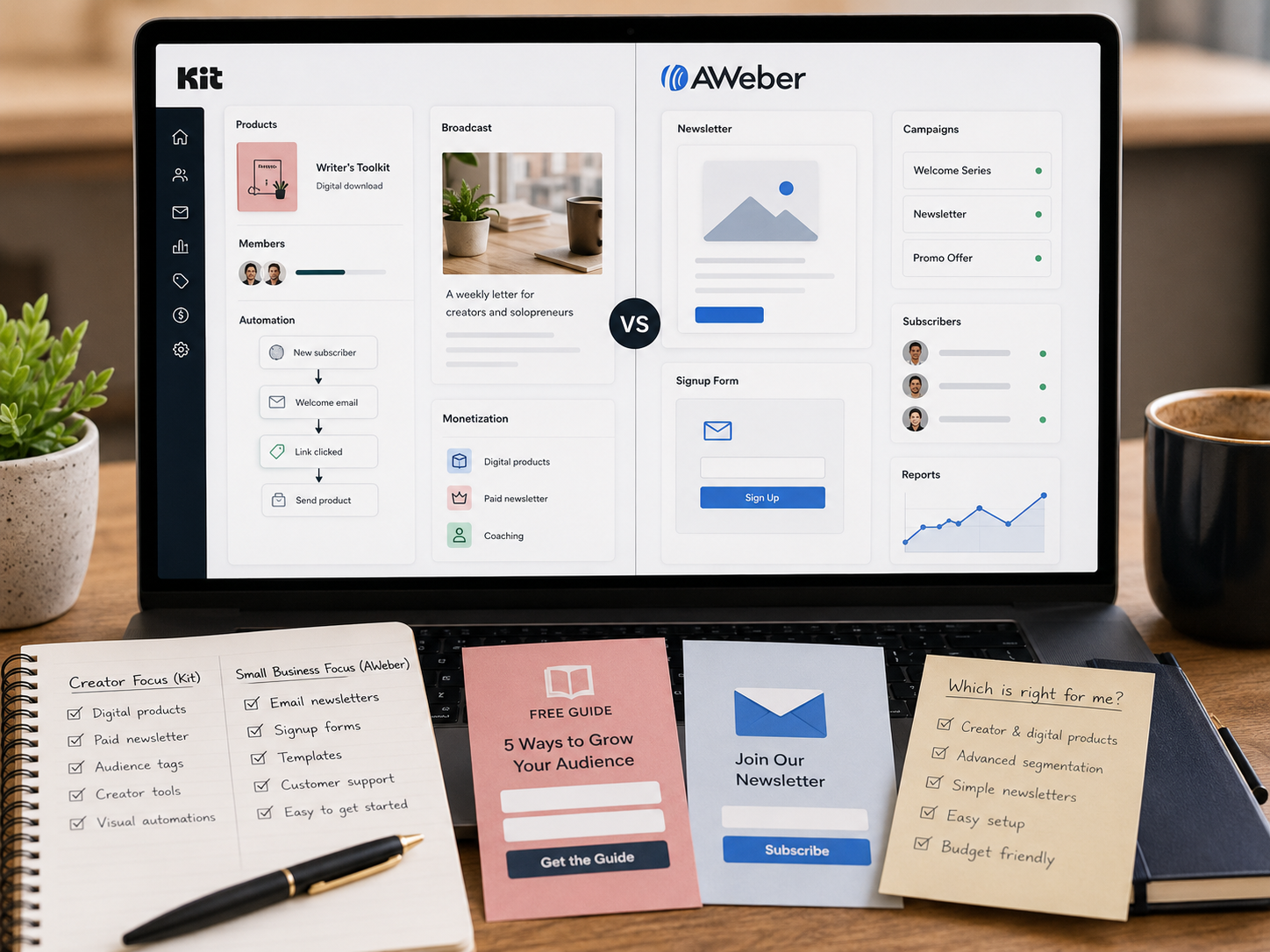
Pros And Cons Of ConvertKit And AWeber
ConvertKit Pros
ConvertKit Cons
AWeber Pros
AWeber Cons
FAQs
Is ConvertKit better for creators?
Usually yes. ConvertKit strongly suits bloggers, writers, educators, coaches, and digital product creators wanting cleaner workflows.
Is AWeber still worth paying for?
Yes, especially for businesses wanting reliable newsletters, simple automation, and traditional email marketing functionality.
Why are creators switching toward ConvertKit?
Many creators want lower dashboard friction, cleaner publishing workflows, easier subscriber organisation, and tools built around audience-led businesses.
Which platform feels easier using daily?
ConvertKit often feels calmer and easier maintaining during busy workweeks, especially for newsletter-focused businesses.
Should beginners avoid AWeber completely?
Not necessarily. AWeber still works reliably. The better question is whether the workflow matches the type of business being built.
Final Verdict
Before paying for AWeber, creators should honestly evaluate how they want daily email marketing to feel long term.
AWeber still works reliably for newsletters, subscriber broadcasts, signup forms, and straightforward communication. The platform is not broken. The issue is that many modern creator businesses now expect tools that feel cleaner, calmer, and more naturally connected to audience-led publishing.
That is where ConvertKit usually feels stronger.
The platform aligns more naturally with bloggers, writers, educators, newsletter creators, and digital product businesses wanting lower friction while still building meaningful audience relationships consistently. The better choice depends less on feature quantity and more on which platform the business will realistically keep using comfortably once workdays become stressful.


