



The Best Lighting for Darker Autumn…

Make Your Home Cosier Without Turning…

Do You Really Need a £420…

Anti-Optimisation Wellness: Can a Sunrise Lamp…

Sunrise Lamps Explained: What They Actually…

Lifesum Review UK: Is Premium Worth…

Garmin CIRQA Review: Screen-Free Tracking Without…

Garden Gatherings – Summer Is The…

Portable Outdoor Speakers for Garden Offices

Outdoor WiFi Extenders For Garden Offices

Portable Pools For Home Workers This…

Best Polarised Sunglasses
You want something warm for lunch, with only a few minutes between calls. The choice here is a soup maker or the saucepan and hand blender you may already own.
We compare them on effort, space, batch size and cost, then finish with if/then pointers. How often you make soup matters more than which method is better.
Quick Overview
- Which? says soup makers cook raw vegetables, but you chop first.
- Which?: a pan and hand blender do the job for occasional soup.
- Which? says the soup makers it covers start from £40.
- Making soup weekly: £1.95-£4.50 a year (Which?, March 2026 cap); no pan figure.
- FSA advises cooling, portioning and reheating only once.
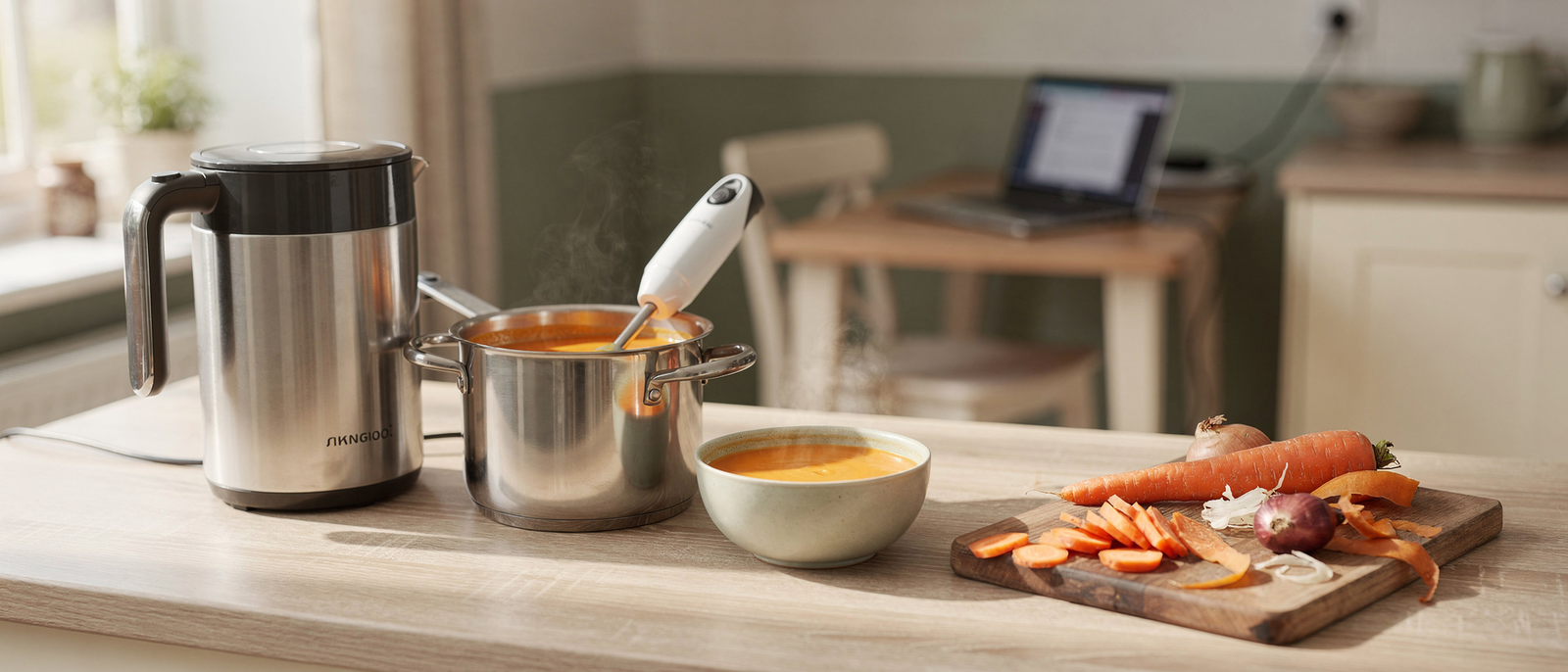
Prep, hands-off time and washing up
Soup maker
Which? says soup makers have a heating element that cooks raw vegetables, but you need to roughly chop them first. So prep is not zero: you still peel and chop, you just skip the standing at the hob.
Once the jug is loaded and switched on, the cooking is hands-off, which suits a day of back-to-back calls. For washing up, the general picture is one jug and lid, though how easy that is depends on the model.
Saucepan and hand blender
With a saucepan you chop the same vegetables, then soften them and simmer them with stock on the hob. A simmering pan is usually checked and stirred, while a soup-maker jug cooks on its own. The sources give no timings, so this is general reasoning rather than a measured difference.
You blend in the pan, so the parts to wash are the pan and the blender head. The sources do not compare washing up.
The hand blender side: smoothness and pan care
Blending straight in the pan
Which? says that if you do not make soup regularly, a saucepan and a hand blender will do the job. Woman&Home adds that stick blenders are helpful for making soup straight in the saucepan, so there is no extra appliance to unpack.
For a lunch you make now and then, that is a fair argument for starting with the kit you already own.
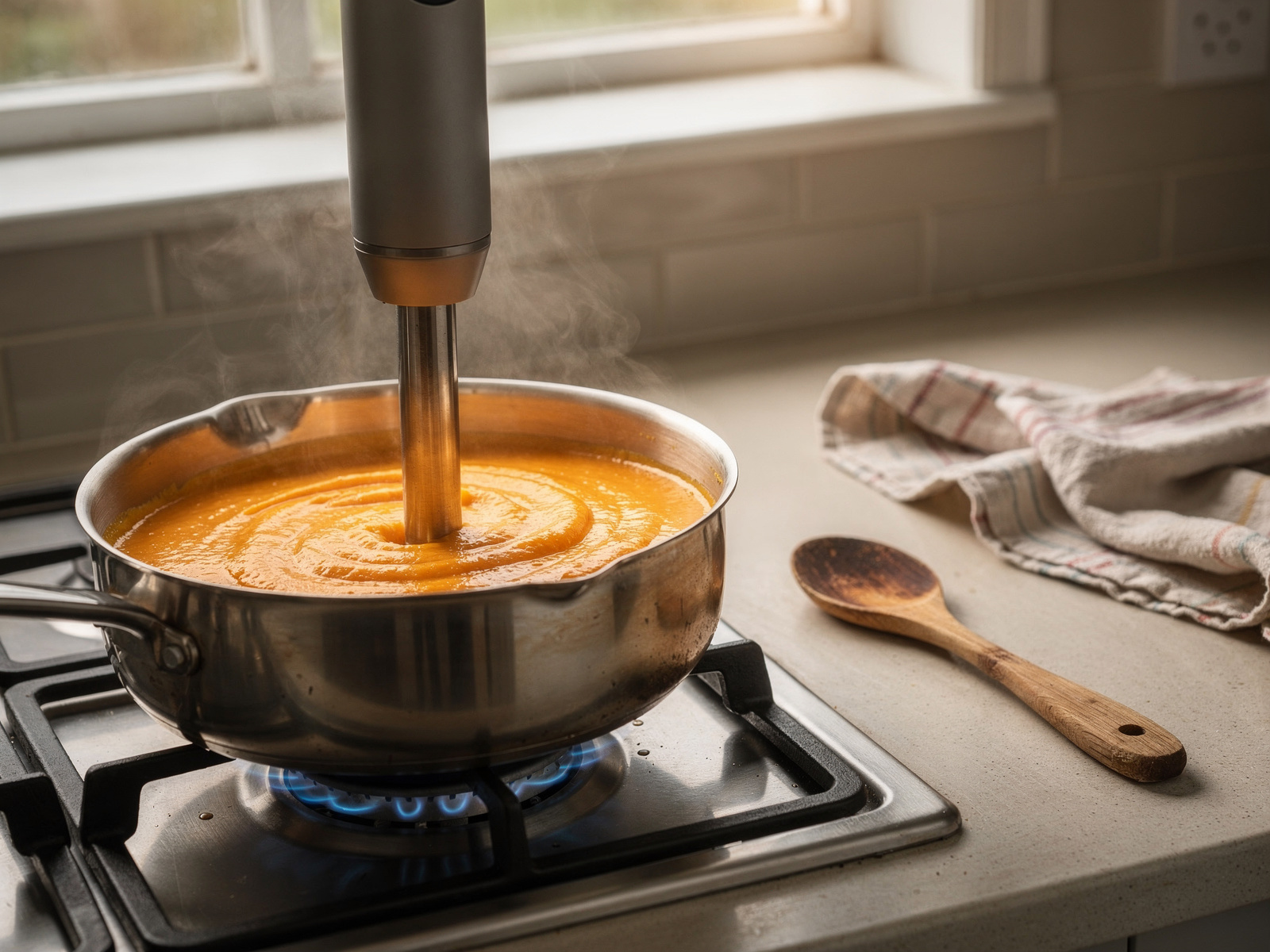
Smoothness
The trade-off is texture. Woman&Home says stick blenders do not always give the same super-smooth results as other soup-making methods.
If you like a very smooth soup, that is worth knowing before you rely on one. If a chunkier, more rustic soup suits you, it matters much less.
Pan care checklist
Woman&Home also says stick blenders can scratch non-stick pans. Before you blend, run through this:
- Check the pan's care instructions for non-stick coatings.
- Use a deep pan so the soup stays inside it.
- Blend in short bursts and check the texture as you go.
Space and batch size
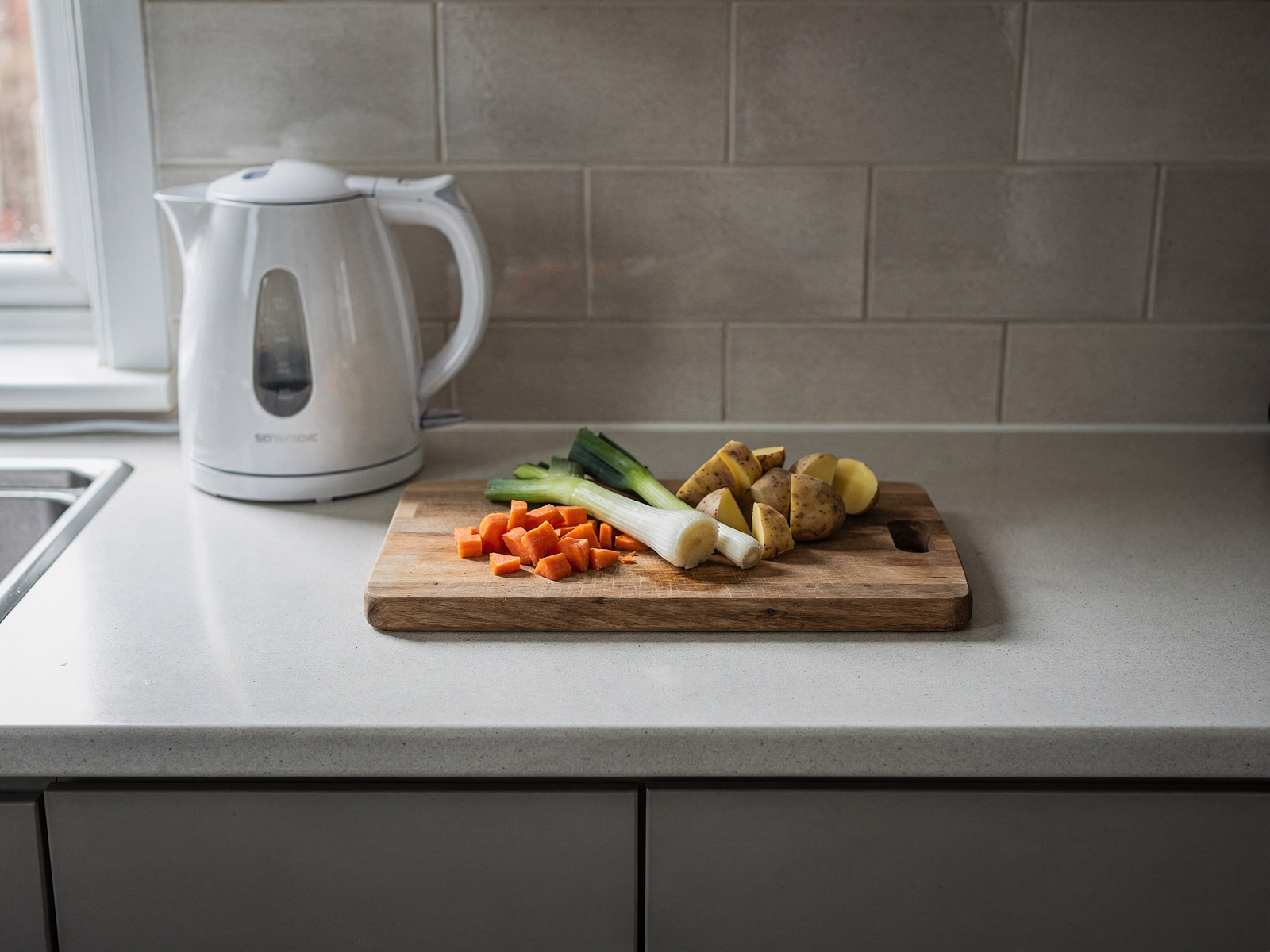
An extra appliance on the worktop
A soup maker is another appliance that needs a spot on the counter or a cupboard to live in. If you already own a pan and hand blender, there is nothing extra to store.
If your worktop already holds a kettle and a coffee machine, that space is worth weighing before you buy.
Capacity: what Which? lists
Which? lists a Panasonic soup maker with a 500ml to 1,200ml capacity and a Salter model with a 1,300ml to 1,600ml capacity. These are example models, so check the product page for any specific one.
A big saucepan can generally make a larger batch than those capacities, which matters if you freeze soup.
Worked example (hypothetical)
Say each lunch is a 500ml portion and you want four in the freezer. That is 2,000ml, above the top of both Which?-listed ranges, so you would need two soup-maker batches or one large pan.
Say instead you only want a portion or two for the next couple of days. Then a fixed, smaller batch is no problem at all.
Cost to buy and run
Buying
Which? says the soup makers it covers start from £40, and its Best Buys include a Great Value option under £45. That was checked on 20 October 2026, and prices can change.
A saucepan and hand blender cost nothing extra if you already own them, which is the clearest difference between the two routes.
Running a soup maker
Which? says that making soup once a week in a soup maker would cost between £1.95 and £4.50 of electricity a year under the March 2026 energy price cap of 24.67p per kWh.
That is Which?'s illustration, not personal advice. No like-for-like figure for a saucepan was found, so it does not show that either method is cheaper to run.
The current electricity rate
MoneySavingExpert reports that under the Ofgem price cap from 1 October to 31 December 2026 the electricity unit rate is 26.32p per kWh, checked on 20 October 2026.
It is an average cap rate that varies by region and tariff and changes quarterly. It has moved on from the March figure above, so do not mix the two into one calculation.
A hob runs on gas or electric
Hobs run on gas or electricity, so unit rates differ. The Energy Shop gives the cap's gas unit rate for the same period as around 7.97p per kWh, checked on 20 October 2026, again an average.
No hob cost per batch is calculated here, because the sources do not support a fair figure.
How to read the cost figures
The sources give a small running-cost illustration for a soup maker (Which?) and no pan figure, so the purchase price and the space it takes are the clearer differences.
Soup maker: the trade-offs at a glance
Pros
- A heating element cooks raw vegetables for you, per Which?
- The cooking is hands-off once the jug is loaded.
- A smaller fixed batch can suit one or two lunches.
- The washing up is generally one jug and lid, depending on the model.
Cons
- It is an extra purchase, from £40 for the models Which? covers.
- You still need to roughly chop the vegetables first.
- Listed capacities of about 500ml to 1,600ml mean smaller batches than a big pan.
- It needs counter or cupboard space.
Cooling, storing and reheating leftover soup
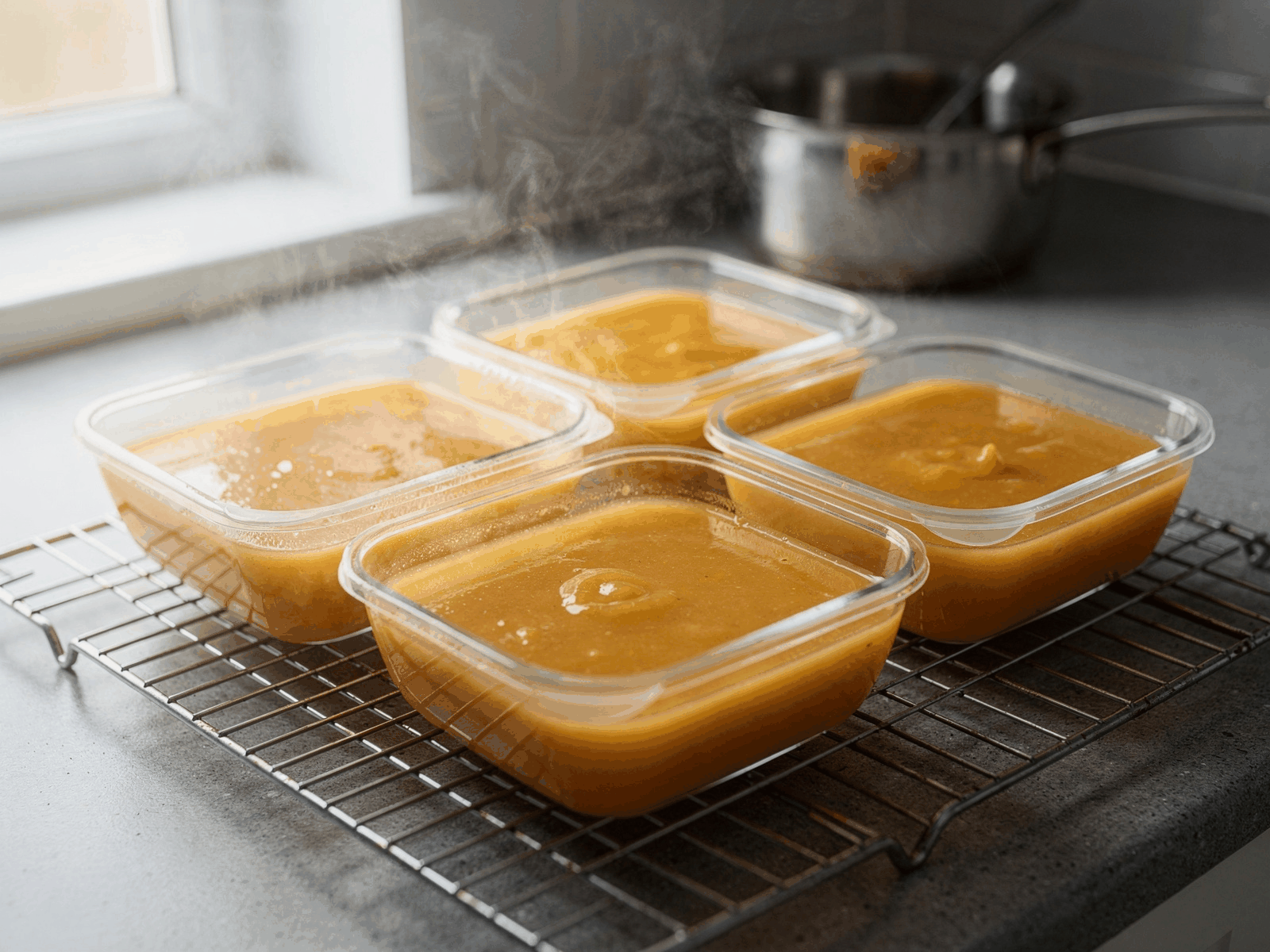
Cool it first
The Food Standards Agency advises cooling cooked food and putting it in the fridge within one to two hours.
This applies equally whether the soup came from a pan or a soup maker.
Divide into smaller portions
The FSA advises dividing food into smaller portions so it cools faster. If you want to compare container types, our container guide covers them.
Eat within 48 hours or freeze
The FSA advises eating leftovers within 48 hours or freezing them.
Reheat only once
An FSA blog from September 2026 says that whether you use the microwave, hob or oven, you should only ever reheat food once. So freeze in single-lunch portions and reheat only what you will eat.
Watching salt in stock cubes
Stock cubes and salt
This applies to both methods. The NHS advises adults to eat no more than 6g of salt a day, which is around one teaspoon. The British Nutrition Foundation's Eatwell tips suggest going for reduced-salt versions of stock cubes.
It is worth reading the label, since a cube makes up the base of many a quick soup.
More vegetables
The British Nutrition Foundation also suggests choosing soup with more vegetables. The NHS Eatwell Guide advises at least 5 portions of a variety of fruit and vegetables a day.
Neither method is claimed to be healthier or to keep more nutrients than the other.
Who each method suits: if you... then...
If you make soup only occasionally
Then start with the saucepan and hand blender. Which? says they will do the job if you do not make soup regularly, and you avoid buying and storing another appliance.
If you want big freezer batches or have a small kitchen
Then the pan route is likely to suit better. Soup-maker capacities in the Which? examples run from about 500ml to 1,600ml, and a big pan can generally make more. It also avoids another appliance on the worktop.
If you make soup often and have call-heavy days
Then a soup maker is a reasonable extra appliance. The cooking is hands-off once you have chopped, and a smaller fixed batch can suit one or two lunches. Weigh that against the buying price and the space it needs.

If you carry soup to your desk
Then pack single portions in a leakproof lunch container and reheat only once. If you want ideas for the rest of the week, our meal-prep guide is a good next step.
Frequently asked questions
Is a soup maker worth it if I rarely make soup?
Which? says that if you do not make soup regularly, a saucepan and a hand blender will also do the job. Starting with the kit you own is a fair first step. A soup maker makes more sense if you will use it often.
Do I still have to chop vegetables with a soup maker?
Yes, roughly. Which? says soup makers have a heating element that cooks raw vegetables, but you need to roughly chop them first. The saving is in the cooking, which is hands-off, rather than in the prep.
Can a stick blender damage my pan?
Woman&Home says stick blenders can scratch non-stick pans. Check your pan's care instructions before blending in it, and use a deep pan so you can blend gently and keep the soup inside.
How long can I keep leftover soup?
The Food Standards Agency advises eating leftovers within 48 hours or freezing them. Cool the soup and get it into the fridge within one to two hours, ideally divided into smaller portions so it cools faster.
Can I reheat soup more than once?
The FSA says you should only ever reheat food once, whether you use the microwave, hob or oven. Portion the soup before freezing so you only reheat what you plan to eat.
Verdict: match the method to how often you make soup
Decide by how often you make soup. If it is occasional, a saucepan and hand blender are a sensible place to start. If it is frequent, a soup maker is a reasonable extra appliance. The biggest reservation is cost and size: Which? says soup makers start from £40, and its examples hold about 500ml to 1,600ml, smaller than a big pan. Next step: work out your usual batch size and check your pan's care instructions.



