



Plug-In Solar Panels UK: Are They…

Lifesum Review UK: Is Premium Worth…

Meta One Explained: Is the Subscription…

Garmin CIRQA Review: Is Screen-Free Tracking…

Plaud One Explained: Can AI Earbuds…

Garden Gatherings – Summer Is The…

Namecheap vs Dynadot

Portable Outdoor Speakers for Garden Offices

Convertkit Vs Beehiiv

Outdoor WiFi Extenders For Garden Offices

Bluehost vs Siteground

Portable Pools For Home Workers This…

Namecheap review

Best Polarised Sunglasses

Cloudways Vs WP Engine

Cooling A Garden Office During Summer

Dropshipping Explained

Best Portable Power Stations For Garden…

Email Subject Lines That Improve Open…

Outdoor Laptop Screens And Anti-Glare
The best office desks for small spaces are not always the narrowest desks you can physically squeeze into a room. A tiny desk can still make work feel awkward if it has no depth, no cable route, no storage and nowhere sensible for your elbows to exist. The better question is this: which desk gives you enough working room without making the room feel smaller, messier or permanently taken over by your laptop?
Best simple compact desk
Best compact sit-stand option
Best fold-away desk solution
Best clutter-control desk type
Best awkward-corner space saver
Measure before buying
Posture matters in small spaces

Most Relevant Audience
This guide is for remote workers, home workers, freelancers, bloggers, creators, side hustlers, parents, carers and small business owners who need a proper desk in a room that is already doing too many jobs.
It is especially useful if you work from a bedroom corner, dining-room edge, hallway nook, shared room or small spare space where every piece of furniture has to justify its existence.
What Makes A Desk Work In A Small Space
Enough depth for real work
A small desk still needs enough depth for your laptop, keyboard, notebook, mouse and hands.
Too shallow, and every task feels cramped. You may technically have a desk, but your posture starts making quiet complaints by lunchtime. Measure the working surface, not just the room gap.
A stable surface
Small desks can sometimes feel light, narrow or wobbly.
That matters if you type heavily, use a monitor, lean on the desk or take video calls. A compact desk should still feel stable enough for daily work, not like a temporary table with ambition.
Cable control
Cables make small spaces feel messy very quickly.
Look for a cable hole, back gap, shelf space or enough room to route chargers neatly. A desk that hides or guides cables can make a tiny workspace feel calmer without needing much extra furniture.
Storage that suits your work
Storage is useful only if it matches what you actually keep near you.
A drawer can be brilliant for notebooks, chargers and pens. Too much built-in storage can make the desk bulky. The goal is to reduce clutter, not buy a small filing cabinet with a keyboard on top.
Room for a proper chair
The desk has to work with your chair, not just the wall.
Check legroom, desk height and whether a chair can slide underneath. A compact desk becomes frustrating if the chair sticks out permanently and turns the room into an obstacle course.
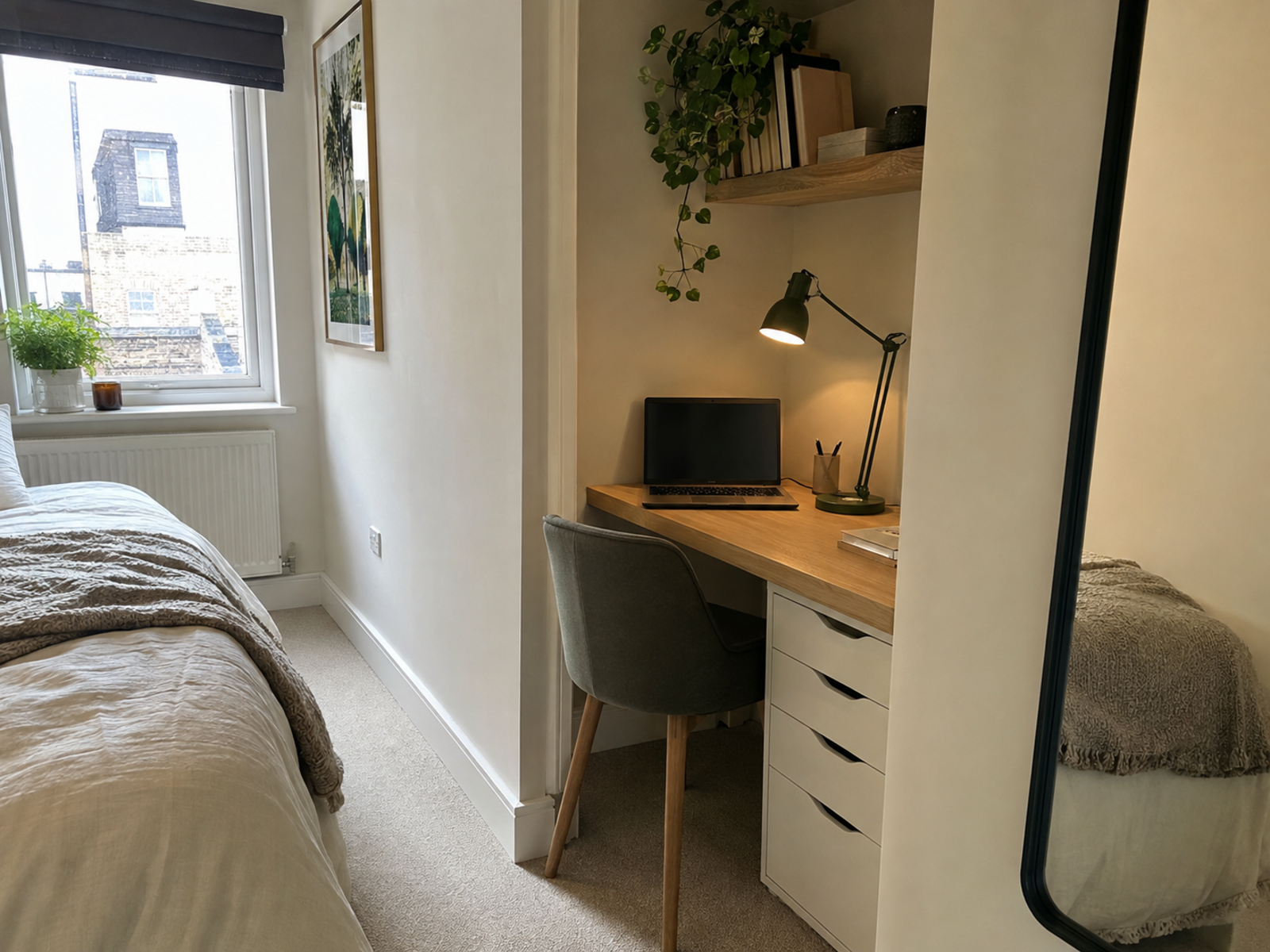
This guide is about choosing an office desk for real small-space work: laptop use, typing, calls, storage, posture and cable control. The right desk should fit the room, but it also has to support the way you actually work every day. If you want a broader overview of small desks for mixed home use, study corners or general furniture planning, the Desks For Small Spaces Review is the better starting point.
Measure The Workspace Before Choosing A Desk
Width
Measure the full width of the space, then leave breathing room.
A desk that technically fits can still feel squeezed if it blocks drawers, wardrobes, radiators, plug sockets or walking routes. Small spaces need clearance, not just furniture that passes the tape-measure test.
Depth
Depth is often more important than people expect.
A very narrow desk may look tidy online but feel tight in real use. If you use a laptop stand, keyboard, monitor or notebook, check that the surface gives you enough working distance.
Height
Desk height affects shoulders, wrists and neck.
If the desk is too high, your shoulders may rise. If it is too low, you may hunch. In small spaces, it is easy to accept awkward furniture because it fits. Your body may not be as forgiving.
Chair clearance
Check whether your chair can tuck under the desk.
This matters in bedrooms, shared rooms and dining spaces where the desk cannot dominate the whole room. A chair that sticks out all day can make even a good desk feel badly chosen.
Plug sockets and lighting
Before buying, check where power and light will come from.
A small desk in a dark corner may need a lamp and cable plan. If the nearest plug socket is awkward, the setup can quickly become messy or unsafe.

Best Office Desks For Small Spaces

A good small-space desk gives your work a clear home. It does not need to be huge, expensive or dramatic. It needs to hold your tools, support your posture, reduce clutter and let the room keep functioning when the laptop closes.
Which Small-Space Desk Fits Your Room?
Best Desk For Bedroom Corners
For bedroom corners, choose a compact desk with enough depth for a laptop and separate keyboard if possible.
IKEA MICKE-style desks can work well here because they keep the setup simple. Avoid desks that block wardrobe doors, drawers or the path around the bed. A bedroom office should not make the bedroom feel permanently invaded.
Best Desk For Shared Rooms
For shared rooms, choose a desk that looks tidy when work stops.
A foldable wall desk, compact storage desk or slim simple desk can help. The key is having a place to close work down, hide cables and remove visual clutter before the room returns to family, rest or shared use.
Best Desk For Clutter Control
For clutter control, choose a desk with one or two useful storage zones.
A drawer, shelf or cable tray can make a big difference. Avoid assuming more storage is always better. In a small space, too much storage can quietly invite more mess to move in.
Best Desk For Movement
A compact standing desk can help if you want to change position through the day.
FlexiSpot-style sit-stand options are useful when you have enough clearance and a sensible cable setup. They work best when paired with a supportive chair, proper screen height and realistic movement habits.
Best Desk For Awkward Layouts
For awkward layouts, a corner desk or narrow desk may solve a space problem that a standard desk cannot.
Check light, socket position, legroom and whether your chair can move naturally. Awkward spaces need more planning, not just smaller furniture.

Small-Space Desk Setup Details That Matter
Cable storage
A small desk needs a cable plan from day one.
Use clips, a small tray, cable ties or a back route if available. Messy cables can make a compact setup feel more stressful than it needs to.

Surface discipline
A small desk cannot hold everything.
Keep only the essentials on the surface: laptop, keyboard, mouse, notebook, lamp and maybe one drink if everyone behaves. Everything else needs storage or a different home.

End-of-day reset
A tiny workspace benefits from a quick reset.
Put chargers away, close the laptop, clear cups and tuck the chair in. The smaller the space, the more visible unfinished work feels.

What To Spend Money On First
The right size
Spend first on the desk size that actually supports your work.
The cheapest narrow desk is not a bargain if it makes every task uncomfortable. Prioritise enough surface depth, stable construction and chair clearance before extras.
A supportive chair
The desk and chair work together.
A good desk cannot fix a poor chair, and a good chair cannot fully rescue a desk at the wrong height. If your budget is tight, consider second-hand office chairs before buying a pretty but unsupportive option.
Storage and cable control
Storage does not need to be expensive.
A drawer insert, wall shelf, small box or cable organiser can reduce visual clutter quickly. The goal is to stop the desk becoming a pile of work bits with legs.

Sit-stand features
Sit-stand features are worth paying for only if you will use them.
A compact standing desk can support movement, but it also costs more and needs space. Do not buy one just because sitting sounds guilty. Buy it because it fits your room and routine.

Common Small-Space Desk Buying Mistakes
Buying the smallest desk available
The smallest desk is not always the best small-space desk.
If it is too shallow, too low or too narrow for real work, it may save floor space while costing comfort. Choose the smallest desk that still supports the job.
Ignoring the chair
Many people measure the desk and forget the chair.
A chair needs space to slide, turn and support your body. If the chair cannot fit properly, the whole setup will feel awkward even if the desk looks perfect.
Choosing storage that adds bulk
Storage is helpful until it makes the desk too large.
A compact storage desk should solve clutter without overwhelming the room. If the drawers make the desk deep, heavy or visually bulky, a separate small shelf may work better.
Forgetting cables
Chargers, monitors, lamps and docks can quickly ruin a neat small desk.
Check socket position and cable routes before buying. A desk that works with your cables will feel calmer every day.
Treating the desk as the whole office
A desk is only one part of the setup.
You still need chair support, screen height, lighting, power and a way to clear work away. Small spaces work best when every piece has a job.
FAQ
What is the best office desk for a small space?
The best office desk for a small space is one that gives you enough working depth, stable support, chair clearance and cable control without overwhelming the room.
For simple setups, IKEA MICKE-style desks can work well. For movement, consider a compact FlexiSpot standing desk. For multipurpose rooms, look at foldable or wall-mounted desks.
Is IKEA MICKE good for working from home?
IKEA MICKE can be good for working from home if you need a simple, compact desk for laptop work, admin, writing or light office tasks.
It may feel limited if you need a deep surface, multiple monitors or heavy equipment. Check the exact MICKE size and layout before buying.
Are compact standing desks worth it?
Compact standing desks can be worth it if you genuinely want sit-stand movement and have enough clearance.
They are less useful if your room is too cramped, your cables are messy or you rarely change position. The desk should fit your routine, not just your intentions.
Are wall-mounted desks practical for daily work?
Wall-mounted desks can be practical for light daily work if they are installed safely and sized properly.
They suit laptops, writing and short sessions. They may be less suitable for heavy monitors, large equipment or people who need a deep work surface all day.
What desk is best for a bedroom office?
For a bedroom office, choose a desk that is compact, calm-looking and easy to reset after work.
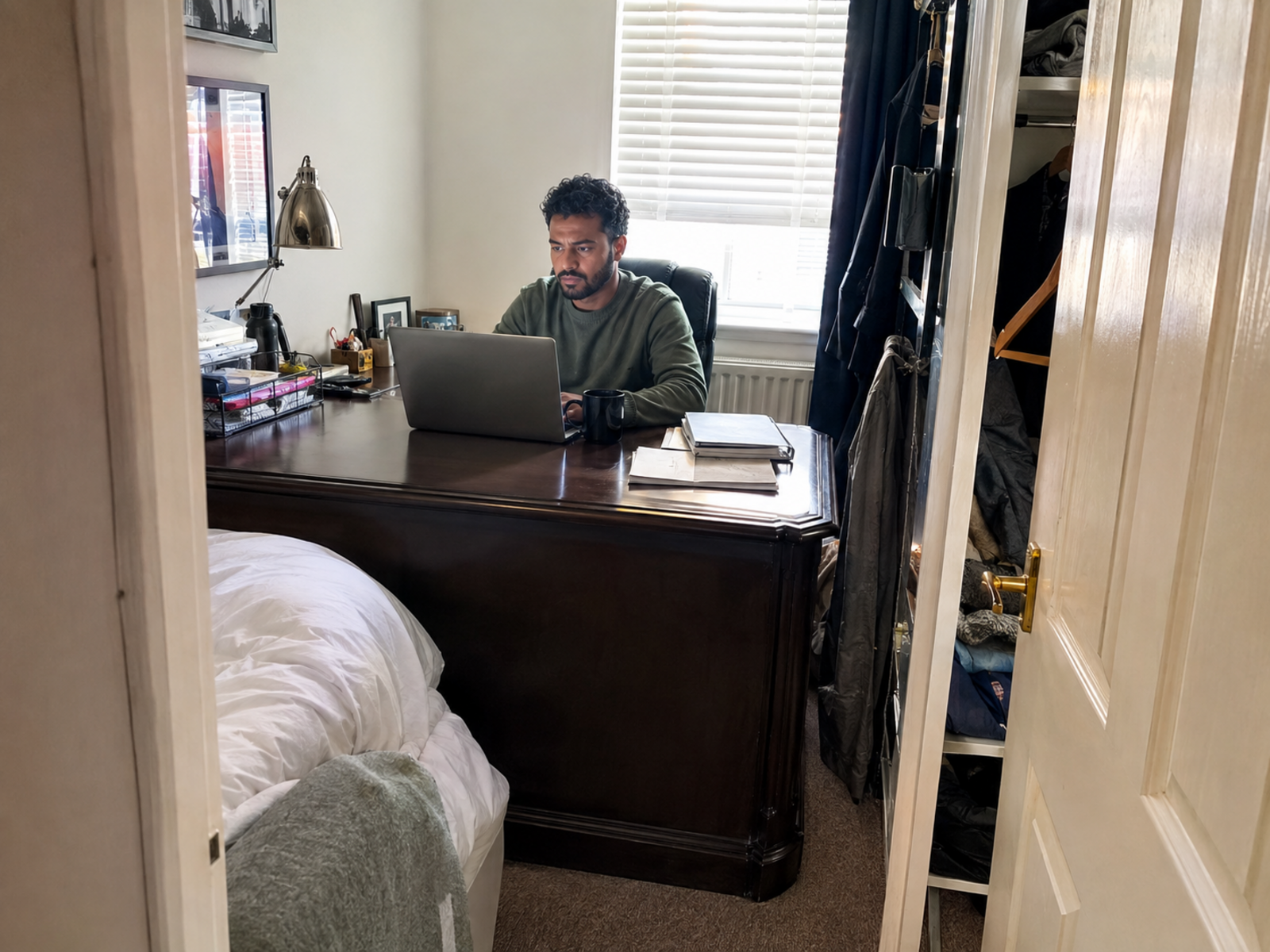
A simple desk, foldable wall desk or compact storage desk can work well. Make sure it does not block wardrobes, drawers, walkways or the feeling that the room is still a bedroom.
How do I choose a desk for a tiny home office?
Measure width, depth, height, chair clearance, plug sockets and light before buying.
Then choose based on your actual work: laptop only, monitor setup, paperwork, video calls, storage needs or sit-stand movement. The right desk should make work feel more intentional, not more cramped.
Final Verdict
The best office desks for small spaces give you enough room to work without making the room feel smaller. IKEA MICKE is a strong simple compact option. FlexiSpot standing desks suit people who want sit-stand flexibility. Wall-mounted foldable desks help multipurpose rooms. Compact storage desks control clutter. Corner desks can rescue awkward layouts.
The right small-space desk is not always the smallest one. It is the desk that supports your work, your posture and your room at the same time, so working from home feels more intentional and less like your laptop has quietly colonised the nearest available surface.






