



Host a Virtual Halloween Party: Audio,…

20 Minimalist Halloween Nail Ideas for…

Can Free Affinity Help You Build…

12 Lower-Sugar Halloween Treat Swaps Worth…

Can Hostinger AI Builder Launch a…

A 5-Step Screen-Free Autumn Reading Ritual…

Plug-In Solar Panels UK: Are They…

15 Last-Minute Zoom Halloween Costumes for…

Meta One Explained: Is the Subscription…

10 Low-Fuss Dog Halloween Ideas: Comfort…

Plaud One Explained: Can AI Earbuds…

9 Gothic Dinner Table Ideas for…

Namecheap vs Dynadot

7 UK Ghost Tours and How…

Convertkit Vs Beehiiv

Do You Really Need a £420…

Bluehost vs Siteground

15 Gentle Spooky Autumn Books to…

Namecheap review

How to Remove Halloween Face Paint…
Lower back pain from sitting too long is often not caused by one terrible posture. It is usually the result of hours of pressure, poor support and too little movement. A chair that does not support your lower back, a seat that feels too deep, dangling feet or long work blocks with no reset can all add up. This guide is practical, not medical. It focuses on support, sitting variety and desk habits that may help sitting-heavy days feel less loaded.
Long sitting can irritate the back
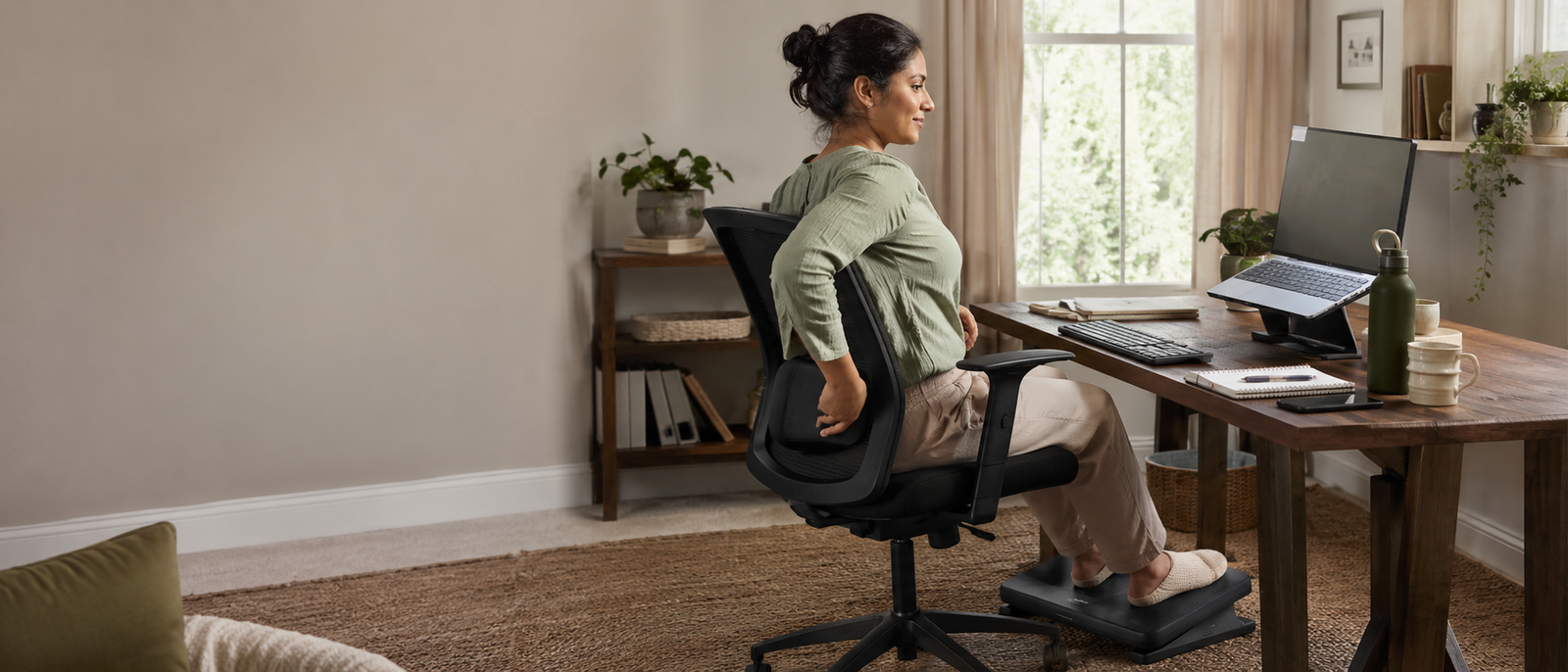
Lower-back support matters
Seat depth affects posture
Feet should feel supported
Cushions can change desk height
Movement breaks reduce long loading
Persistent pain needs proper advice
Most Relevant Audience
This guide is for remote workers, home workers, freelancers, bloggers, creators, side hustlers, parents, carers and small business owners who sit for long stretches at a desk.
It is especially useful if your lower back starts to feel stiff, achy or uncomfortable during laptop sessions, admin blocks, writing days, client work or screen-heavy afternoons.
Why Sitting Can Irritate The Lower Back
Sitting loads the same area for too long
The lower back often struggles when one sitting position lasts for hours. Even a decent chair can feel uncomfortable if your body gets no variety.
The issue is not always dramatic. It can be repeated pressure, little movement and the same posture held through calls, emails, writing and admin. Your back usually wants support plus change.
Poor lumbar support encourages slumping
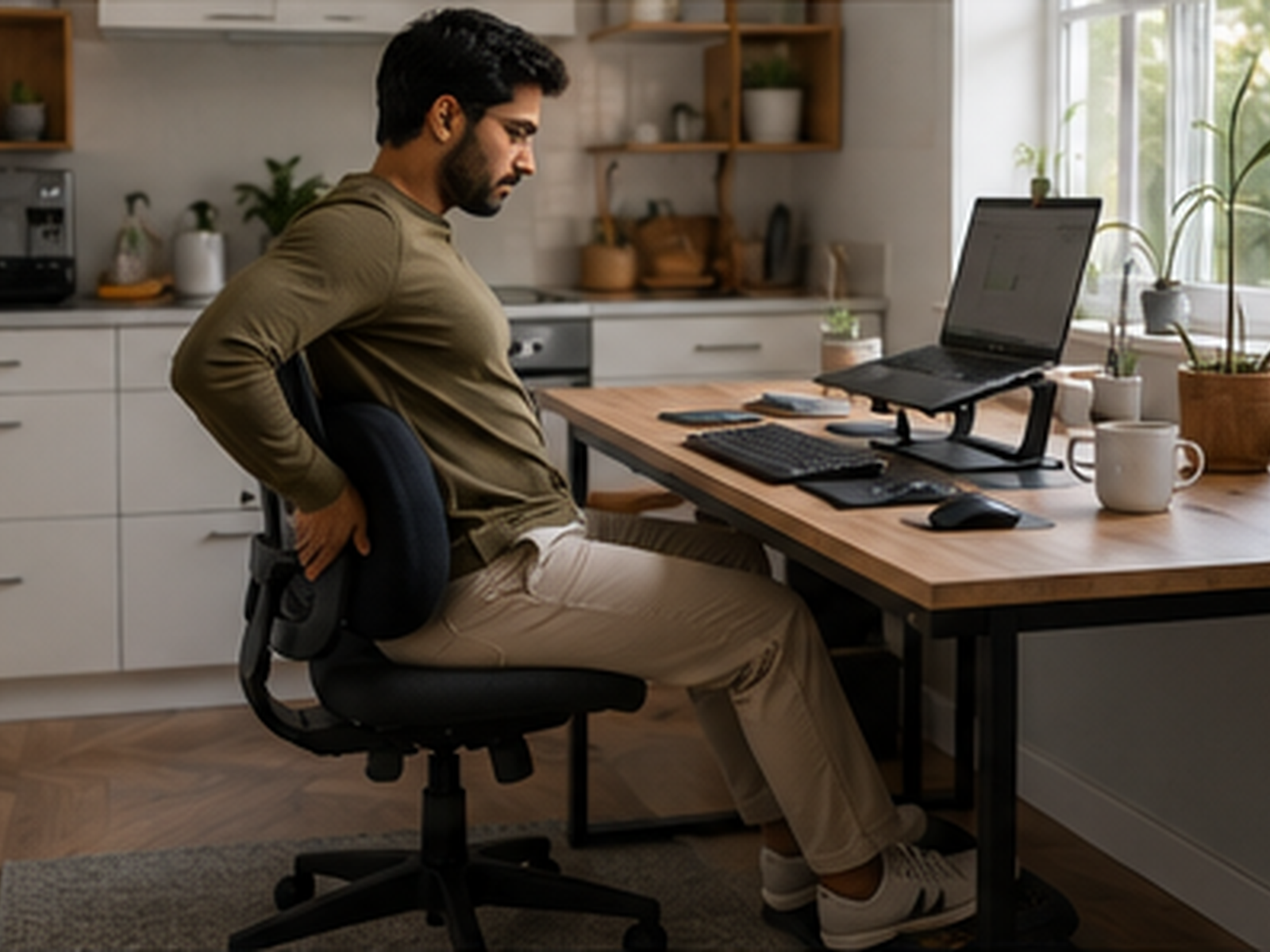
If your chair does not support the lower back, you may slump, round forward or hold yourself upright with extra effort.
Gentle lumbar support can help some desk workers sit back more comfortably. It should support the natural curve of the lower back without forcing an exaggerated arch.
Seat depth changes how you sit
If the seat is too deep, you may slide forward or lose contact with the backrest. If it is too shallow, your thighs may feel unsupported.
A better fit lets you sit back with lower-back support while keeping a little space behind the knees. Seat depth is easy to ignore, but it can change the whole sitting position.
Unsupported feet affect the base
If your feet dangle or barely reach the floor, the body may feel less stable. That can affect the hips, pelvis and lower back during long sitting.
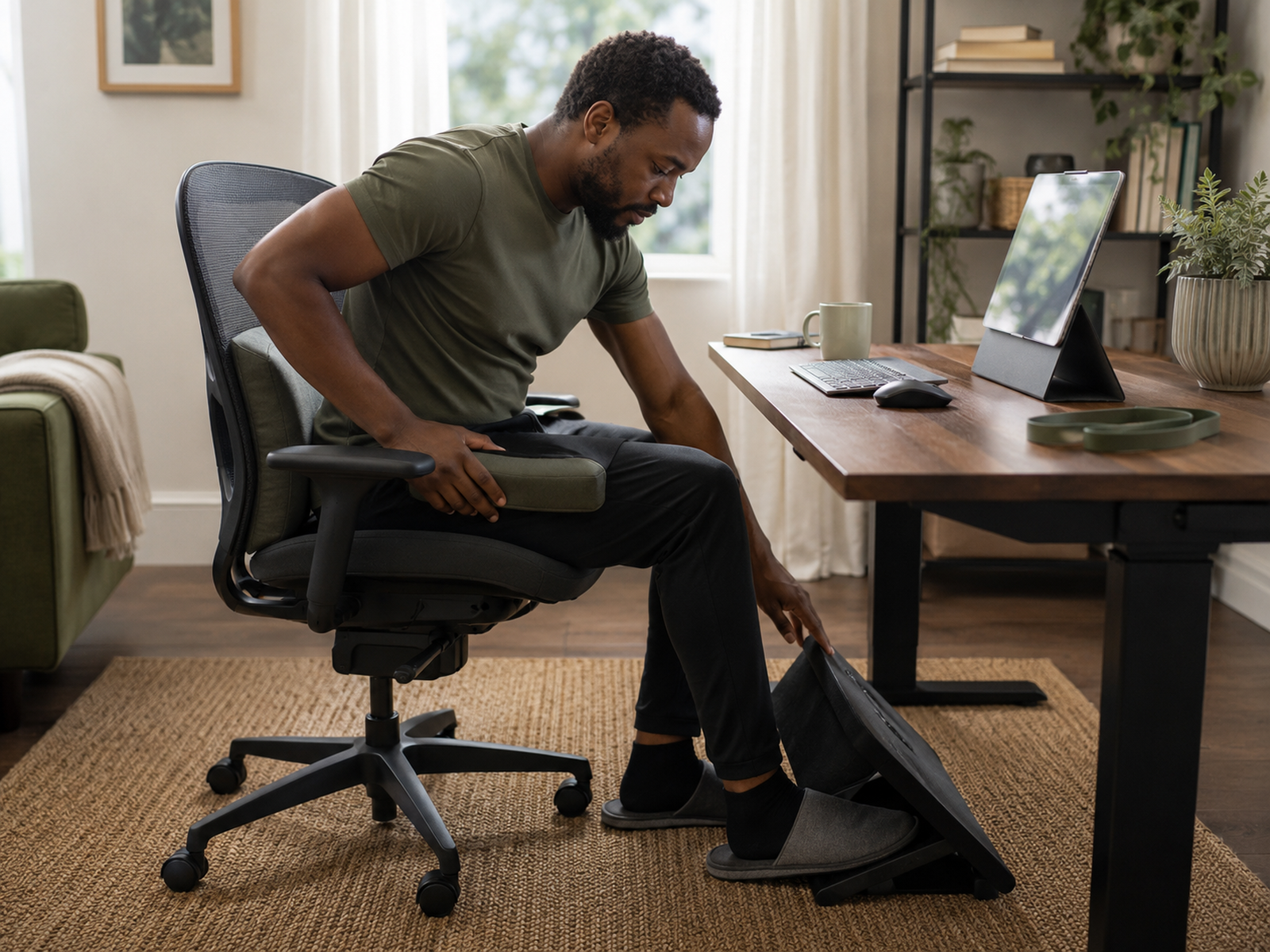
Adjust chair height first. If your feet still do not rest comfortably, a footrest can help create a steadier base.
Desk height can pull the body forward
A desk that is too high, too low or too far away can make you round, reach or lean. That position can add to lower-back strain over time.
Lower-back comfort is not only about the chair. Screen height, keyboard reach, foot support and desk distance all work together.
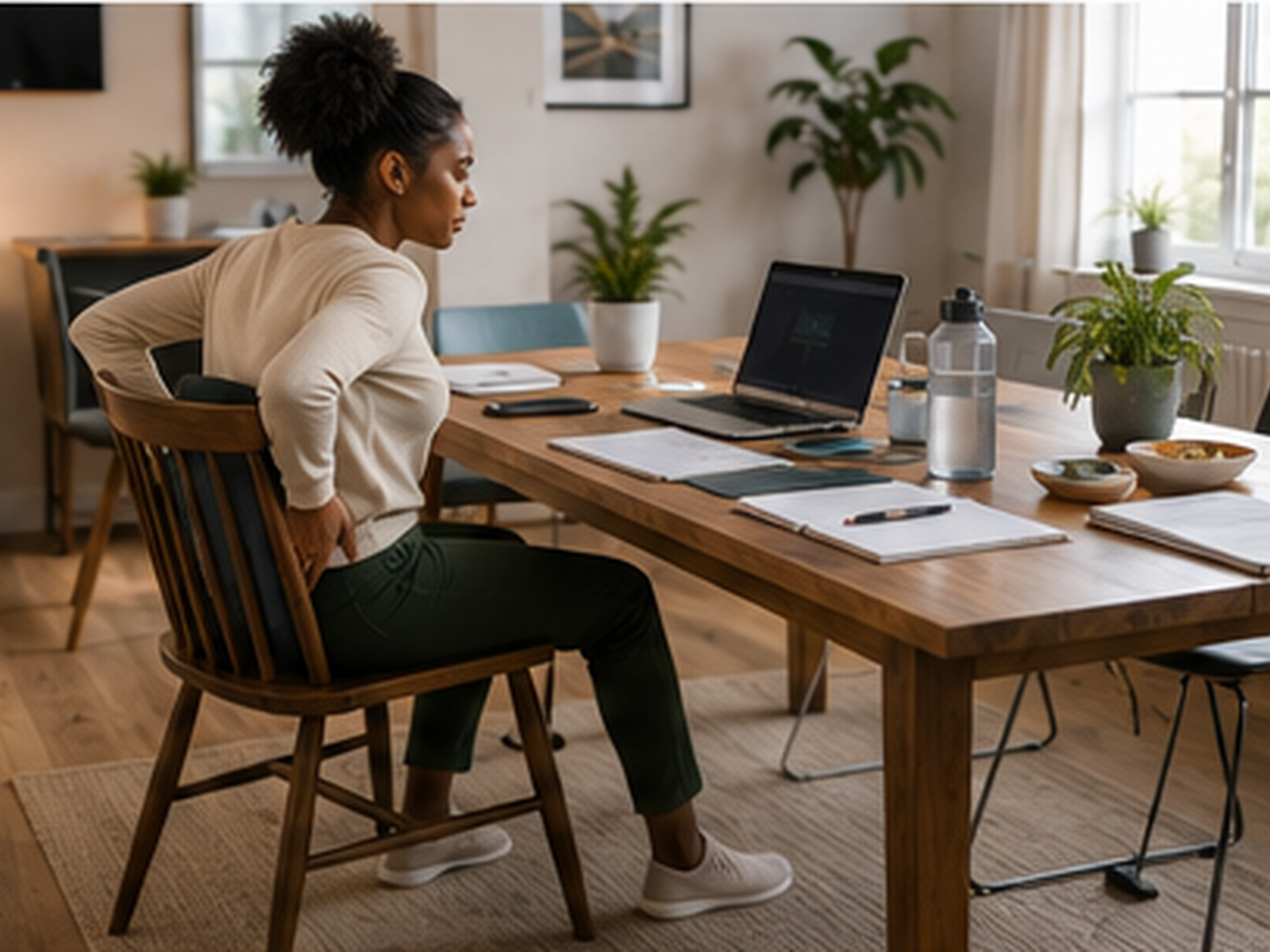
The aim is not to find one heroic sitting position and hold it until dinner. Better lower-back comfort usually comes from support plus variety: sit back, support the lower back, keep feet grounded, adjust the chair fit and change position before discomfort builds.
Desk Support Upgrades To Consider
Lower-Back Resets For Sitting-Heavy Days
Reset your sitting position
Before changing tools, reset how you are sitting. Sit back into the chair, check lower-back support, place feet firmly and bring the keyboard within easy reach.
This helps you spot whether the discomfort is coming from an unsupported position rather than the chair itself.
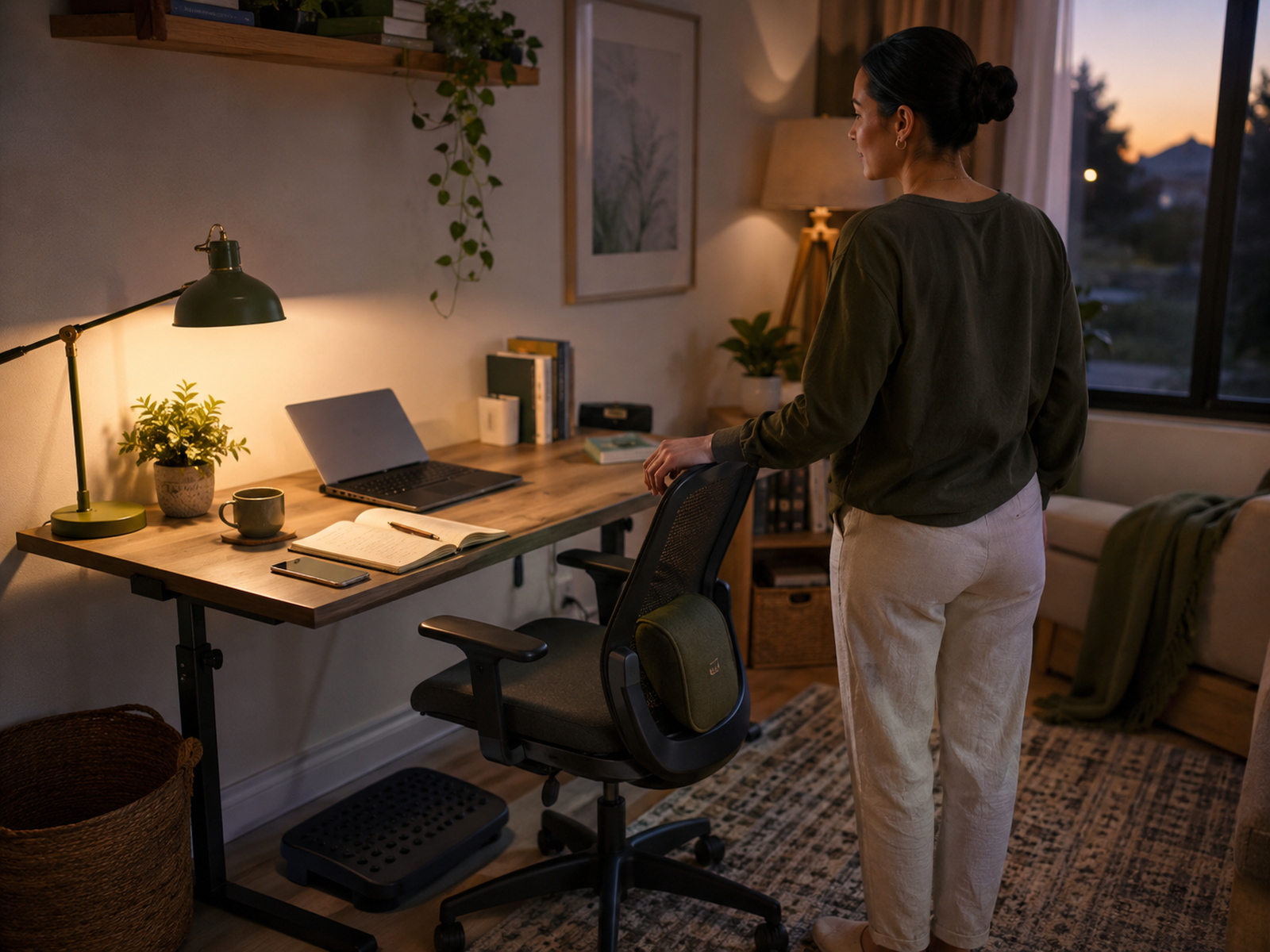
Stand before stiffness builds
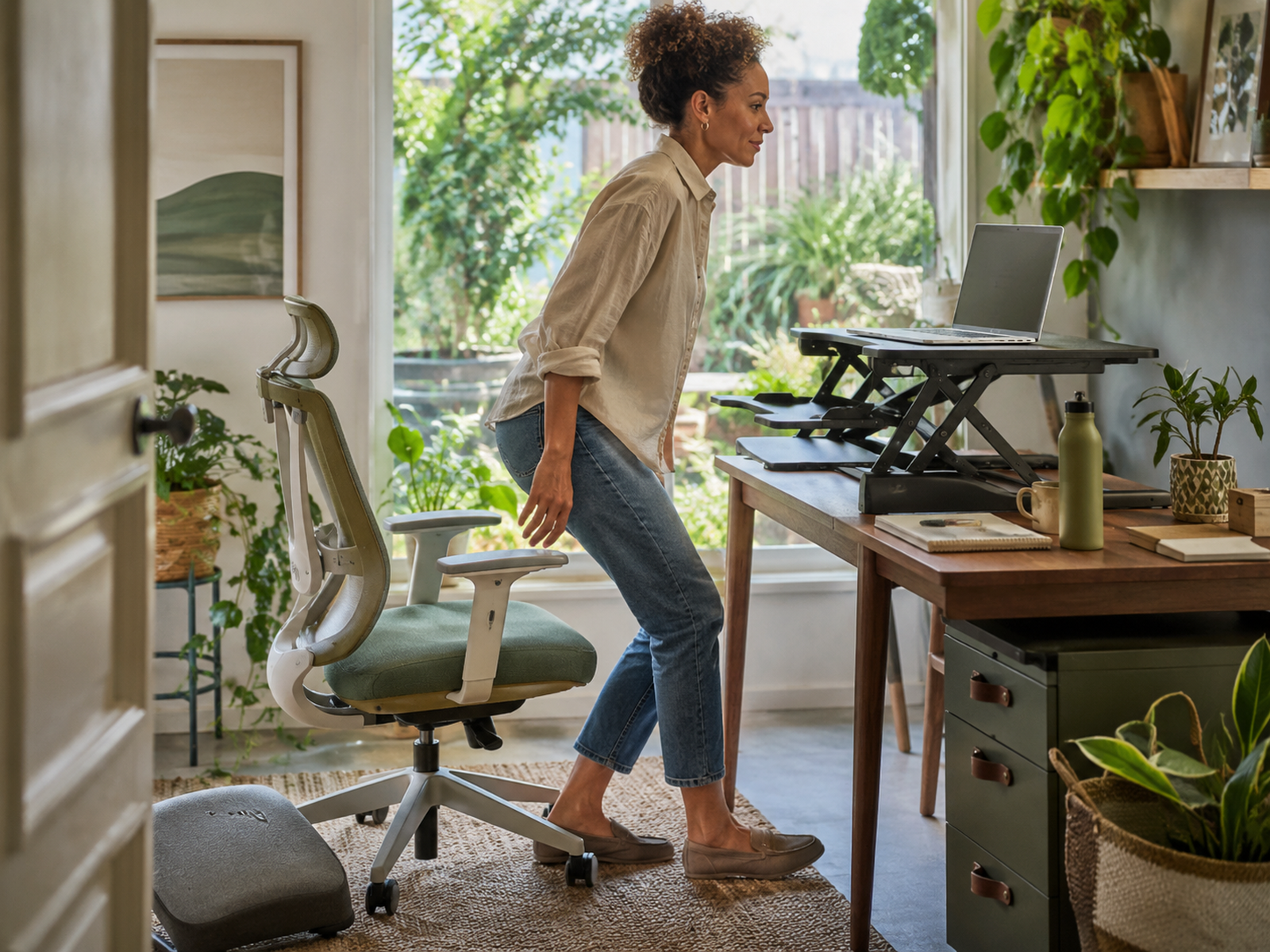
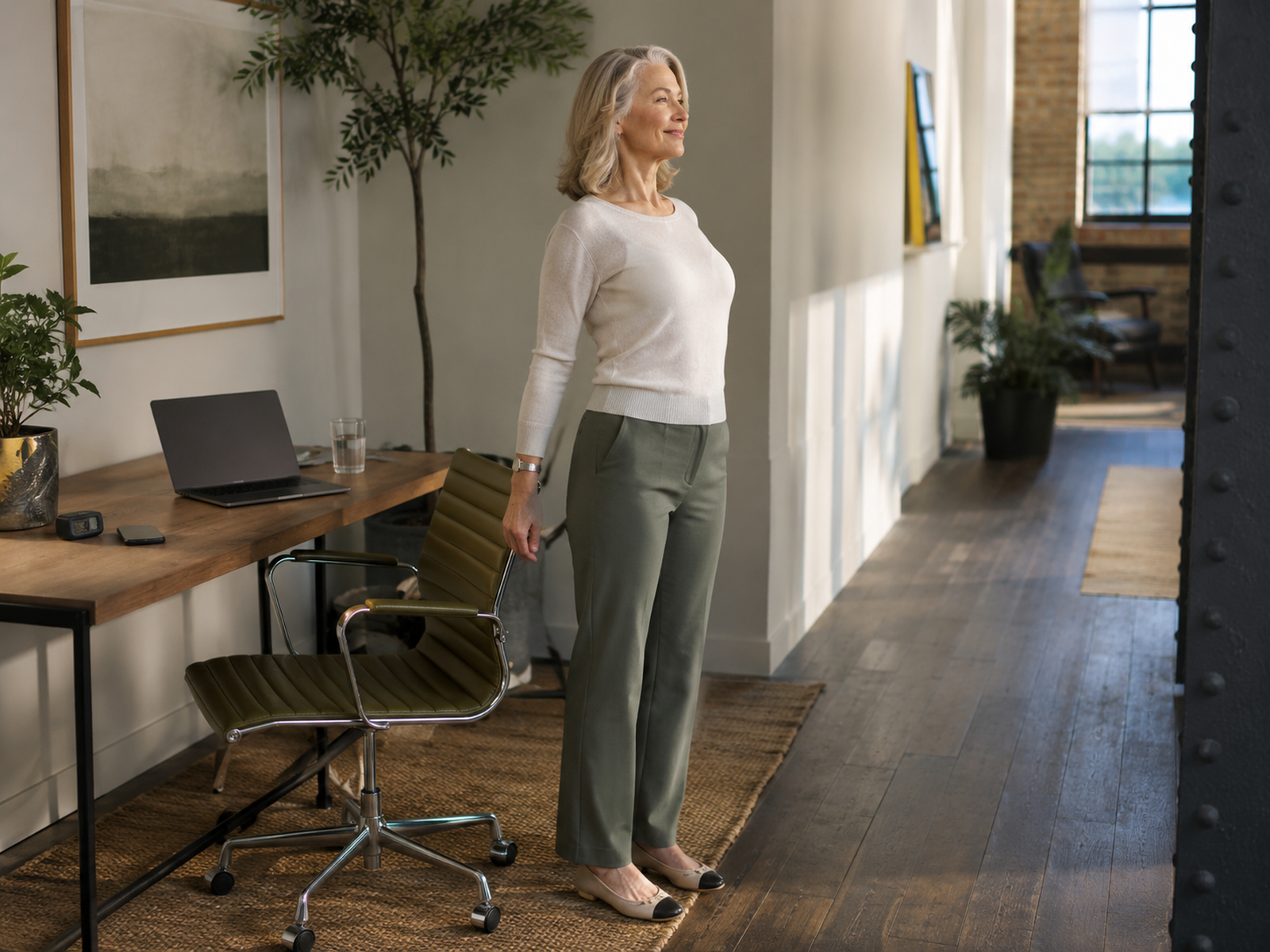
Stand briefly between tasks, after calls or before starting another focus block. Gently squeeze your glutes, lengthen your spine and relax your shoulders.
This gives the lower back a change from constant sitting pressure. It does not need to become a workout.
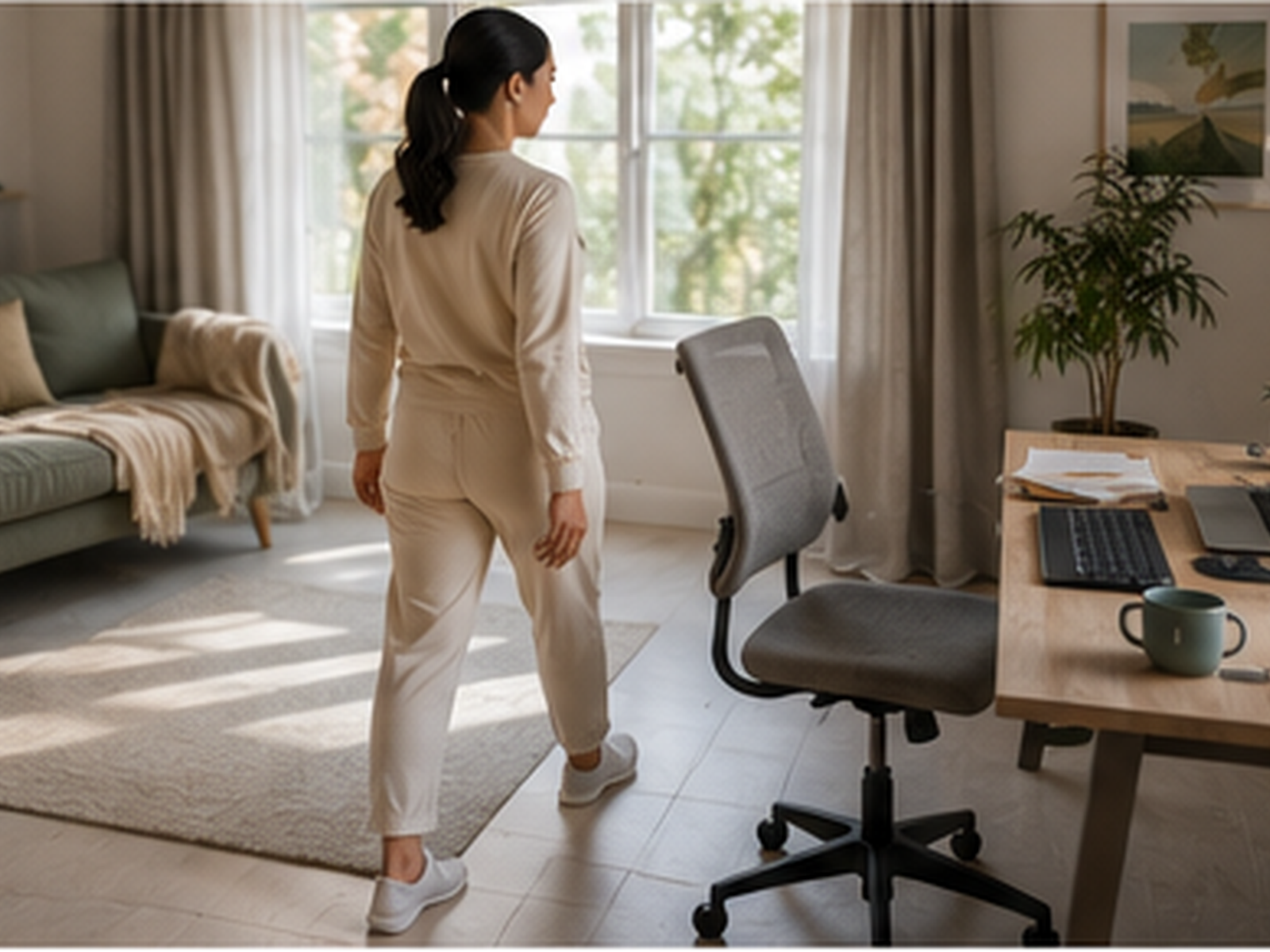
Walk for two minutes
A short walk around the room, hallway or garden can help interrupt long sitting. Use it after a focused work block or before lunch.
Keep it simple. The value is in changing position and reducing continuous loading, not turning the workday into a fitness plan.
Try a gentle hip reset
Stand tall, step one foot back slightly and gently tuck the pelvis under. You may feel a mild stretch at the front of the hip.
Long sitting keeps the hips folded, so a gentle reset may feel useful. Stop if anything feels sharp, uncomfortable or wrong.
Use bands for light support work
A light resistance band can support simple glute, hip or upper-back movements away from the desk.
Keep the effort controlled. This is optional support for sitting-heavy days, not a requirement. If it feels too much, focus on walking and position changes first.
Common Sitting Mistakes That Make Back Pain Worse
Sitting on the edge all day
Perching on the edge of the chair can leave the lower back unsupported and make the body work harder to stay upright.
Try sitting back into the chair with gentle lower-back support. If the chair is too deep, adjust the setup or consider support that helps you sit back comfortably.
Letting feet dangle
Dangling feet can make sitting feel unstable and may affect the hips, pelvis and lower back.
Adjust chair height if possible. If your feet still do not reach the floor well, a footrest may help create a more supported base.
Adding cushions without checking height
A cushion can improve comfort, but it can also raise your sitting height. That may change your arm position, foot support and desk fit.
After adding any cushion, check the whole setup again. Your lower back, shoulders, wrists and feet need to work together.
Holding one posture too long
Even a good sitting position can become uncomfortable if you hold it for too long.
Change position regularly. Sit, stand, walk, stretch and return. The best setup supports variation rather than trapping you in one “correct” pose all day.
Ignoring early warning signs
Stiffness is easier to manage early. If you push through discomfort for hours, small tension can become harder to settle.
Use early signs as prompts. Stand, walk, adjust support or reset your sitting position before the discomfort grows.

When Sitting Pain Needs Proper Advice
If pain is severe or worsening
Severe, sharp or worsening lower-back pain needs proper advice. Stop anything that increases symptoms and do not treat persistent pain as just another desk problem.
Desk changes can support comfort, but they are not a diagnosis or treatment plan.
If symptoms spread
Pain that travels down the leg, or symptoms such as numbness, tingling or weakness, should be taken seriously.
A better chair may still help your workday later, but spreading symptoms need appropriate professional guidance rather than guesswork.
If pain affects daily life
If back pain affects sleep, walking, work, caring responsibilities or normal daily activity, get support.
The aim of this article is to help with desk habits and comfort. It should not replace medical advice when symptoms are persistent, worrying or limiting your life.
FAQ
Why does my lower back hurt after sitting?
Your lower back may hurt after sitting because of long stillness, poor lower-back support, awkward chair height, seat depth, desk setup or unsupported feet.
It can also be affected by stress, workload, previous injuries or other factors. Persistent or worrying pain needs proper advice.
How can I reduce lower back pain at my desk?
Start with support and variety. Sit back into the chair, support the lower back, keep feet grounded, adjust chair height and take regular position-change breaks.
A lumbar cushion, seat cushion, footrest, standing desk converter or reminder app may help if it fits your body and workspace.
Can a seat cushion help lower back pain?
A seat cushion may help some desk workers feel more comfortable, especially on hard or unsupportive chairs.
Check fit, firmness and height. If the cushion raises you too much or changes your desk position, it may create new discomfort elsewhere.
Is standing better than sitting for back pain?
Standing is not automatically better than sitting. For many people, the useful approach is changing position more often.
Alternate sitting, standing, walking and gentle movement. Holding any one position for too long can become uncomfortable.
How often should I move if sitting hurts my back?
A practical starting point is to move briefly every 30 to 60 minutes, or between work blocks.
Keep it realistic. Stand, walk, stretch or reset for a minute or two. Small, repeatable changes are often easier than long routines.
When should I see a doctor about lower back pain?
Seek professional advice if pain is severe, worsening, persistent, spreading down the leg or linked with numbness, tingling or weakness.
You should also get help if pain affects sleep, mobility, work or daily life.
Final Verdict
Lower back pain from sitting too long is often a sign that your workday needs more support, better chair fit and fewer hours stuck in one position. Start with lower-back support, seat depth, foot position, cushion height and regular changes between sitting, standing and walking.
Useful tools such as a lumbar cushion, seat cushion, footrest, standing desk converter, reminder app or resistance band can help when they fit your body and workspace. The goal is not a perfect chair. It is a routine that stops quietly loading your lower back all day.


