



Can Hostinger AI Builder Launch a…

Anti-Optimisation Wellness: Can a Sunrise Lamp…

Plug-In Solar Panels UK: Are They…

Sunrise Lamps Explained: What They Actually…

Meta One Explained: Is the Subscription…

Lifesum Review UK: Is Premium Worth…

Plaud One Explained: Can AI Earbuds…

Garmin CIRQA Review: Screen-Free Tracking Without…

Namecheap vs Dynadot

Garden Gatherings – Summer Is The…

Convertkit Vs Beehiiv

Portable Outdoor Speakers for Garden Offices

Bluehost vs Siteground

Outdoor WiFi Extenders For Garden Offices

Namecheap review

Portable Pools For Home Workers This…

Cloudways Vs WP Engine

Best Polarised Sunglasses

Dropshipping Explained

Best Office Desks For Small Spaces
SEO for blogs means helping readers and search engines understand what your article solves, who it helps and why it deserves attention. If you are publishing helpful posts but traffic barely moves, the issue may not be effort. It may be clarity. Good blog SEO is not about tricking Google, stuffing keywords or writing like a robot with an affiliate link. It is about choosing searchable topics, matching search intent, structuring the article well and giving readers a useful answer.
SEO helps readers and search engines.
Search intent shapes the article.
Random topics weaken visibility.
Thin content can still be long.
Clear headings improve trust.
Internal links connect the site.
Strong SEO grows through updates.

Most Relevant Audience
This guide is for bloggers, creators, affiliate site owners, small business owners and small site builders who want organic traffic without turning every article into a technical panic. It is especially useful if you publish consistently but your posts feel invisible, scattered or difficult to rank.
Why Some Blogs Stay Invisible
The keyword targeting is wrong
A blog post can be well written and still fail if nobody searches for the topic in that format. Strong SEO starts with matching real searches, not guessing what readers might want.
For example, “email marketing ideas” and “best email marketing platforms” are not the same search. One reader wants inspiration. The other probably expects comparisons, tools, pricing notes, pros and cons, and a clear recommendation. If your article gives the wrong type of answer, it can miss the opportunity even if the writing itself is good.
The structure feels confusing
Messy headings, weak introductions, scattered sections and unclear article flow make content harder to understand. Search engines need structure, but readers need it even more.
A reader should quickly see what the article covers, where the answer is and whether the page matches their problem. If they land on a post and have to dig through vague paragraphs before understanding the point, they may leave.
The article feels too thin
Thin content does not always mean short content. A long article can still be thin if it repeats generic advice without examples, judgement, comparisons, tool guidance or realistic next steps.
Readers usually want help making a decision or doing something better. If a post says “write useful content” but never explains what useful looks like in that situation, it has not really moved the reader forward.
Search intent gets ignored
Search intent is the reason behind the search. A reader searching “how to start a blog” needs a different article from someone searching “best blog hosting for beginners” or “how to improve old blog posts.”
Ranking is not just about using the keyword. It is about answering the job that keyword represents. If someone wants a buyer guide and you give them vague motivation, the page may feel wrong even if the topic looks similar.
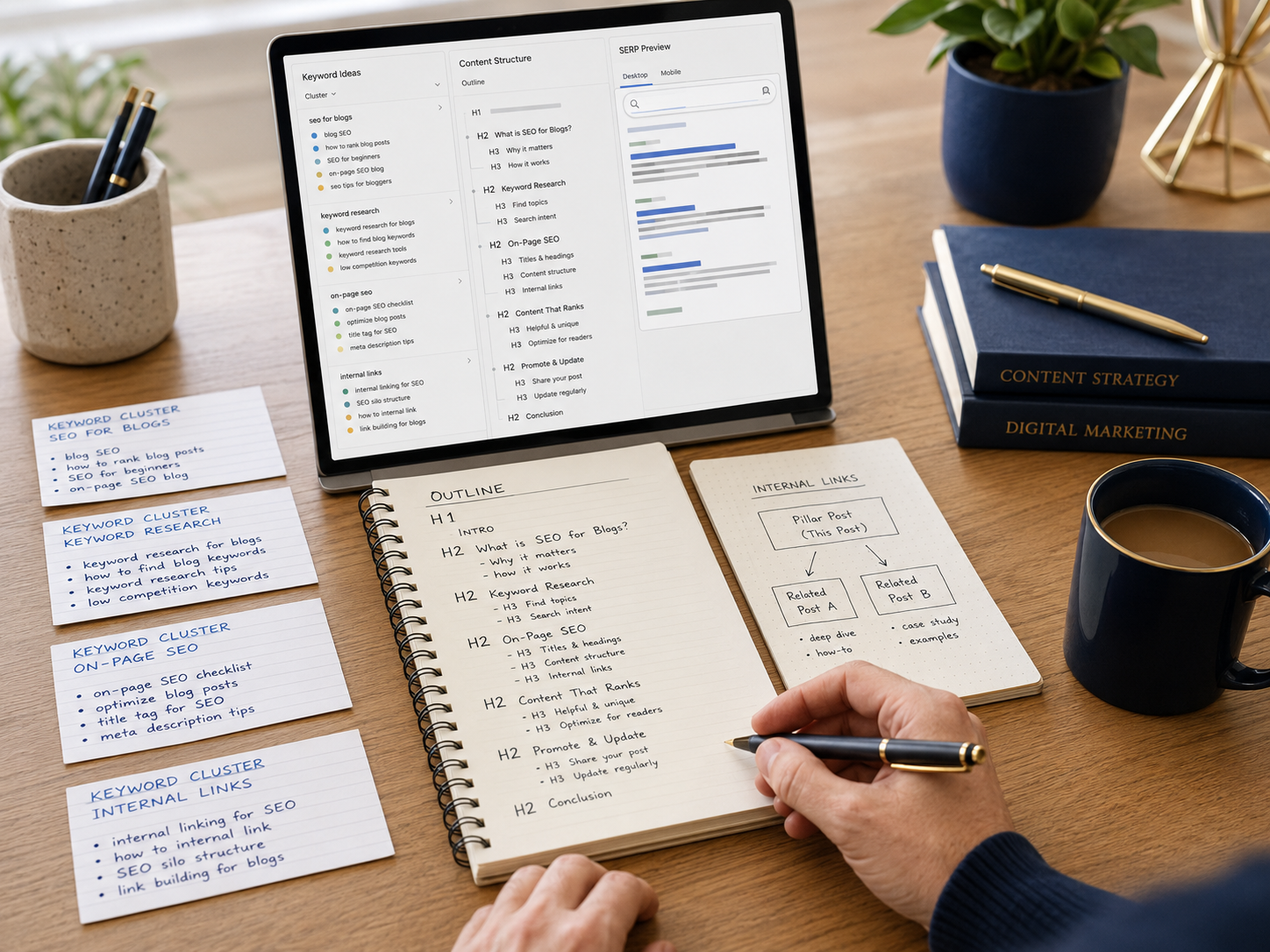

SEO Is Really About Reducing Reader Confusion
Strong blog SEO is not about tricking Google. It is about making useful content easier to understand, easier to trust and easier to match with the right search. When an article answers the exact question clearly, uses logical headings, links to related resources and gives practical examples, both readers and search engines have fewer reasons to ignore it.
That does not guarantee instant traffic, because SEO is slow and competitive. But it gives the article a proper chance. Every page should tell the reader: you are in the right place, this is the problem we are solving, and here is the next useful step. If the article cannot do that, adding more keywords will not save it. That is just decorating confusion.
What Actually Improves Blog SEO?
Better topic selection
Good blog SEO starts before writing. You need to know what the article is meant to target, what kind of answer the searcher expects and how your post will be more useful than what already exists.
This does not mean every article needs to chase huge keywords. Smaller, clearer topics can work better for newer blogs because they are easier to match properly and easier to connect to related posts.
Keyword and competitor research
Keyword research helps you understand search demand, wording, competing pages and content gaps. Tools such as Ahrefs SEO Platform and Semrush SEO Platform can help you check keywords, competitors and ranking opportunities.
The tool is only useful if you turn the research into better pages. Otherwise you just collect charts and call it strategy, which is emotionally satisfying but not very profitable.
Clear headings and article flow
Clear headings help readers scan faster, understand the article flow and find the section they need. A good heading does not just contain a keyword. It explains what the next section will actually do.
Article flow matters too. A strong post should move from the reader’s problem to the useful explanation, examples, mistakes, next steps and related resources without wandering into three unrelated side quests.
Internal links
Internal links help readers continue learning without searching elsewhere. They also show how related articles connect across the website.
A post about blog SEO might naturally point readers toward SEO tools, email marketing automation, sales funnels, blog setup, hosting or platform comparisons when those guides help explain the wider traffic and growth system.
Useful content
Useful content is the biggest piece. Blog SEO becomes more practical once bloggers realise that helpful content usually beats shallow keyword writing.
Specific examples, honest trade-offs, beginner-friendly explanations and clear next steps keep readers engaged longer. The goal is not just to mention the topic. The goal is to help the reader understand, decide or act.

SEO Mistakes Bloggers Make Early
Publishing random topics
A blog about money tools, wellness habits, recipes, travel, software, skincare and dog beds all at once can confuse readers and search engines. That does not mean a site can only have one tiny topic forever, but it does need clear areas of authority.
Topical focus helps readers understand what your site is for. It also helps you build connected articles that support each other instead of publishing lonely posts floating around like abandoned socks.
Copying competitors too closely
Competitor research is useful. Copying is not. If every ranking article has the same structure, same examples and same safe advice, repeating it rarely gives search engines a strong reason to reward your version.
Better posts add clearer context, better explanations, sharper examples or more practical decision help. You can learn from ranking pages without becoming their slightly cheaper twin.
Forgetting the reader’s situation
A beginner does not only need definitions. They need to know what to do next, what to avoid, which choices matter and where mistakes usually happen.
If your article explains SEO but never shows how a blogger would actually use it, the content stays too abstract. Readers need the bridge between “this matters” and “here is how to apply it to your next post.”
Overthinking technical SEO too soon
Technical SEO matters, especially as a site grows. But newer blogs often need clearer articles, stronger keyword choices, better internal links and more useful examples before advanced audits become urgent.
It is easy to spend three days worrying about schema while your article still has a vague introduction and no clear answer. That is like polishing the doorbell when the house has no stairs.
What Search Engines Usually Reward Long Term
Useful content solving real problems
High-performing blogs often answer practical questions with enough depth that readers do not immediately return to search results looking for another explanation.
That means the article should go beyond surface-level definitions. It should help the reader understand the issue, make a choice, avoid mistakes or take the next step with more confidence.
Topical consistency
A site publishing connected articles around email marketing, ecommerce, blogging, creator tools or website growth usually feels more trustworthy than a site jumping between unrelated topics every week.
Topical consistency does not mean boring repetition. It means building a useful library where articles naturally support each other.
Better user experience
Slow pages, aggressive popups, cluttered layouts, confusing navigation and hard-to-read formatting can damage otherwise useful content.
Readers are not patient when the page fights them. If an article is hard to read, slow to load or covered in interruptions, the content has to work much harder than it should.
Consistent improvement
SEO usually grows through steady publishing and regular updates, not one perfect post. Older articles can often be improved with clearer headings, fresher examples, better internal links and stronger sections.
A useful blog becomes an asset when the library gets stronger over time. That is why updating old content matters as much as publishing new posts.
How Bloggers Should Apply SEO In Real Life
Before writing a new article
Before writing, check whether the topic has search demand and what the reader probably expects. Look at the search results and ask what kind of page is ranking: a how-to guide, comparison, list, review, definition or tutorial.
Then decide what your article needs to include to answer the query properly. This stops you writing a lovely article that answers a question nobody asked in that way.
While writing the article
Write for the reader first, but give the article a clear structure. Use headings that explain the journey. Keep the introduction focused. Avoid wandering into three unrelated side topics because your brain found them interesting at 11:47pm.
If a section needs an example, add one. If a claim needs a practical next step, give it. If the article is a buyer guide, help the reader compare. If it is an explainer, make the concept usable.
After publishing
Publishing is not the end. Check whether the article needs stronger internal links, clearer headings, a better introduction or more useful examples.
If you use WordPress, the post can often be improved through better formatting, related article links, cleaner metadata and updated sections. Small improvements can matter, especially when repeated across a growing blog library.

Pros And Cons Of SEO For Bloggers
Pros
Organic traffic can grow consistently over time.
Better keyword targeting reduces wasted writing effort.
Useful articles can attract returning readers.
Internal links improve reader journeys across the site.
Search traffic can reduce dependence on paid ads or social media.
SEO encourages clearer structure and better article planning.
Older posts can keep bringing value after publishing.
Cons
Rankings often take months to improve.
Competitive topics need stronger content and patience.
Weak articles rarely rank consistently even if optimised.
Search traffic can fluctuate after algorithm updates.
Beginners often overthink technical details too early.
Keyword research can become a procrastination trap.
SEO still requires consistent publishing and updates.
Empty SEO Content Still Fails
Some blogs technically follow SEO advice but still feel flat. The headings are correct, the keyword appears, and the article length looks acceptable, yet the content gives no useful examples or honest guidance. The page looks optimised from a distance, but up close it does not help anyone decide, understand or act.
A stronger post explains the real frustration, shows what matters and helps someone make a better decision before they leave. That is the difference between content that exists and content that earns attention. If the article is basically wearing an SEO costume, readers will notice.
FAQ
What does SEO actually mean for bloggers?
SEO helps search engines understand blog content while helping readers discover useful articles through search results. For bloggers, that usually means choosing searchable topics, matching search intent, writing clear headings, giving useful answers and linking related posts together naturally.
Why do some blogs never rank properly?
Poor keyword targeting, shallow content, weak structure, slow pages and missed search intent often reduce visibility. A blog may also struggle if it publishes too many unrelated topics or if its articles do not give readers enough practical value compared with existing results.
Does SEO require technical expertise immediately?
Not always. Many blogs improve first through clearer writing, better structure, stronger keywords, useful examples and natural internal links. Technical SEO becomes more important as a site grows, but beginners often get more benefit from improving content quality and article planning first.
How long does blog SEO take to work?
Blog SEO often takes months of consistent publishing and improvement before meaningful traffic patterns appear. Some posts may move faster, but most blogs grow through a library of useful connected articles rather than one instant win.
What matters most for blog SEO long term?
Useful content, topical consistency, clear structure, practical value, internal linking and steady publishing usually matter most. The strongest blogs keep improving older articles as well as publishing new ones.
Final Verdict
SEO for blogs is really about helping readers and search engines understand content more clearly. Blogs often stay invisible because articles miss search intent, lack practical value, use weak structure or target topics people are not actively searching for. Strong SEO does not require stuffing keywords everywhere. It requires useful answers, clean organisation, realistic examples and a clear reason for readers to stay.
The smartest starting point is simple. Write around questions people already search for. Make the article easier to understand than competing pages. Add examples that help readers make decisions. Connect related posts naturally. Keep improving old content instead of only chasing the next new idea. That is how blog SEO becomes less of a mystery and more of a practical publishing system: one clear, helpful article at a time.






