



Host a Virtual Halloween Party: Audio,…

20 Minimalist Halloween Nail Ideas for…

Can Free Affinity Help You Build…

12 Lower-Sugar Halloween Treat Swaps Worth…

Can Hostinger AI Builder Launch a…

A 5-Step Screen-Free Autumn Reading Ritual…

Plug-In Solar Panels UK: Are They…

15 Last-Minute Zoom Halloween Costumes for…

Meta One Explained: Is the Subscription…

10 Low-Fuss Dog Halloween Ideas: Comfort…

Plaud One Explained: Can AI Earbuds…

9 Gothic Dinner Table Ideas for…

Namecheap vs Dynadot

7 UK Ghost Tours and How…

Convertkit Vs Beehiiv

Do You Really Need a £420…

Bluehost vs Siteground

15 Gentle Spooky Autumn Books to…

Namecheap review

How to Remove Halloween Face Paint…
Many workers spend entire days feeling physically uncomfortable, mentally overstimulated, distracted, or emotionally drained without fully realising how strongly workspace design influences wellbeing throughout demanding routines. Desk setup mistakes became increasingly important because many remote workers now recognise that unhealthy environments quietly affect focus, posture, emotional regulation, and workday recovery over time.
As a result, healthier desk setups started becoming less about aesthetics alone and more about creating calmer more supportive work environments overall. However, many workers still accidentally create setups increasing tension, clutter, fatigue, and overwhelm instead of reducing them. The purpose of this article is to explore desk setup mistakes that make you feel worse while focusing on practical changes supporting healthier more comfortable workdays.
In many cases, small workspace adjustments create surprisingly noticeable wellbeing improvements over time.
Quick Overview
In this guide you will learn:
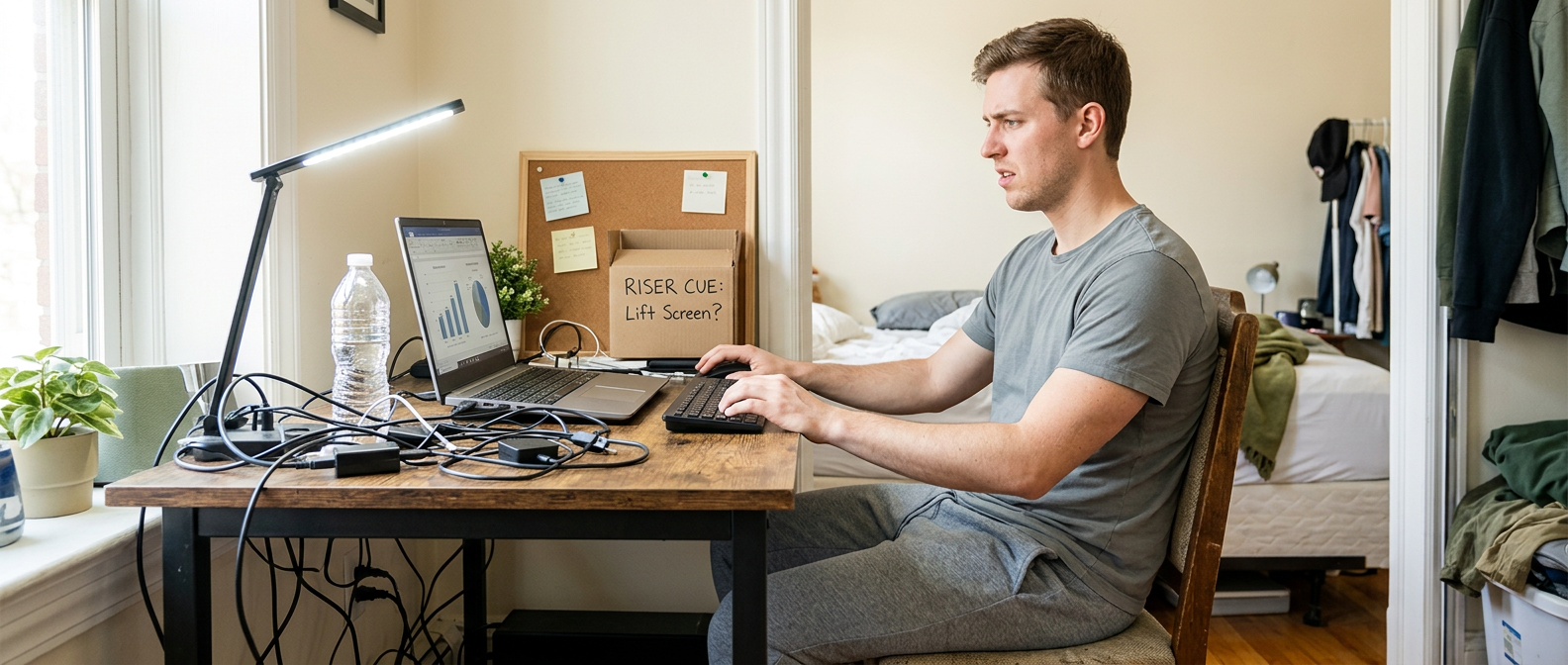
An overstimulating workspace contributing to stress and discomfort.
Helpful next reads: Home office setup on a budget
Why Workspace Design Influences Wellbeing So Strongly
Workers Spend Huge Amounts Of Time At Desks
Many remote workers spend most waking hours inside the same workspace environment daily.
Consequently, smaller discomforts gradually become more significant over time.
Visual Clutter Quietly Drains Attention
Messy overloaded environments frequently create additional mental stimulation during stressful workdays.
Meanwhile, calmer spaces often support focus naturally.
Physical Comfort Affects Emotional Energy
Poor posture, awkward desk positioning, and physical tension frequently influence patience, mood, and concentration.
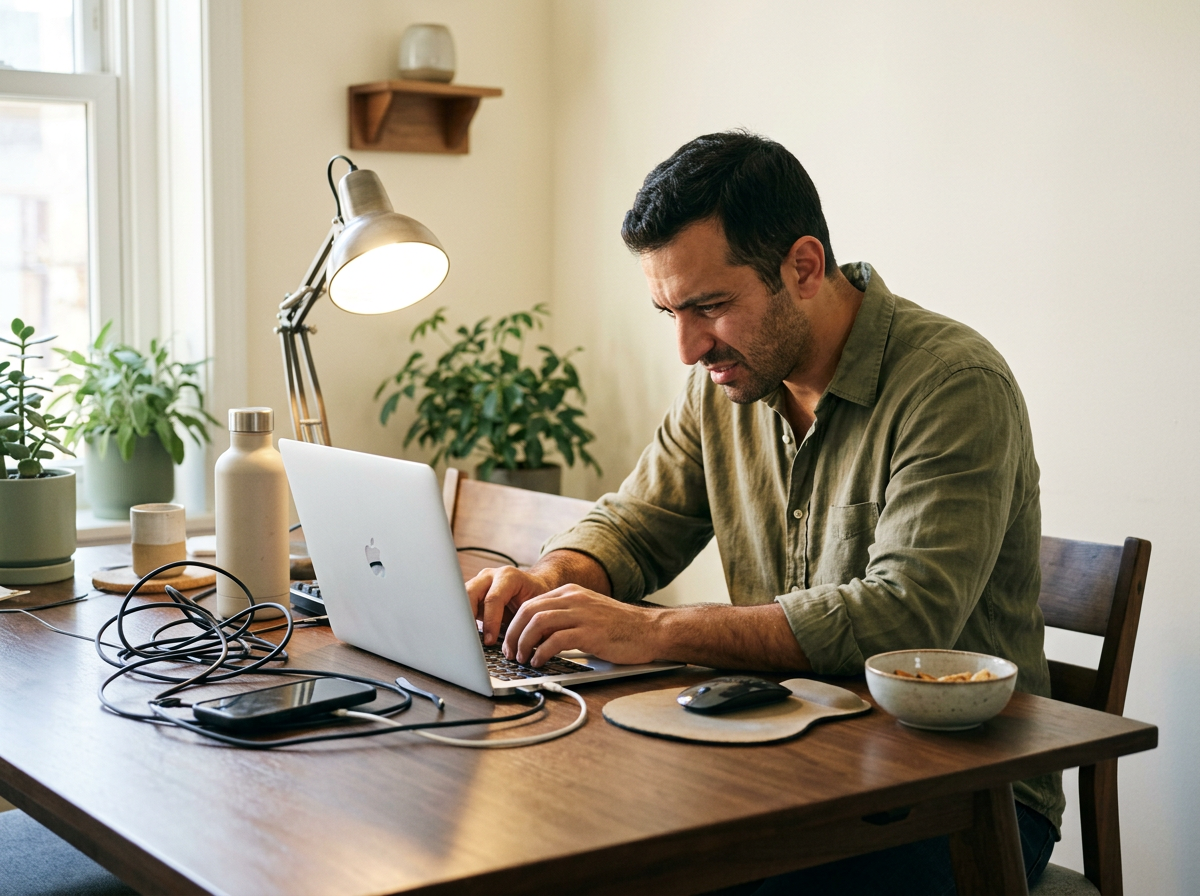
Therefore, comfort often matters far beyond physical wellbeing alone.
Stress Builds Gradually Through Environment
Certain desk setup problems feel minor individually but emotionally exhausting once combined together daily.
As a result, healthier environments usually improve workdays gradually instead of instantly.
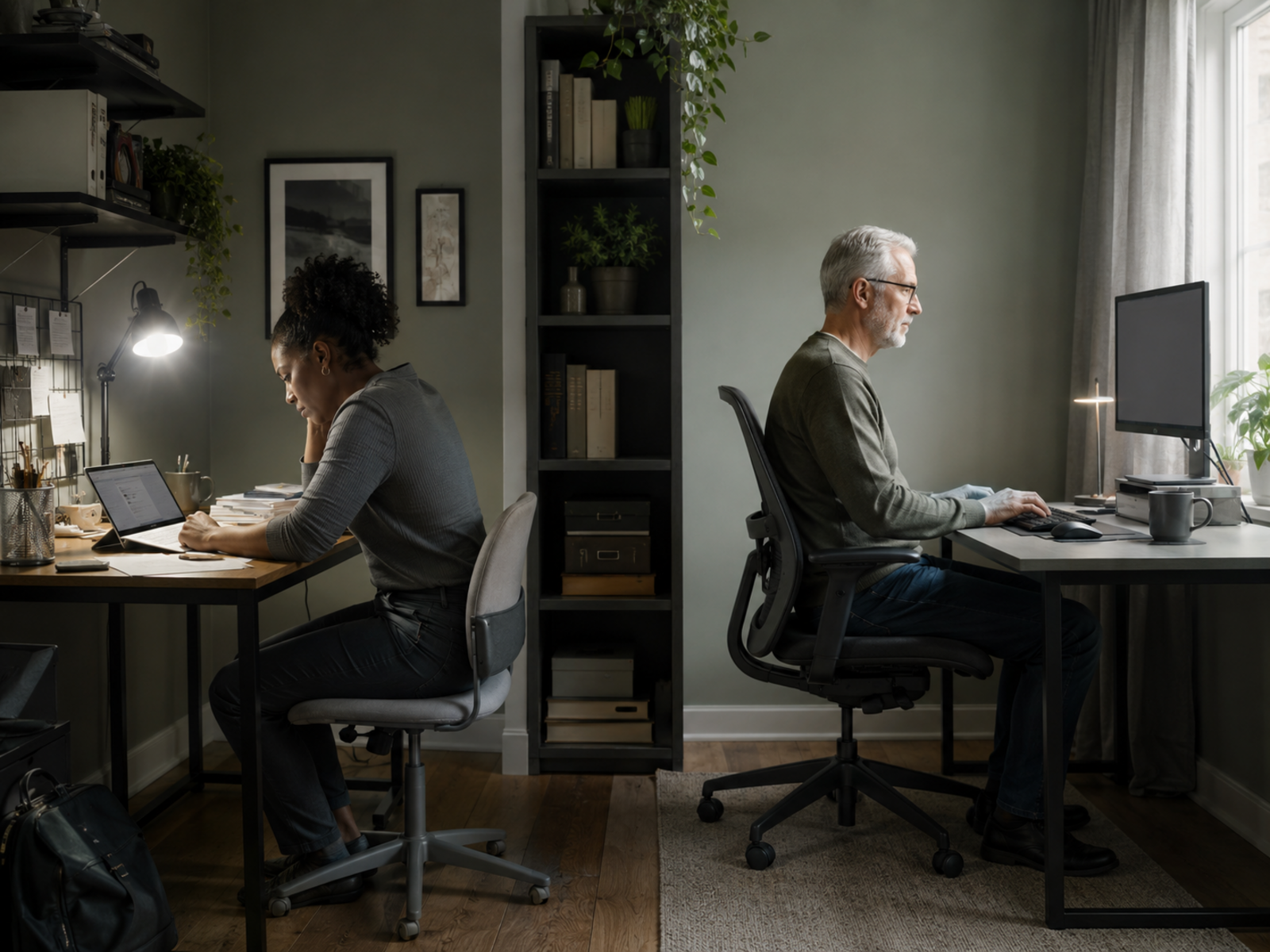
Desk setup differences influencing comfort and emotional wellbeing.
Desk Setup Mistakes Usually Involve Comfort And Overstimulation
Many workers assume productivity problems always relate directly to motivation, discipline, or workload alone.
However, desk setup mistakes usually involve posture strain, visual overload, environmental stress, awkward ergonomics, and emotional overstimulation quietly increasing fatigue throughout workdays instead. In many cases, workers feel noticeably calmer once environments stop constantly creating friction and discomfort.
Supportive environments still matter enormously.
Explore more insights: How to make your home office feel less overwhelming
Desk Setup Mistakes Worth Fixing First
Screens Positioned Too Low
Low laptop and monitor positioning frequently create neck tension and rounded posture during long workdays.
Additionally, screen height strongly affects overall comfort throughout the day.

Poor monitor height contributing to neck and shoulder discomfort.
Further reading: Laptop stands keyboards and mouse setup for better posture
Overloaded Desks And Visual Clutter
Crowded workspaces frequently increase distraction and emotional overstimulation significantly.
Meanwhile, cleaner environments often feel calmer automatically.
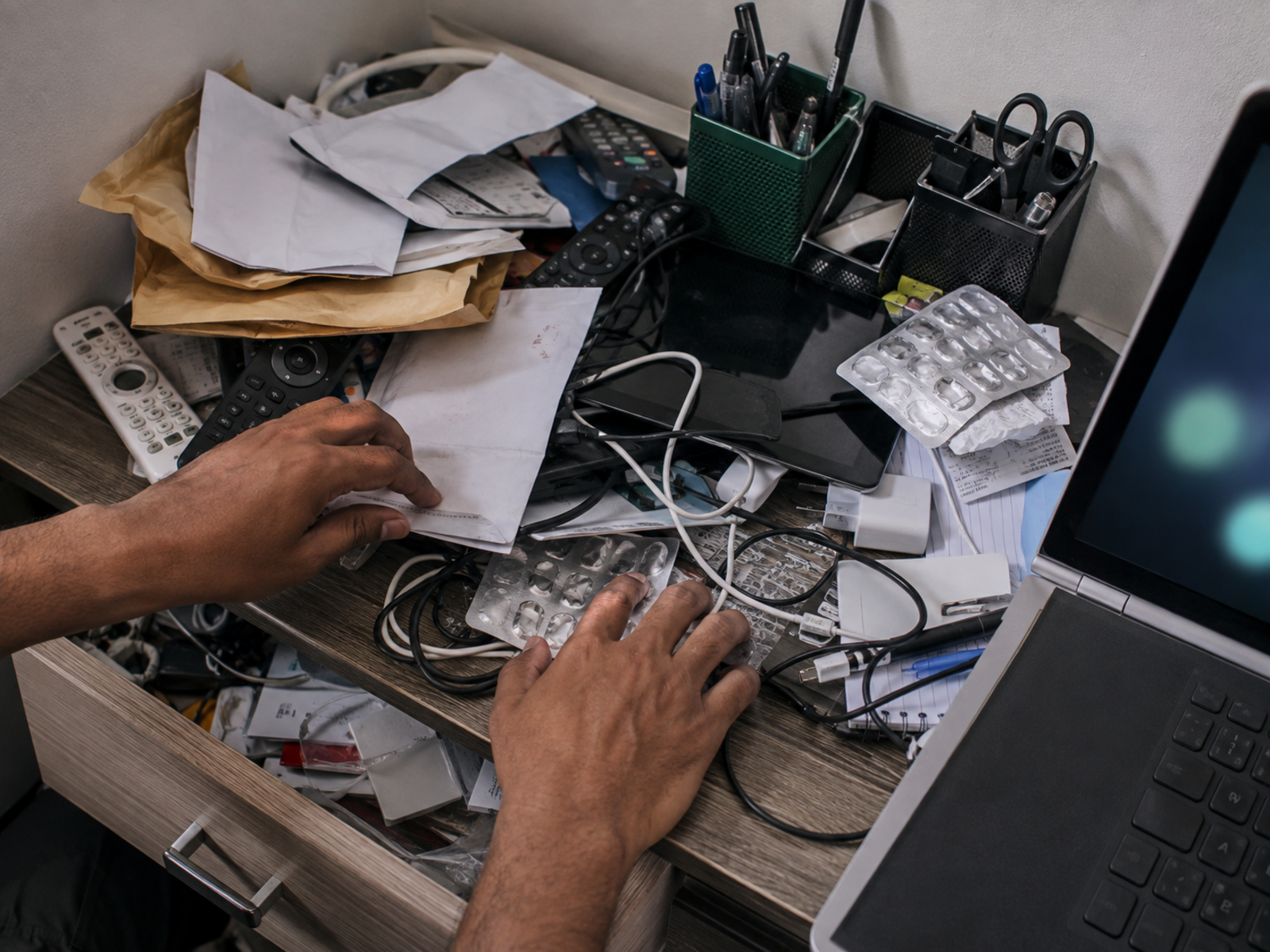
An overloaded workspace contributing to mental fatigue and distraction.
Harsh Lighting And Poor Atmosphere
Bright harsh lighting and visually cold environments frequently increase emotional fatigue during screen-heavy routines.
Consequently, softer lighting often improves comfort noticeably.

An uncomfortable lighting setup increasing visual and emotional fatigue.
Ignoring Physical Comfort Completely
Many workers tolerate uncomfortable chairs, awkward desk heights, and unsupported sitting positions for far too long.
Likewise, smaller ergonomic improvements often deliver strong value.

An uncomfortable workspace contributing to posture strain and fatigue.
Too Many Gadgets And Accessories
Certain workers overcrowd desks with unnecessary productivity tools, accessories, and visual distractions constantly.
Therefore, simpler workspaces often support healthier focus naturally.
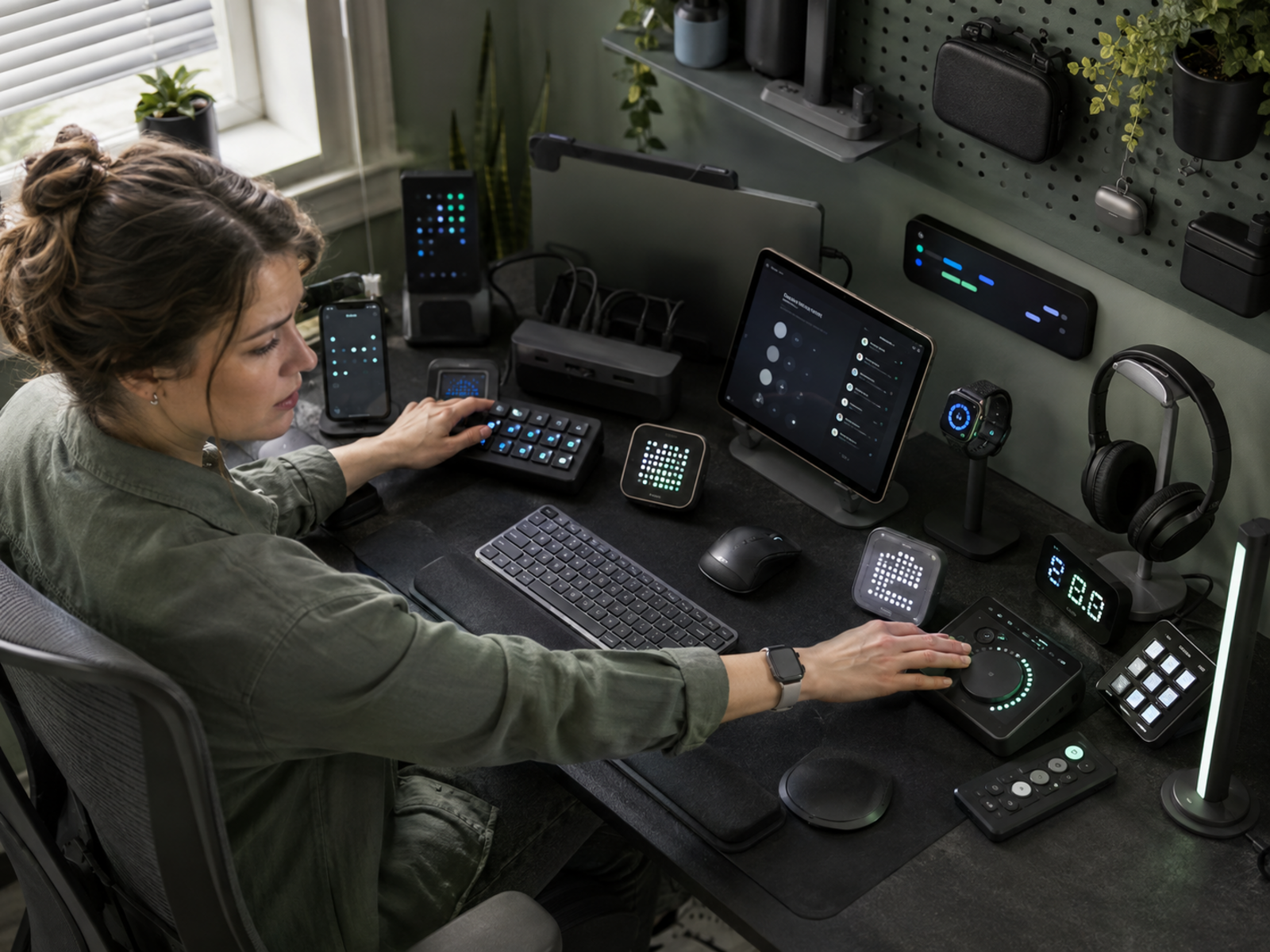
A gadget-heavy desk setup increasing distraction and clutter.
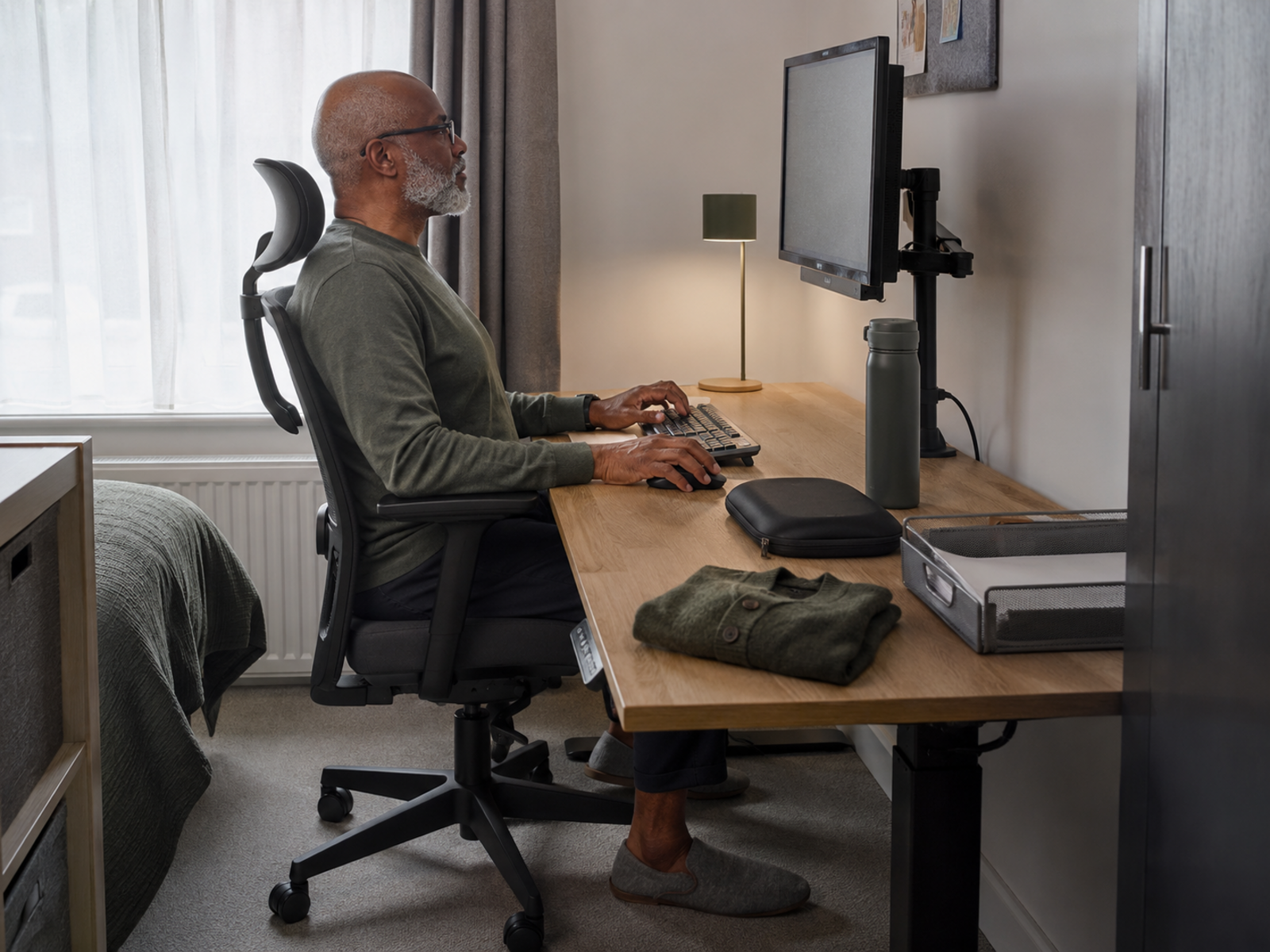
A cleaner home office supporting healthier focus and emotional wellbeing.
Workspace Categories That Often Improve Wellbeing Most
Ergonomic Comfort Improvements
Healthier seating, monitor positioning, and posture support frequently improve daily comfort significantly.
Therefore, ergonomic improvements often deliver strong long-term value.
Lighting And Atmosphere Changes
Lighting strongly affects mood, focus, and emotional comfort throughout workdays.
Meanwhile, softer environments frequently support calmer routines naturally.
Workspace Simplification
Cleaner simpler desk environments usually reduce visual fatigue and overstimulation noticeably.
Consequently, reduced clutter often improves focus indirectly too.
Sustainable Comfort Habits
Movement breaks, hydration, emotional pacing, and healthier routines often support wellbeing alongside physical workspace improvements.
As a result, overall routines still matter heavily.
Frequently read together: Home office decor that supports focus and wellbeing
Better Workspaces Usually Feel Calmer Not More Complicated
Many workers continue adding more products, gadgets, and accessories hoping productivity and motivation will improve automatically afterward.
However, healthier workspaces often feel calmer, simpler, and more emotionally supportive instead of visually overwhelming and highly optimised. In many cases, workers feel better once environments reduce friction instead of constantly demanding attention.
Simplicity still supports wellbeing enormously.
Readers also enjoyed: The busy worker guide to buying less but better
What Many Workers Get Wrong About Desk Setups
Prioritising Aesthetics Over Comfort
Certain visually impressive setups still create physical strain and emotional fatigue during daily use.
However, practical comfort usually matters more long term.
Assuming Productivity Requires More Equipment
Many workers buy endless accessories believing additional tools automatically improve focus and motivation.
Meanwhile, simplicity frequently supports concentration better.
Ignoring Emotional Atmosphere
Workspace mood and emotional comfort frequently influence wellbeing throughout stressful workdays.
Therefore, atmosphere often matters significantly too.
Simpler Workspace Systems Usually Work Best
Desk setup mistakes usually improve once environments become calmer, cleaner, healthier, and more supportive for realistic daily routines.
Long-term wellbeing often improves through smaller intentional workspace adjustments repeated consistently.
Also worth reading: Budget wellness habits that feel expensive but are not
Pros And Cons Of Improving Desk Setups
Pros
Cons
Final Thoughts
Desk setup mistakes that make you feel worse usually involve smaller environmental stressors quietly increasing physical discomfort, visual overload, and emotional fatigue throughout demanding routines.
Screen positioning, workspace clutter, lighting quality, ergonomic comfort, and calmer environments may all support healthier workdays gradually over time. Most importantly, supportive setups often help workers feel less overwhelmed because environments finally reduce friction instead of constantly increasing it.
For many remote workers, healthier productivity begins once the workspace starts supporting calmness and comfort instead of overstimulation and tension.
Further reading: Home office setup on a budget
FAQ
What desk setup mistake affects comfort most?
Poor screen positioning frequently contributes heavily to neck tension, posture strain, and physical discomfort during long workdays.
Does clutter really affect focus?
Yes. Overloaded environments often increase visual distraction and emotional overstimulation significantly.
Are expensive desk setups necessary?
Not necessarily. Smaller intentional improvements frequently support healthier routines surprisingly well.
What helps create a calmer workspace?
Softer lighting, cleaner organisation, ergonomic comfort, and reduced visual clutter often help significantly.
Should productivity setups prioritise aesthetics?
Practical comfort and sustainable usability usually matter more than highly aesthetic trend-focused setups long term.


