



Host a Virtual Halloween Party: Audio,…

20 Minimalist Halloween Nail Ideas for…

Can Free Affinity Help You Build…

12 Lower-Sugar Halloween Treat Swaps Worth…

Can Hostinger AI Builder Launch a…

A 5-Step Screen-Free Autumn Reading Ritual…

Plug-In Solar Panels UK: Are They…

15 Last-Minute Zoom Halloween Costumes for…

Meta One Explained: Is the Subscription…

10 Low-Fuss Dog Halloween Ideas: Comfort…

Plaud One Explained: Can AI Earbuds…

9 Gothic Dinner Table Ideas for…

Namecheap vs Dynadot

7 UK Ghost Tours and How…

Convertkit Vs Beehiiv

Do You Really Need a £420…

Bluehost vs Siteground

15 Gentle Spooky Autumn Books to…

Namecheap review

How to Remove Halloween Face Paint…
Decodo is a web infrastructure platform that provides proxy services and tools designed to help businesses collect and analyze online data. Companies that rely on web data for research, automation, or market analysis often use proxy services to access information from websites while avoiding restrictions or blocks.
In simple terms, proxies allow businesses to access websites through different IP addresses, which helps with tasks such as web scraping, competitive analysis, and data monitoring.
Decodo focuses on providing reliable proxy networks and web data tools that support these activities. Businesses, developers, and marketing teams often use such platforms when gathering publicly available data from multiple sources.
In this review we’ll explore how Decodo works, the features it offers, and who may benefit from using its services.

Quick Overview
In this guide we’ll explore the most important aspects of Decodo.
What Is Decodo?
Decodo is a proxy and web data infrastructure provider designed to help businesses access and analyze online data.
Websites often restrict automated data access or limit the number of requests coming from a single IP address. Proxy platforms like Decodo solve this problem by allowing users to route their requests through a large network of IP addresses.
This allows businesses to collect publicly available data while reducing the risk of being blocked by websites.
Typical use cases for proxy services include:
Because of these capabilities, proxy platforms are widely used by businesses that rely on online data.
How Proxy Networks Work
A proxy server acts as an intermediary between your computer and the website you are accessing.
Instead of sending requests directly from your own IP address, the proxy sends the request on your behalf.
The process typically works like this:
By rotating through multiple proxy IP addresses, businesses can access websites without triggering automated restrictions.
Decodo Features
Proxy Infrastructure
One of Decodo’s core services is its proxy network.
The platform provides access to large pools of IP addresses that allow users to distribute web requests across multiple locations.
This helps reduce the risk of websites blocking requests from a single IP.
Proxy Management Snapshot

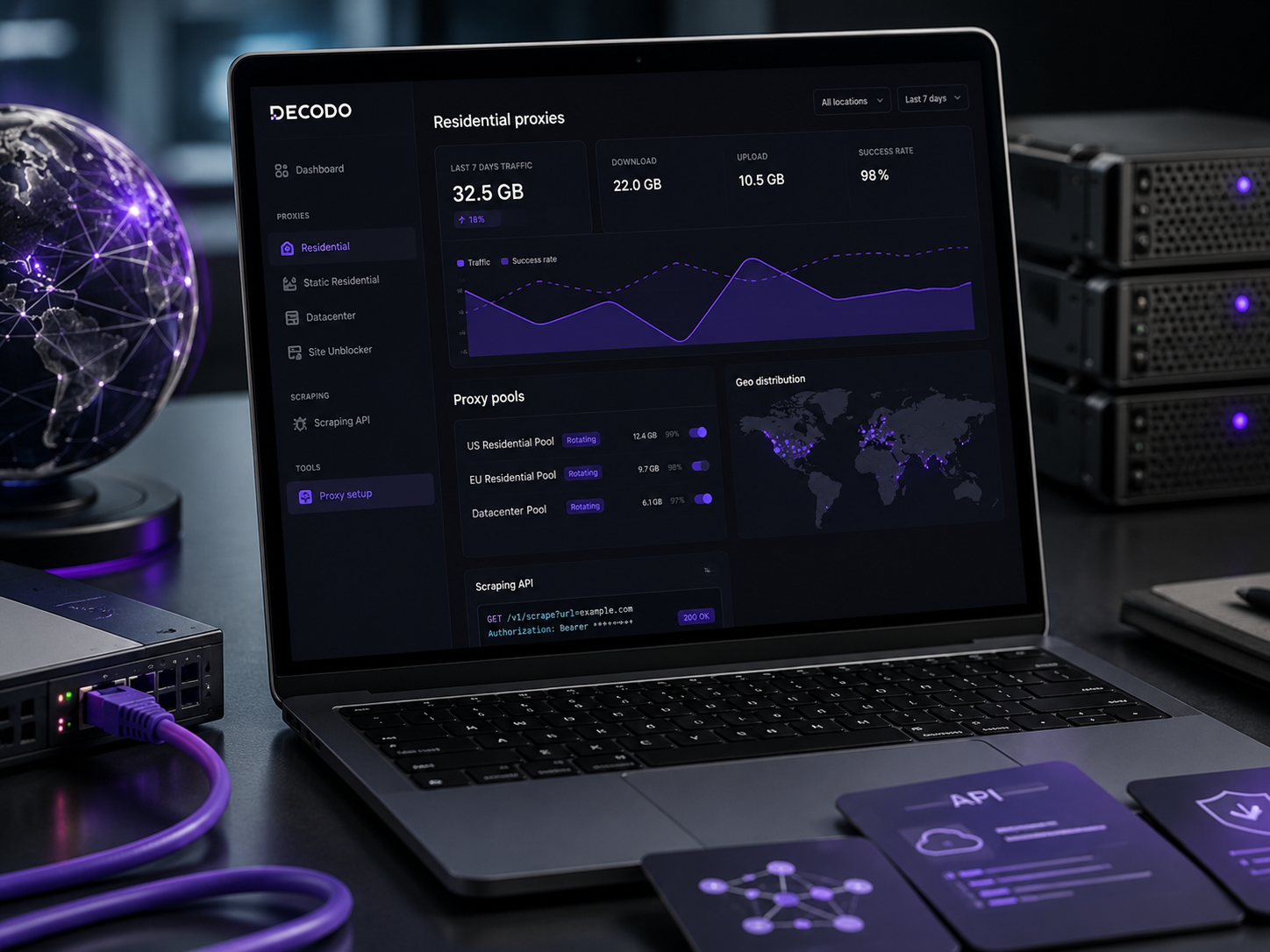
Rotating Proxies
Decodo offers rotating proxies that automatically change the IP address used for each request.
This feature is useful when performing tasks such as:
Rotating proxies help mimic natural browsing behavior.
Rotating Proxy Settings
Data Collection Tools
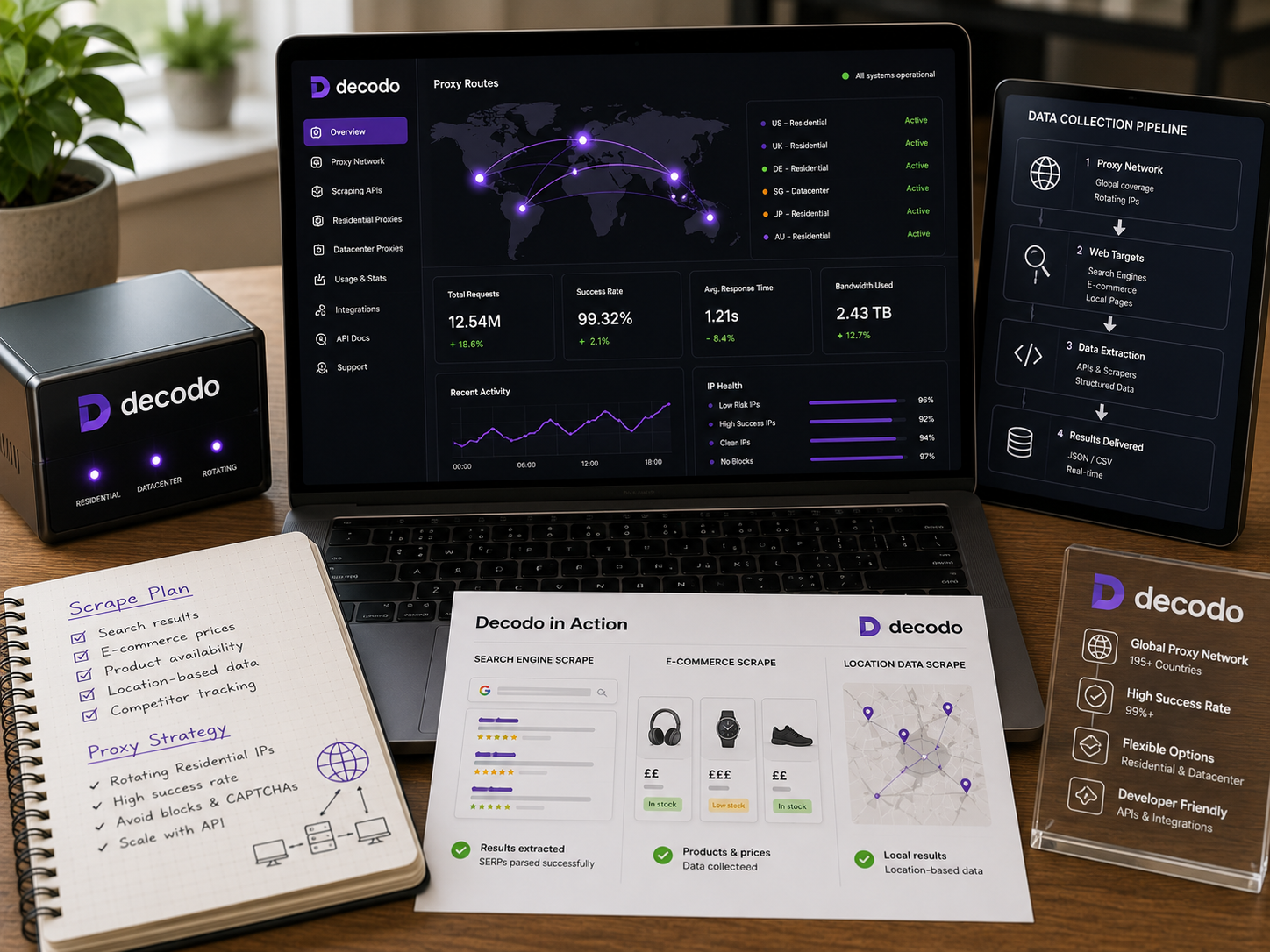
Some proxy platforms also include tools designed to simplify web data extraction.
These tools may help businesses:
By combining proxy infrastructure with data collection tools, platforms like Decodo help automate online research processes.
Data Extraction Interface
Security and Reliability
Reliable proxy networks must maintain stable connections and high uptime.
Decodo focuses on providing infrastructure designed to support consistent data collection tasks.
Key factors include:
These features help ensure that data requests remain consistent.
Network Performance Analytics

Pros and Cons of Decodo
Advantages of Decodo
Decodo offers several benefits for businesses working with web data.
Advantages include:
These features help businesses gather online data more efficiently.
Where Decodo Falls Short
Despite its strengths, proxy services have limitations.
Limitations include:
Businesses with simple needs may not require advanced proxy infrastructure.
Who Decodo Is For (And Who It Isn’t)
Decodo Is Best For
Decodo works well for:
These users benefit from proxy infrastructure and automation tools.
Decodo May Not Be Ideal For
Some users may not require proxy services.
Examples include:
In these cases, proxy infrastructure may not be necessary.
Decodo vs Other Proxy Providers
Decodo competes with other proxy platforms that provide similar infrastructure for accessing online data.
Different providers may vary in terms of:
Choosing the right proxy provider depends on the scale of data collection and technical requirements.
Free Resource: Blog Setup Checklist
🎁 Free Guide: Blog Setup Checklist
If you’re building an online business and want to grow traffic through content, download the Blog Setup Checklist.
Inside the guide you'll learn how to:
Affiliate Tool Recommendation
If you're growing a website and want to attract traffic through search engines, SEO tools can help guide your strategy.
Continue here: Semrush Review
Final Verdict
Decodo provides proxy infrastructure designed to help businesses access and analyze online data.
For companies that rely on web scraping, competitive analysis, or automated data collection, proxy networks can be an essential part of their technical infrastructure.
While proxy platforms may not be necessary for every type of online business, organizations that depend on large‑scale data access can benefit from tools designed to support those processes.
FAQs About Decodo
What is Decodo used for?
Decodo provides proxy infrastructure used for web data access and automation.
Are proxy services legal?
Proxy services themselves are legal, although users must ensure they follow website terms and data regulations.
Do bloggers need proxy services?
Most bloggers do not require proxy services unless performing data collection tasks.
What are rotating proxies?
Rotating proxies automatically change the IP address used for each request.


