



Host a Virtual Halloween Party: Audio,…

20 Minimalist Halloween Nail Ideas for…

Can Free Affinity Help You Build…

12 Lower-Sugar Halloween Treat Swaps Worth…

Can Hostinger AI Builder Launch a…

A 5-Step Screen-Free Autumn Reading Ritual…

Plug-In Solar Panels UK: Are They…

15 Last-Minute Zoom Halloween Costumes for…

Meta One Explained: Is the Subscription…

10 Low-Fuss Dog Halloween Ideas: Comfort…

Plaud One Explained: Can AI Earbuds…

9 Gothic Dinner Table Ideas for…

Namecheap vs Dynadot

7 UK Ghost Tours and How…

Convertkit Vs Beehiiv

Do You Really Need a £420…

Bluehost vs Siteground

15 Gentle Spooky Autumn Books to…

Namecheap review

How to Remove Halloween Face Paint…
BigCommerce gets attention from store owners who are tired of paying extra for features that should feel built in. A shop may start smoothly, then need better filtering, product options, SEO control, marketplace selling, and stronger catalogue management. If every improvement requires another paid app, ecommerce starts feeling scattered. BigCommerce aims to solve that problem by giving growing stores more native tools from the beginning.
Quick Overview
In this review you will learn:

Ecommerce platform supporting scalable online business operations.
Helpful next reads: Shopify review
Why Businesses Consider BigCommerce
Built-In Features Reduce App Dependency
BigCommerce includes stronger native ecommerce functionality than platforms that rely heavily on paid add-ons. That matters when a store needs better product handling, promotions, SEO controls, and catalogue structure without stacking too many outside tools.
Scaling Feels More Comfortable
Stores expecting larger inventories, higher traffic, wider catalogues, and more demanding operations often appreciate that BigCommerce feels built for growth rather than quick beginner setup only.
SEO Tools Feel Strong
BigCommerce gives store owners useful control over URLs, metadata, technical settings, product indexing, and site structure. That flexibility matters once organic traffic becomes a serious growth channel.
Daily Management Can Feel Less Fragmented
A store becomes harder to manage when plugins, integrations, subscriptions, and apps multiply. BigCommerce appeals because more ecommerce functionality lives inside the core platform.
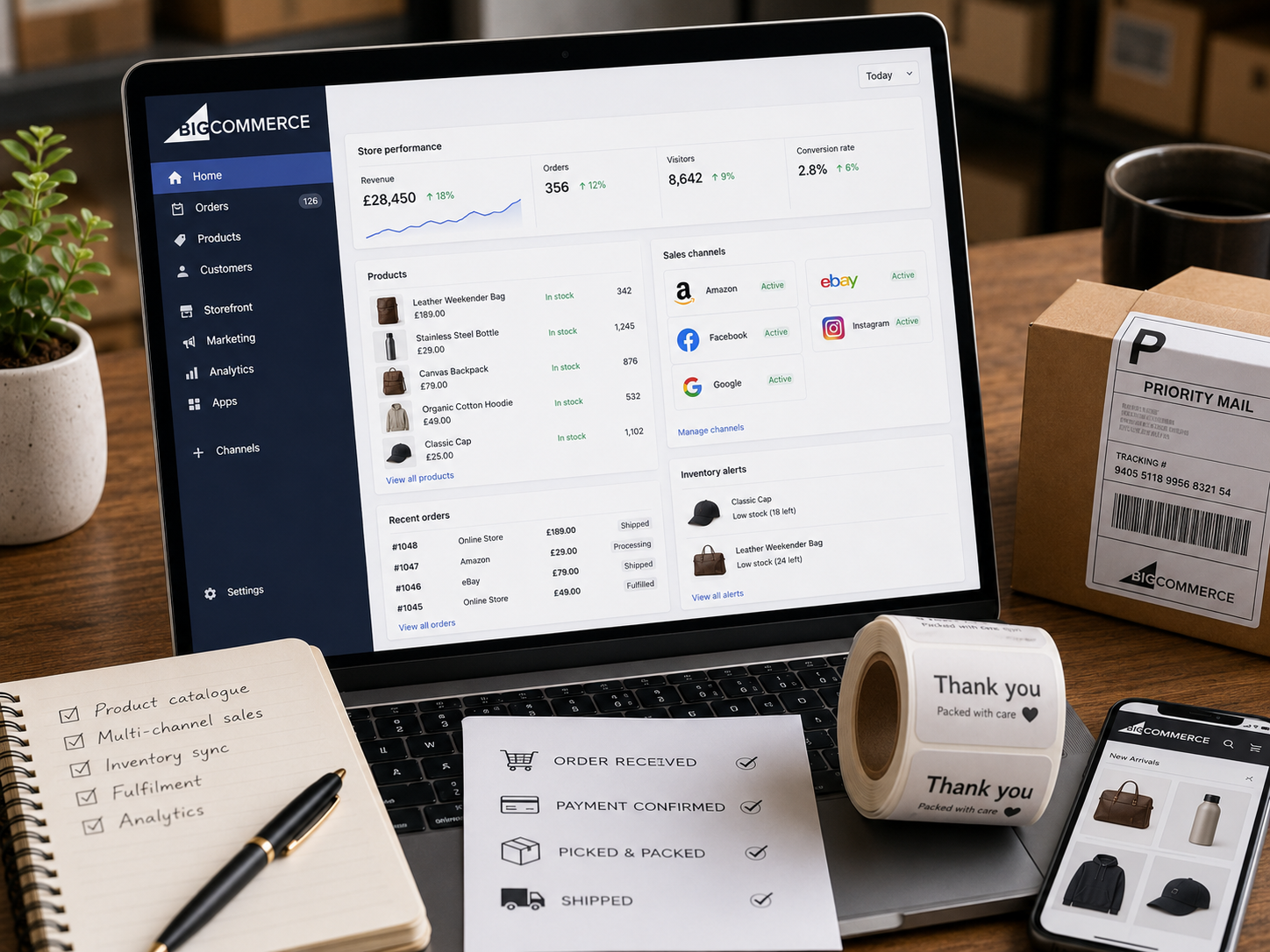
Online store platform supporting scalable ecommerce workflows.
Online Stores Get Messy Faster Than Owners Expect
A store often begins with one clean theme, a few products, and simple marketing. Growth changes the work. More products need categories, filters, variants, fulfilment rules, SEO updates, email flows, and customer support. When every improvement requires another app, daily management starts feeling fragmented. BigCommerce helps by keeping more ecommerce infrastructure inside the platform itself, which can reduce subscription clutter and technical fatigue as operations expand.
Explore more insights: Ecommerce platforms explained
BigCommerce Features
Product Management Feels Strong
BigCommerce comfortably supports larger inventories, product variants, categories, filtering options, and broader catalogue management. That strength becomes useful once a store moves beyond a handful of simple products.

Ecommerce workflow supporting inventory and catalogue organisation.
SEO Controls Feel More Flexible
The platform gives store owners stronger control over store structure, metadata, product URLs, technical settings, and indexation choices compared with simpler ecommerce builders.

Multi-Channel Selling Works Smoothly
BigCommerce supports selling through marketplaces, social platforms, product feeds, and online storefronts without forcing every channel into a completely separate process.
Built-In Tools Reduce Clutter
BigCommerce review discussions become more useful once businesses realise fewer external apps often means fewer updates, fewer billing surprises, and fewer systems breaking unexpectedly.
Ecommerce infrastructure supporting scalable online store operations.
What Quietly Frustrates BigCommerce Users
The Platform Feels Less Beginner-Friendly
Some beginners find Shopify easier at first because BigCommerce feels more serious from the beginning. The extra depth is useful, but it can feel heavier during early setup.
Design Editing Can Feel Less Casual
Theme editing and storefront customisation may require more patience than simpler drag-and-drop builders. A store owner wanting quick visual changes may find the process less intuitive.
Tiny Stores May Not Need The Depth
A shop with only a few products may not benefit enough from advanced catalogue handling, SEO controls, multi-channel tools, and scalability features to justify the learning curve.

Stronger Tools Still Need Discipline
BigCommerce provides solid infrastructure, but it does not remove the need for organised product data, clean categories, consistent updates, and sensible customer communication.

Ecommerce management system supporting scaling online businesses.
Stores Usually Outgrow Simple Tools Gradually
A business rarely wakes up one morning and suddenly feels too large for its store system. The pressure builds slowly. Product catalogues expand, SEO matters more, marketplace selling becomes useful, inventory rules get more detailed, and app costs start annoying the owner. BigCommerce becomes attractive at that stage because it feels less like a beginner storefront builder and more like ecommerce infrastructure built for heavier operations.
Frequently read together: Shopify review
Which Businesses Usually Fit BigCommerce Best?
Growing Ecommerce Stores
BigCommerce strongly suits stores expecting inventory growth, broader operations, and heavier ecommerce requirements over time.
SEO-Focused Ecommerce Businesses
Businesses relying on organic search may appreciate stronger technical control because product pages, categories, and store architecture become increasingly important.
Multi-Channel Sellers
BigCommerce fits businesses selling through marketplaces, social platforms, online stores, product feeds, and broader ecommerce channels at the same time.

Stores Wanting Fewer Add-Ons
BigCommerce review comparisons become clearer once store owners calculate how much complexity, cost, and maintenance endless apps quietly create.
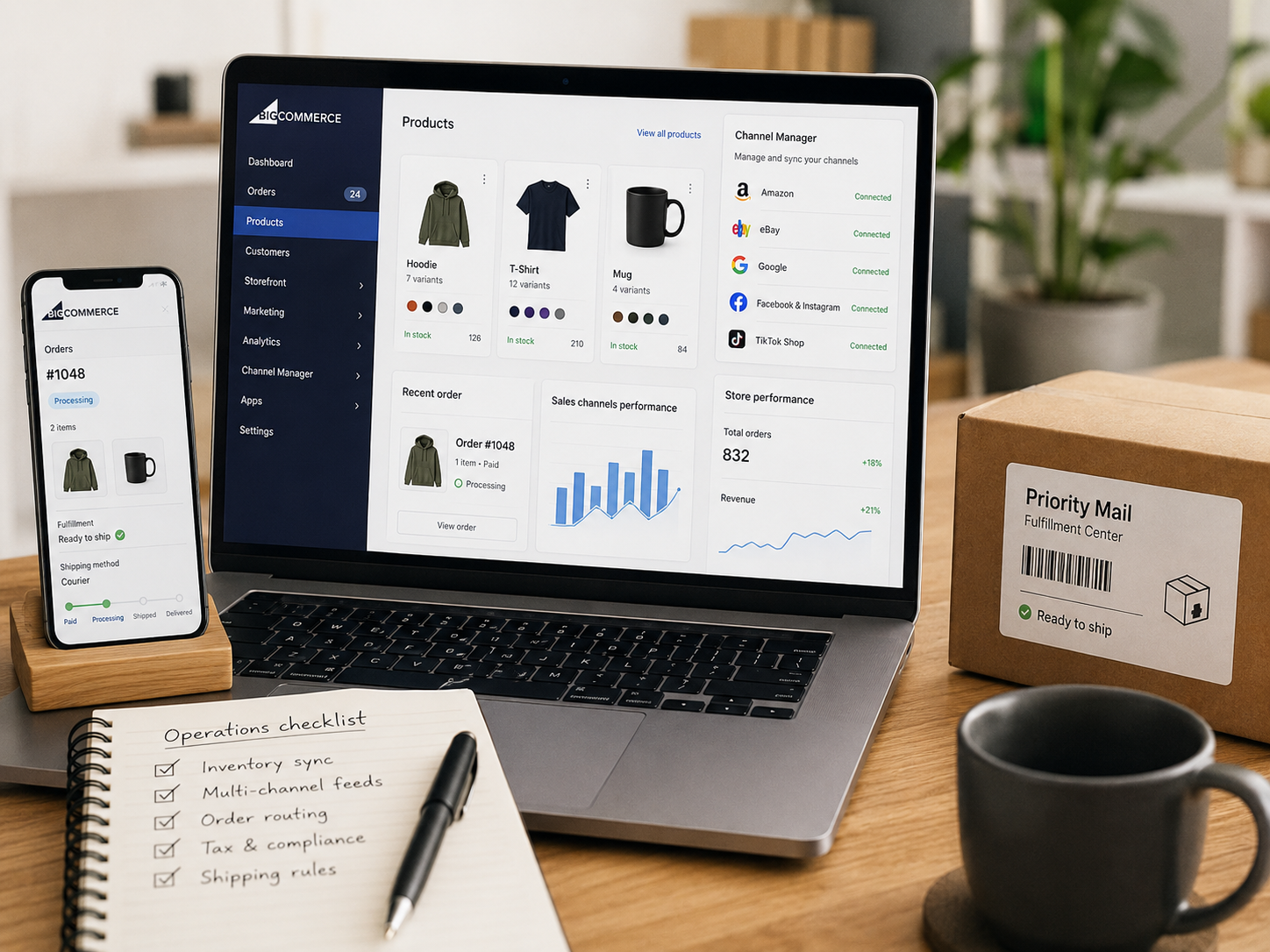
Online business workflow supporting larger ecommerce operations.
Pros And Cons Of BigCommerce
Pros
Cons
FAQs
Is BigCommerce better than Shopify?
BigCommerce can feel stronger for growing stores needing built-in infrastructure, while Shopify usually feels easier for beginners managing their first store.
Why do businesses choose BigCommerce?
Businesses often choose BigCommerce for lower app dependency, stronger SEO controls, larger catalogue support, and infrastructure that handles ecommerce growth more comfortably.
Is BigCommerce beginner-friendly?
It can work for beginners, but the platform may feel heavier than simpler ecommerce systems because it offers more depth from the start.
Does BigCommerce work well for scaling stores?
Yes. BigCommerce strongly supports growing inventories, larger catalogues, multi-channel selling, and broader ecommerce operations.
Why do built-in tools matter?
Built-in tools can reduce app costs, workflow fragmentation, technical maintenance, and the stress of managing too many disconnected systems.
Final Verdict
BigCommerce became attractive because ecommerce businesses grew tired of relying on endless apps for functionality that should feel central to store management. The platform suits growing stores wanting stronger built-in infrastructure, better SEO flexibility, larger catalogue support, and lower dependency on fragmented add-ons.
It is not always the easiest beginner platform. Shopify often feels simpler during the first launch. BigCommerce usually becomes more valuable once a store needs scalability, stronger product handling, and fewer paid apps creating dashboard clutter.
For the right business, that infrastructure can make daily ecommerce management feel more sustainable.


