



Can Hostinger AI Builder Launch a…

Christmas Gifts for Home Workers That…

Plug-In Solar Panels UK: Are They…

Halloween Decorations Worth Buying — and…

Meta One Explained: Is the Subscription…

Anti-Optimisation Wellness: Can a Sunrise Lamp…

Plaud One Explained: Can AI Earbuds…

Sunrise Lamps Explained: What They Actually…

Namecheap vs Dynadot

Lifesum Review UK: Is Premium Worth…

Convertkit Vs Beehiiv

Garmin CIRQA Review: Screen-Free Tracking Without…

Bluehost vs Siteground

Garden Gatherings – Summer Is The…

Namecheap review

Portable Outdoor Speakers for Garden Offices

Cloudways Vs WP Engine

Outdoor WiFi Extenders For Garden Offices

Dropshipping Explained

Portable Pools For Home Workers This…
Some home work is easy to spot: laundry, dishes, school forms and the mysterious pile nobody wants to claim. Invisible work is the part that happens before all that noticing what is missing, remembering appointments, planning meals, tracking supplies, reading messages and quietly keeping family life moving.
Invisible work at home is tiring because it rarely looks like one big job. It feels more like a hundred tiny open loops, all asking one person to keep watch.
What invisible work at home really means
Why remembering, noticing and planning count as real work
Why “helping” is not the same as owning responsibility
How hidden household work becomes exhausting
How to make invisible work more visible
How to share the load more fairly
Common mental load mistakes to avoid
Where this differs from work and home boundary stress

Most Relevant Audience
This article is for home workers, parents, carers, partners, freelancers, creators and busy households where one person quietly carries too much hidden responsibility. It focuses on invisible home work: remembering, noticing, planning, organising, emotional labour, household admin and family logistics. If your main issue is paid work and home life interrupting each other in the same space, read the blurred-boundaries guide next.
What Invisible Work At Home Really Means
Remembering is part of the work
Remembering is work. Remembering the school trip payment, the pet appointment, the birthday card, the medication refill, the lunch supplies, the bin day and the fact that someone’s shoes are suddenly too small all uses mental energy.
Noticing is part of the work
A lot of invisible household labour starts with noticing. Noticing that the toothpaste is nearly empty, the fridge has become optimistic, the calendar is getting crowded or a child seems unsettled is part of keeping family life moving.
Planning is part of the work
Planning is the hidden layer behind many chores. Dinner is not only cooking. It is deciding what to make, checking ingredients, remembering preferences, thinking about time and making sure the meal fits the day everyone is actually having.

Emotional labour is part of the work
Emotional labour at home can mean noticing moods, smoothing tension, remembering what matters to people, anticipating reactions and keeping family life feeling cared for. It can be meaningful, but it still takes energy.

The load grows when one person carries the system
Invisible work becomes heavier when one person is expected to know what needs doing and remind everyone else. That person becomes the calendar, stock checker, emotional weather station, appointment tracker and domestic search engine.

Invisible household work can feel hard to explain because it often sounds small when listed one task at a time. Book dentist. Check lunches. Reply to school. Replace shampoo. Plan dinner. Remember the appointment. Buy the gift. Send the message. None of it sounds dramatic.
Together, it becomes a constant background pressure. The hidden load counts because your brain is still working even when your hands are not. If persistent exhaustion, stress or burnout symptoms keep building, take them seriously and look for proper support, but also look at the household system around you.
Why Invisible Home Work Becomes Exhausting
Small tasks create a constant background load
Small tasks are tiring because they do not arrive neatly. They appear while you are cooking, working, resting, getting ready, answering a message or trying to remember why you walked into a room.
Being the default person drains energy
The default person is the one everyone assumes will know. Where is the form? What time is the appointment? Are we out of cereal? Did anyone reply to that message? What are we eating? Do they need a costume tomorrow?
Helping is not the same as owning
Helping usually means someone does a task when asked. Owning means they notice it, plan it, remember it, do it and follow through without needing another person to manage the process.
Resentment builds when work stays unnamed
Resentment often grows when invisible work is treated as automatic. One person quietly handles the remembering, planning and emotional labour until the imbalance feels normal to everyone except the person carrying it.
Rest feels harder when the household list never closes
Rest is difficult when every pause becomes a chance to remember another task. If one person’s rest is always interrupted by household management, it is not really rest. It is unpaid project management with a cushion.

The problem is rarely just the dishes, the laundry, the shopping or the school message. The issue is the system behind those tasks. Who notices? Who remembers? Who plans? Who checks? Who carries the emotional weight if something is forgotten?
Once you separate the visible chore from the invisible responsibility, the conversation becomes clearer. A fairer household is not only about who takes the bin out. It is about who knows the bin needs taking out without being prompted by another tired adult.
How To Make Invisible Work More Visible
Write down the hidden tasks
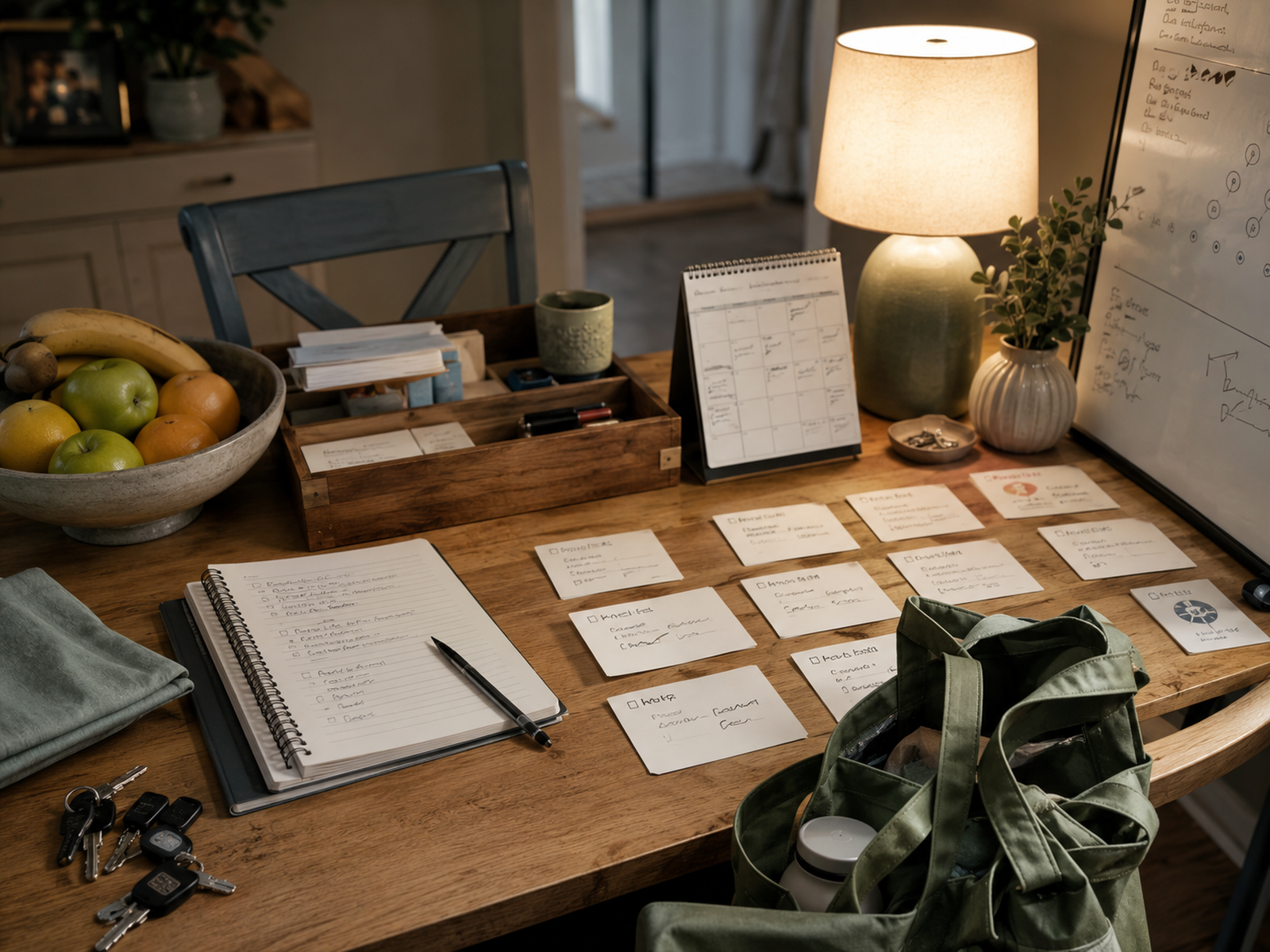
Start by writing down the household tasks that live in someone’s head. Include meals, shopping, appointments, forms, birthdays, repairs, supplies, school messages, pet care, family admin, cleaning routines and recurring reminders.
Separate doing from remembering
For each task, separate the visible action from the mental ownership. Buying toothpaste is one task. Noticing it is low, adding it to the list, remembering to buy it and checking it actually arrives are the hidden layers.
Name the planning behind each task
Planning is often where the invisible load hides. A family meal may include checking the week, knowing who is home, planning around activities, buying ingredients, using what is already in the fridge and making sure the meal will actually be eaten.
Create a shared household view
A shared calendar, list, whiteboard, app or simple notebook can move tasks out of one person’s head. The tool does not need to be fancy. It just needs to make the household load visible enough that more than one person can see it.
Use short weekly check-ins
A short weekly household check-in can reduce last-minute stress. Look at the week ahead, name what needs doing, assign ownership and agree what can be delayed or dropped.
How To Share The Load More Fairly
Assign ownership, not reminders
Fair sharing means giving someone the whole task, not just the final visible piece. If one person owns packed lunches, they own checking supplies, planning options, preparing them and noticing when something needs replacing.
Agree what “done” means
Households often argue because “done” means different things to different people. One person thinks dinner means food cooked. Another thinks it includes planning, shopping, clearing up and knowing what tomorrow’s breakfast situation looks like.
Reduce unnecessary standards
Some household standards are useful. Others are inherited pressure wearing a nice cardigan. If the load is too heavy, ask what can be simplified, delayed, shared differently or stopped altogether.
Give admin a container
Household admin can spread everywhere if it has no boundary. Give it a regular slot, a shared list and a clear owner where possible. Bills, forms, appointments, renewals and messages should not be allowed to nibble the whole evening.
Protect recovery as a real need
Recovery is not what happens after every household task is finished, because households do not finish. They regenerate. Protecting recovery means treating rest as part of the system, not as a reward for completing it.


Common Mental Load Mistakes
Treating invisible work as nothing
Invisible work can be dismissed because it does not always look like labour. Remembering, planning, noticing and emotionally holding a household together can be treated as personality traits instead of work.
Waiting until resentment explodes
Many people wait until they are furious before naming the imbalance. Earlier is kinder. Naming the hidden load before resentment builds gives everyone a better chance of changing the system.
Sharing tasks without sharing responsibility
A household can split chores and still leave the mental load uneven. Real sharing means sharing responsibility, not just labour. The question is not only “Who does it?” It is “Who owns it from start to finish?”
Turning rest into another job
Rest can become another managed task when one person has to arrange their own break, prepare everything first, remind others, lower expectations and then feel guilty for stopping.
Expecting one person to be the household operating system
No one should have to be the household operating system by default. One person should not be the calendar, reminder app, stock manager, care coordinator, emotional support desk and missing-item search engine for everyone else.

FAQ
What is invisible work at home?
Invisible work at home is the hidden remembering, noticing, planning, organising and emotional labour that keeps daily life running. It includes things like tracking appointments, planning meals, noticing supplies are low, managing family logistics and anticipating what needs to happen next.
What is the difference between chores and mental load?
Chores are the visible tasks, such as cooking, cleaning or shopping. Mental load is the hidden work around those tasks, such as remembering they need doing, planning when they will happen, knowing what is needed and checking whether they are complete.
Why is remembering so tiring?
Remembering is tiring because it keeps your brain partly on duty. Even small tasks use energy when you have to track them, hold them, prioritise them and make sure they do not get forgotten.
How do you share invisible work more fairly?
Share invisible work more fairly by naming the hidden tasks, assigning full ownership and using shared calendars, lists or check-ins. The key is to share the remembering and planning, not just the final visible action.
Can invisible work contribute to burnout?
Invisible work can contribute to burnout when one person carries too much responsibility for too long without enough support, rest or recovery. Persistent burnout symptoms should be taken seriously.
What is the first step to reduce household mental load?
The first step is to write down the invisible tasks that one person is carrying. Include remembering, noticing, planning, emotional labour and admin. Once the load is visible, it can be shared, simplified, delayed or dropped.
Final Verdict
Invisible household work is real work. Remembering, noticing, planning, organising, tracking, caring and emotionally holding daily life together all take energy, even when nobody sees them happening.
The first step is making the hidden load visible. Once it is out of one person’s head, it can be shared more fairly, simplified, delayed or dropped. A household should not depend on one tired person silently carrying the whole invisible system.






