



Host a Virtual Halloween Party: Audio,…

Calm Autumn Reset: 10 Small Changes…

Can Free Affinity Help You Build…

10 Easy Halloween Party Snacks With…

Can Hostinger AI Builder Launch a…

The Subscription Audit: Can Emma Find…

Plug-In Solar Panels UK: Are They…

20 Minimalist Halloween Nail Ideas for…

Meta One Explained: Is the Subscription…

12 Lower-Sugar Halloween Treat Swaps Worth…

Plaud One Explained: Can AI Earbuds…

A 5-Step Screen-Free Autumn Reading Ritual…

Namecheap vs Dynadot

15 Last-Minute Zoom Halloween Costumes for…

Convertkit Vs Beehiiv

10 Low-Fuss Dog Halloween Ideas: Comfort…

Bluehost vs Siteground

9 Gothic Dinner Table Ideas for…

Namecheap review

7 UK Ghost Tours and How…
A heated airer and a dehumidifier both dry washing indoors, but they cost different amounts to run and suit different homes. This guide starts with the free steps, then shows the running-cost arithmetic so you can use your own unit rate. The figures are MyHotips's own sums from manufacturer and Ofgem numbers, checked on 17 October 2026, not hands-on tests, and they can change.
Quick Overview
- Free steps such as an extra spin and an open window come before any purchase.
- Manufacturer ratings give about 7.9p an hour for a 300W airer and 3.6p for a 136W dehumidifier.
- Those figures use Ofgem's 26.32p average rate, checked on 17 October 2026, so swap in your own.
- An hourly cost is not a per-load cost, because drying times differ.
- A heated airer needs floor space and careful, manufacturer-led safe use.
- A dehumidifier suits a room you can close, but means emptying a tank and living with fan noise.
- The right pick depends on your home: floor space, a closable room and how much noise you will tolerate.
Start free: how much moisture washing adds and what helps
Know the scale
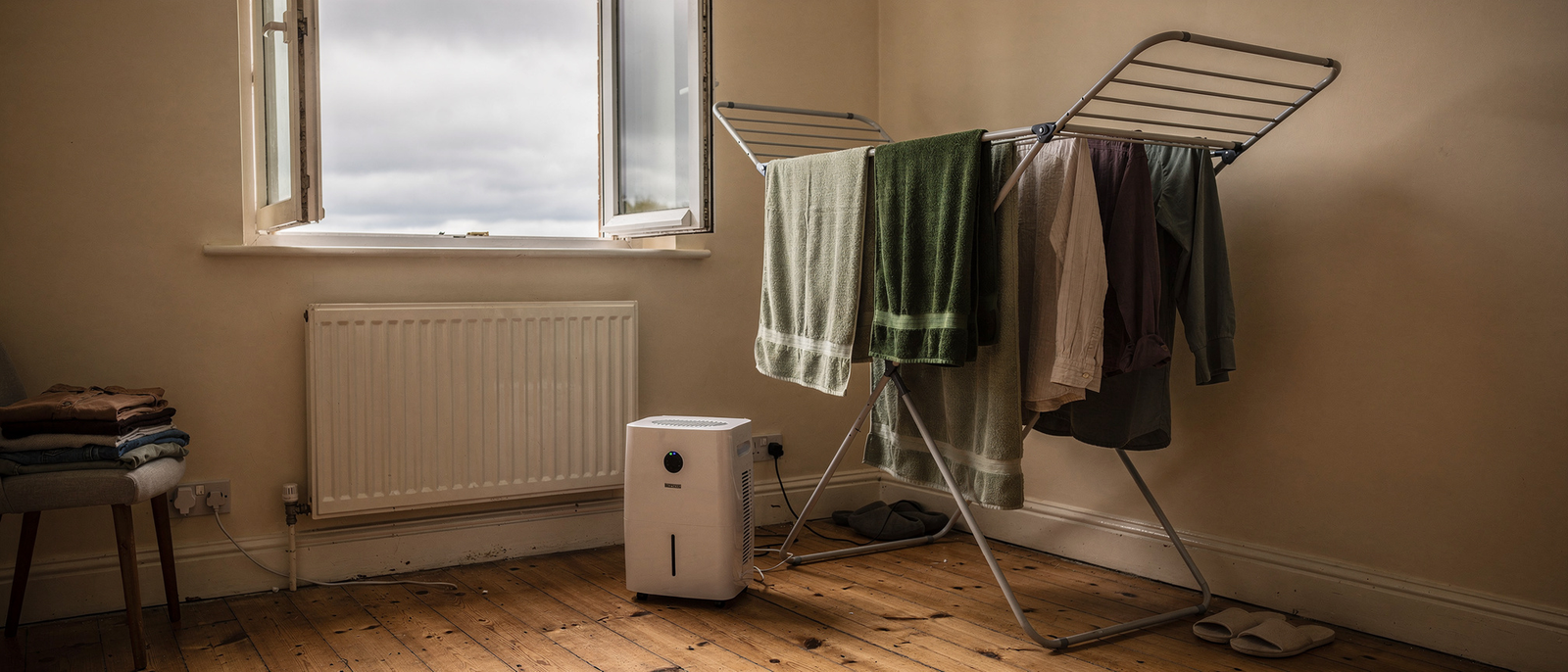
Rother District Council's damp and condensation guidance says drying clothes inside can add an additional 10 to 15 litres of moisture. The page does not say over what period, so treat it as a sense of scale rather than a daily figure.
Give the load an extra spin
Rother suggests an extra spin in the washing machine to speed drying.
Pick the right room
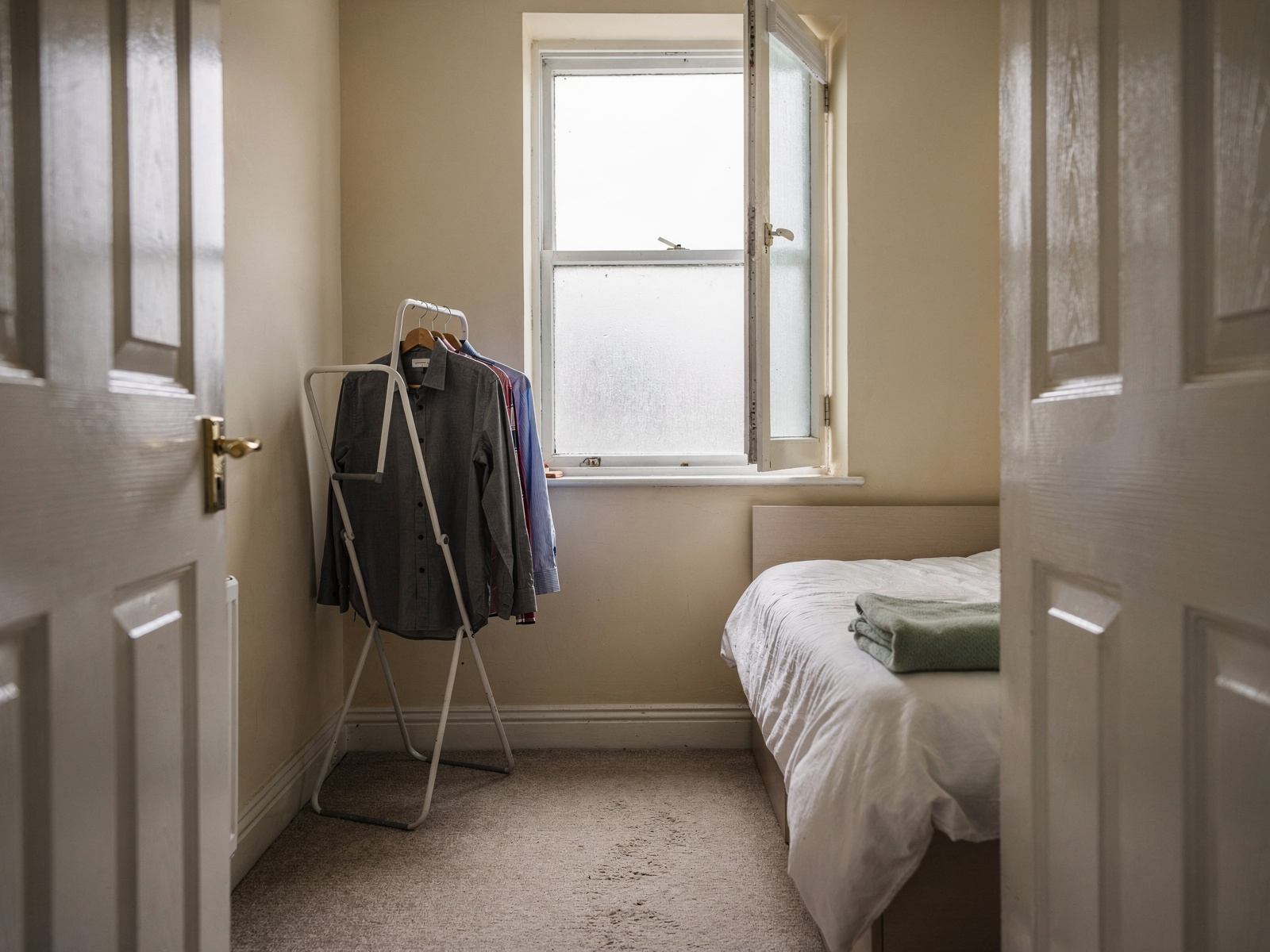
Norwich City Council advises drying clothes in a small room with the door closed and the window open or an extractor fan on. Rother makes a similar point about using an airer where you can close the door and open a window.
Dry outside and keep heating steady
Norwich also says to dry clothes outside if you can, and in cold wet weather to keep heating steady at a low level, between 18 and 21C. This is general advice, not a guarantee against damp.
How they differ: mechanism, drying time, space and noise
Heated airer
A heated airer warms the rack itself, so wet clothes dry in the room where it stands. Currys TechTalk (December 2025) says an uncovered airer releases moisture into the room. Lakeland describes its Dry:Soon 3-Tier as holding approximately two wash loads (15kg, 21 metres of drying space) at 73 x 75 x 137cm, so it needs real floor space. Tech Advisor's February 2025 review of the Deluxe 3-Tier said bulkier items take 10 to 12 hours.
No source here gives a like-for-like drying time against a dehumidifier, so check how long your own load takes before judging. The footprint matters most if the airer shares your work room.
Dehumidifier
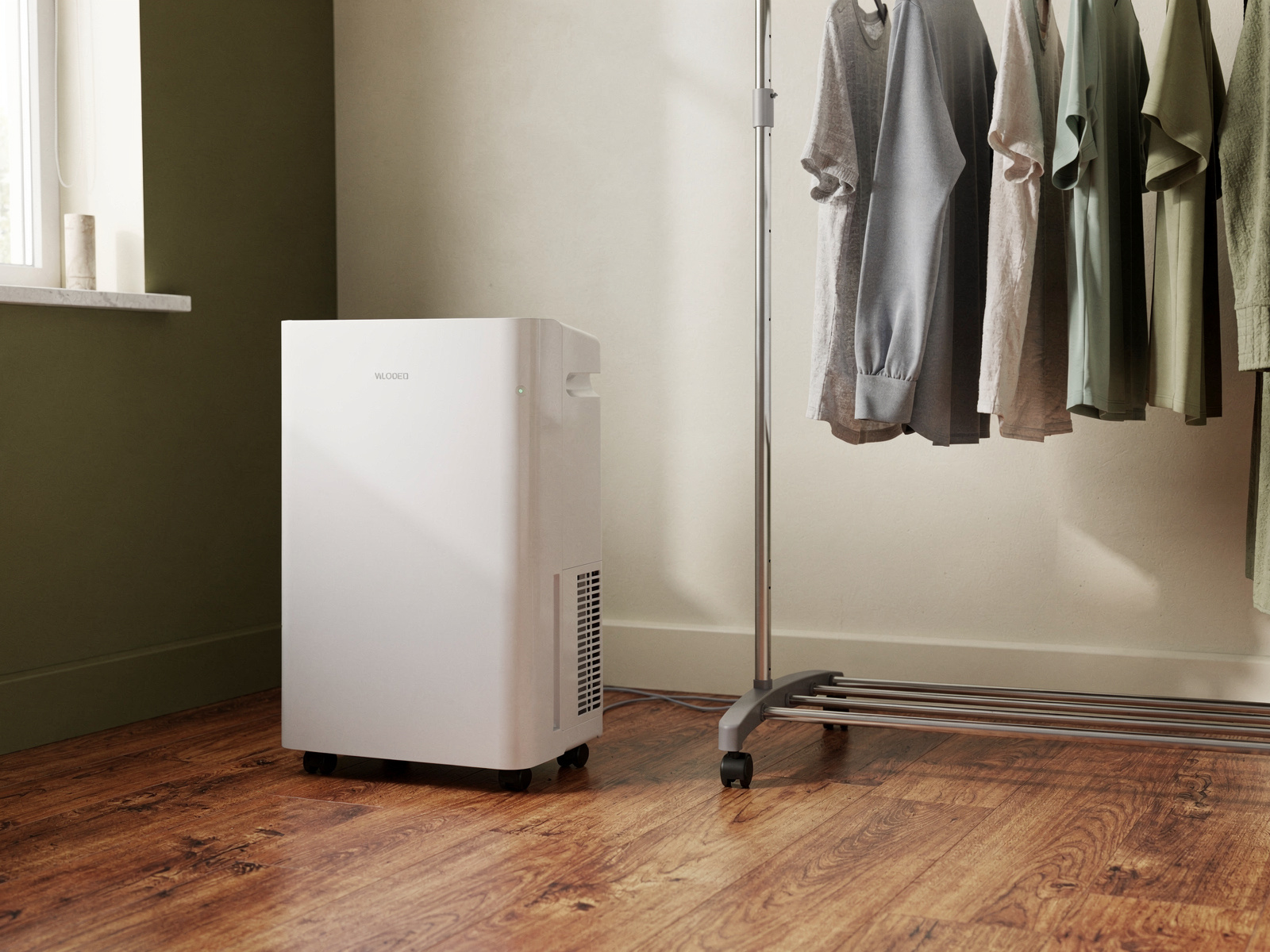
A dehumidifier draws moisture out of the air into a tank. Meaco's Arete Two 12L has a 2.5 litre tank and, says Meaco, extracts 5.40 litres a day at 20C and 60% relative humidity, ranging from 1.97 to 11.99 litres across its tested conditions. Meaco states noise of 35, 38 and 44 dB(A) across fan speeds. These are manufacturer figures, not a real-home result.
Currys TechTalk says a dehumidifier removes moisture from the room rather than releasing it. Neither replaces ventilation.
What they cost to run: the working
Heated airer, 300W
The working is simple: kWh = watts / 1000 x hours, then cost = kWh x your unit rate. Ofgem's price cap for 1 October to 31 December 2026 averages 26.32p per kWh for default tariffs paid by Direct Debit, and Ofgem says energy prices rise by 4% for a typical household. Ofgem describes cap rates as excluding VAT for the period. Rates can change, and your own rate is the one that counts.
The Deluxe 3-Tier booklet rates the airer at 300W, so 0.3 kWh an hour. At 26.32p that is about 7.9p an hour, about 63p for 8 hours and about 95p for 12 hours.
Dehumidifier, 136W
Meaco states 136W for its Arete Two 12L at 20C and 60% relative humidity, and 111 to 182W across tested conditions. That is 0.136 kWh an hour: about 3.6p an hour and about 29p for 8 hours at the same 26.32p rate. In a cooler or drier room, real consumption will differ.
These costs use two example models, the Deluxe 3-Tier booklet rating per the manufacturer and Meaco's Arete Two 12L. Other models draw different power, so check the rated watts on your own appliance. Treat both sets of numbers as illustration, using rated power rather than measurement.
Currys TechTalk (December 2025) concludes a dehumidifier works out slightly cheaper per laundry load than a heated airer, though there is not much in it. Drying times differ, so an hourly cost is not a per-load cost: an appliance with a lower hourly cost that needs many more hours is not automatically the cheaper load.
Reading a dehumidifier spec sheet before you buy
Extraction rate and its conditions
A litres-a-day figure means little without the conditions it was measured in. Check the temperature and humidity behind it, and remember your room may be cooler or drier.
Watts across conditions
Look for a range, not one figure: a single wattage is tied to one set of conditions. Use the range with the cost working above to see how far your hours could vary.
Tank size against extraction
Compare the tank size with the extraction rate to judge how often you would be emptying it on a heavy washing day.
Laundry mode, filter and noise
Check whether the model has a laundry mode with adjustable settings and what filter is fitted. Look at the noise figure at every fan speed, not just the quietest.
Compare on the same conditions
Before paying, put two models side by side using figures measured in the same conditions. For reference, Meaco lists the Arete Two 12L at £199.99, checked on 17 October 2026; prices can change.
Using a heated airer safely
Rating and load
The Dry:Soon Deluxe 3-Tier booklet gives a power rating of 300W and a maximum load of 15kg. It says not to overload the airer.
Load it evenly, on the right surface
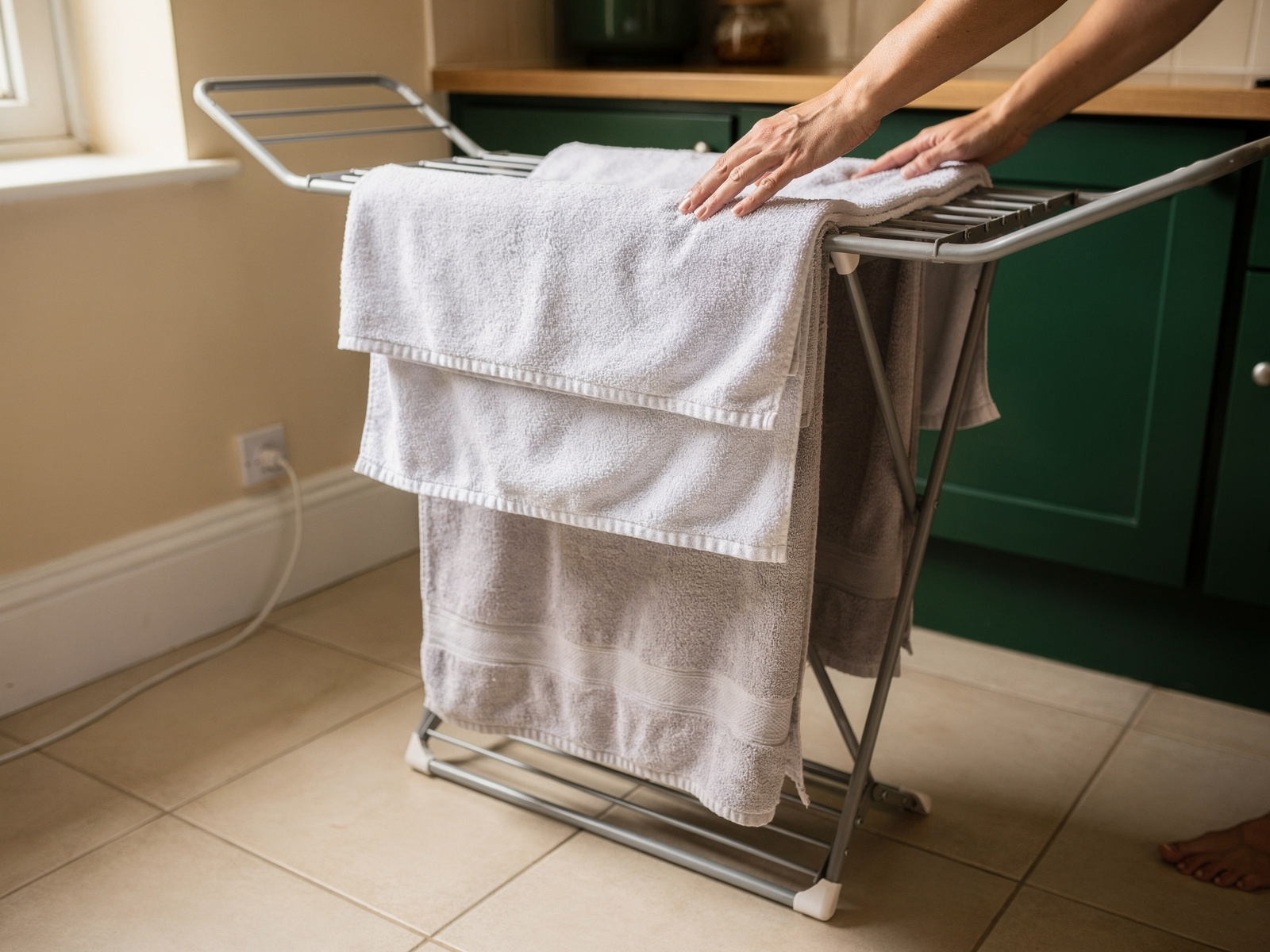
The booklet says to load evenly across the surface to avoid the airer tipping over, and to use it on a dry, level, heat-resistant surface.
Mind the plug and lead
Keep the plug and lead away from ovens, burners, flames and water, according to the booklet.
Do not leave it on indefinitely
The booklet says the airer is not designed to be kept switched on indefinitely. Switch off after 24 hours and let it cool before switching on again.
Check the model
The booklet covers the Deluxe 3-Tier. Lakeland's listing is for the Dry:Soon 3-Tier, so check the model you are buying matches before assuming identical specifications.
Watching for damp: measure, don't guess
Measure the room
A hygrometer, or humidity monitor, shows a room's relative humidity, so you can see what drying washing does to it rather than guessing.
If damp shows up
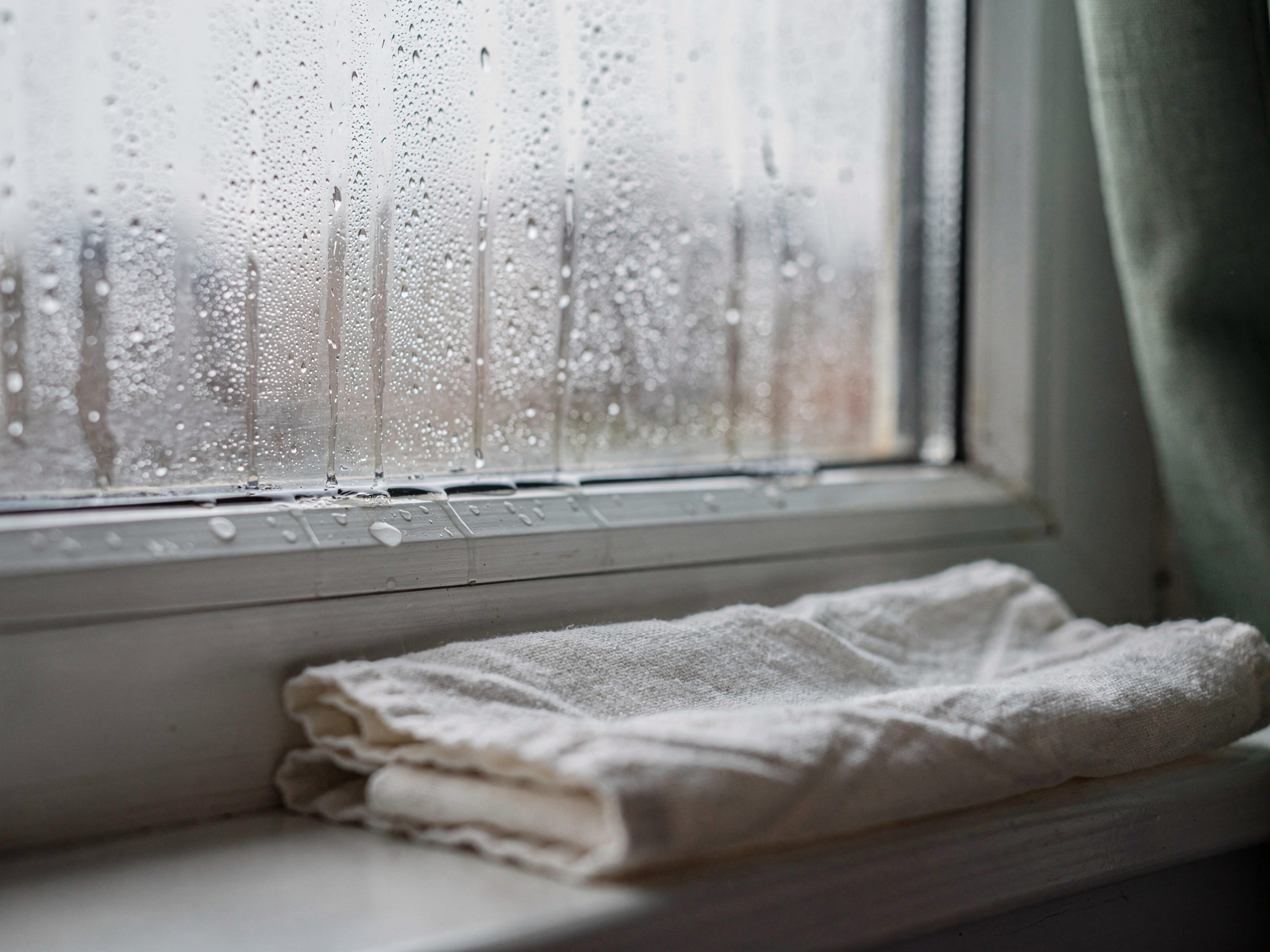
If windows stream or damp patches appear after you dry washing, change the routine: use a smaller room, add ventilation or try a different appliance. Running the same set-up for longer is not the fix.
If you rent
The council pages here are general guidance. If damp persists, report it to your landlord or your council.
Which suits your home?
Small flat, no spare room
Lean towards a dehumidifier. Currys TechTalk says an uncovered airer releases moisture into the room while a dehumidifier removes it, and Lakeland's 3-Tier airer measures 73 x 75 x 137cm, which is a lot of floor in a small flat. Our sources do not cover this layout directly, so treat it as a lean, and open a window either way.
Family with large loads
Lean towards a dehumidifier in a room you can close. Rother says drying clothes inside can add an additional 10 to 15 litres of moisture, and a dehumidifier removes moisture rather than releasing it. Lakeland describes its airer as holding approximately two wash loads (15kg), but on the earlier working 12 hours on a 300W airer is about 95p, and we have no like-for-like drying time for a dehumidifier.
Small closable room
Either works with the door closed and the window open, as Norwich and Rother advise, but lean towards a dehumidifier because it removes moisture from the air. You empty the tank as it fills.
Home worker or light sleeper
Lean towards a dehumidifier placed away from your desk or bed, since a 73 x 75 x 137cm airer takes floor space in a work room and releases moisture into it. Meaco states 35, 38 and 44 dB(A) across fan speeds. Our sources do not give airer noise, so the evidence here is limited.
Renter or damp-prone home
Lean towards a dehumidifier in a room with the door closed and the window open, and keep heating steady at a low level, between 18 and 21C, as Norwich advises. If you use an airer, Rother says to use it where you can close the door and open a window. This is general guidance, not a guarantee against damp, and if damp persists, report it to your landlord or your council.
Pros and cons of buying an appliance at all
Pros
- Running cost can be estimated from rated watts and your own unit rate.
- Per Currys TechTalk, a dehumidifier removes moisture from the room rather than releasing it.
- Meaco says the Arete Two 12L has a smart laundry mode with adjustable timers and louvre.
Cons
- Upfront cost: Tech Advisor gave the Deluxe 3-Tier airer at £199.99 in February 2025, an old price rather than a current one.
- Hourly figures hide differences in drying time.
- An uncovered airer releases moisture into the room, so ventilation matters either way.
- An airer needs floor space and a dehumidifier brings fan noise.
FAQs
Is a dehumidifier cheaper than a heated airer?
Currys TechTalk concludes a dehumidifier is slightly cheaper per load, with not much in it. The arithmetic here depends on hours, which differ between appliances, so check how long your own washing takes.
Can I leave a heated airer on overnight?
The Deluxe 3-Tier booklet says it is not designed to be kept switched on indefinitely, and to switch off after 24 hours and let it cool before switching on again. The sources we hold do not cover overnight use, so read the instructions for your own model.
Do I need to use my own unit rate?
Yes. Ofgem's 26.32p per kWh is an average for default tariffs paid by Direct Debit, not your tariff. Check your bill or supplier account and put that figure into the same formula.
Does a heated airer add damp?
Currys TechTalk says an uncovered heated airer releases moisture into the room, as the wet washing dries. That is why the council advice on a closed door and open window applies to airers too.
Where do I put either in a small home?
Norwich City Council advises drying in a small room with the door closed and the window open or an extractor fan on. Choose the smallest room you can close, and keep the appliance clear of walkways.
Verdict
Do the free steps first. After that, choose a heated airer if you have floor space and bulky items to dry, or a dehumidifier if you can close a room and want moisture taken out of the air. The biggest reservation is that every cost here is MyHotips arithmetic from rated power and Ofgem's average rate, not a measurement. Next, repeat the working with your own unit rate and the hours your washing really takes.


